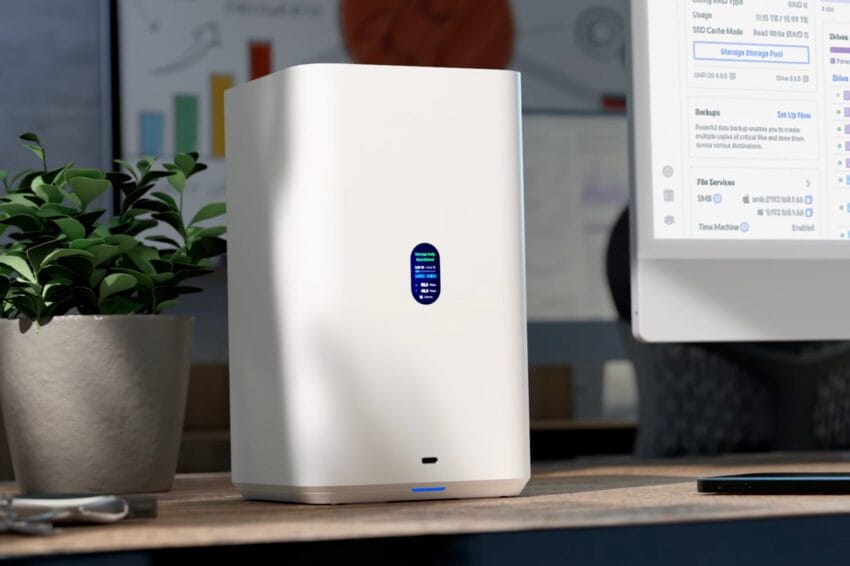
ubiquiti s new desktop nas looks more Ubiquiti has unveiled its latest network-attached storage (NAS) solutions, the UNAS 2 and UNAS 4, which blend sleek design with functionality, resembling wireless routers more than traditional storage devices.
ubiquiti s new desktop nas looks more
Overview of Ubiquiti’s New NAS Solutions
Ubiquiti, a company known for its innovative networking products, has recently expanded its offerings with the introduction of the UNAS 2 and UNAS 4. These new storage solutions are designed to integrate seamlessly with Ubiquiti’s existing UniFi ecosystem, which includes a variety of networking devices such as routers, switches, and security cameras. Unlike conventional NAS units from competitors like Synology and Ugreen, Ubiquiti’s new models prioritize aesthetics alongside performance, presenting a more modern and minimalist appearance.
Design and Build Quality
The UNAS 2 and UNAS 4 are designed to be visually appealing, featuring a sleek, compact form factor that allows them to blend into home or office environments without looking out of place. The UNAS 2 is available in both black and white finishes, catering to different aesthetic preferences. This design philosophy reflects a growing trend in consumer electronics, where users are increasingly looking for devices that not only perform well but also complement their living or working spaces.
The UNAS 2 is particularly noteworthy for its innovative approach to hard drive installation. It accommodates two 3.5-inch hard drives configured in RAID 1, which provides redundancy by mirroring data across both drives. This setup is crucial for users who prioritize data integrity and protection against drive failures. The drives are inserted through an access panel located on the underside of the device, featuring a sliding locking mechanism to ensure they remain securely in place, even when the NAS is upright. This thoughtful design choice minimizes the risk of accidental dislodgment, a common concern with traditional NAS units.
Connectivity and Performance
In terms of connectivity, the UNAS 2 is equipped with a 5 Gbps USB-C port on the front, allowing users to attach additional external storage devices easily. This feature enhances the NAS’s versatility, making it suitable for various use cases, from simple file storage to more complex media serving tasks. The device requires only a single Ethernet cable to connect to a compatible switch that supports Power over Ethernet (PoE) delivery. For setups lacking PoE support, Ubiquiti includes a 60W PoE adapter, ensuring that users can power the device without needing additional power outlets.
The UNAS 2 also features a 1.45-inch screen on the front that displays real-time performance metrics and storage statistics. This display provides users with immediate feedback on the system’s health, making it easier to monitor performance and address any potential issues proactively.
UNAS 4: A Larger Option for Increased Storage Needs
For users requiring more storage capacity, the UNAS 4 presents a compelling alternative. Expected to ship later this year at a price point of $379, the UNAS 4 shares a similar design aesthetic with the UNAS 2 but offers significantly more storage capabilities. It can accommodate up to four 2.5-inch or 3.5-inch hard drives, in addition to a pair of M.2 NVMe SSD drives. This expanded capacity makes the UNAS 4 suitable for more demanding applications, such as video editing or large-scale data backups.
While Ubiquiti’s rack-mounted NAS solutions provide even greater capacity and RAID options, specific details regarding the RAID configurations supported by the UNAS 4 have yet to be disclosed. It remains unclear whether it will support multiple RAID levels or if it will be limited to RAID 1, similar to the UNAS 2. This uncertainty may influence potential buyers who are evaluating their storage needs and considering the best configuration for their data.
Comparative Analysis with Competitors
When comparing Ubiquiti’s UNAS 2 and UNAS 4 to offerings from competitors like Synology and Ugreen, several distinctions become apparent. Traditional NAS solutions often prioritize functionality over design, resulting in bulkier units that can be cumbersome in home or office settings. In contrast, Ubiquiti’s approach emphasizes a blend of form and function, appealing to users who value aesthetics as much as performance.
Competitors typically offer a wider range of RAID configurations and advanced features, such as built-in media servers and extensive app ecosystems. For instance, Synology’s DiskStation Manager (DSM) provides a robust operating system with numerous applications for file sharing, multimedia streaming, and data backup. Ubiquiti’s UNAS models, while visually appealing, may need to catch up in terms of software capabilities and user experience.
Target Audience and Use Cases
The UNAS 2 and UNAS 4 are designed for a diverse range of users, including home users, small businesses, and creative professionals. Home users may appreciate the UNAS 2 for its simplicity and aesthetic appeal, making it an excellent choice for basic file storage and media streaming. The built-in display and easy connectivity options enhance its usability for everyday tasks.
Small businesses may find the UNAS 4 more aligned with their needs, offering greater storage capacity for file sharing and collaboration among team members. The ability to integrate with Ubiquiti’s UniFi ecosystem allows for streamlined networking, which can be particularly beneficial for businesses looking to maintain a cohesive technology environment.
Creative professionals, such as photographers and videographers, may also benefit from these NAS solutions. The UNAS 4’s capacity for multiple drives and SSDs makes it suitable for storing large media files, enabling efficient workflows and easy access to critical data.
Implications for Data Storage Trends
The introduction of the UNAS 2 and UNAS 4 reflects broader trends in data storage and networking. As more users seek integrated solutions that combine storage, networking, and security, products like Ubiquiti’s NAS offerings are likely to gain traction. The emphasis on design and user experience may also influence other manufacturers to rethink their product aesthetics, leading to a shift in how consumers perceive and interact with storage devices.
Moreover, as data generation continues to rise, the demand for reliable and efficient storage solutions will only increase. Ubiquiti’s entry into the NAS market may encourage competition, prompting existing players to innovate and enhance their offerings further.
Stakeholder Reactions
Initial reactions from industry analysts and tech enthusiasts have been generally positive, particularly regarding the design and integration capabilities of the UNAS 2 and UNAS 4. Many appreciate Ubiquiti’s focus on aesthetics, which sets these devices apart from traditional NAS offerings. However, some experts have expressed concerns about the lack of detailed information regarding RAID configurations and software capabilities, which could impact the decision-making process for potential buyers.
Users in online forums have also shared mixed opinions. While many are excited about the sleek design and ease of use, others are cautious, waiting for more information on performance benchmarks and software features before making a purchase.
Conclusion
Ubiquiti’s UNAS 2 and UNAS 4 represent a significant step forward in the NAS market, combining modern design with essential storage functionality. As the demand for integrated storage solutions continues to grow, these devices may appeal to a wide range of users, from home consumers to small businesses and creative professionals. However, the success of these products will ultimately depend on Ubiquiti’s ability to deliver on performance, software capabilities, and customer support.
As the company continues to refine its offerings and gather user feedback, it will be interesting to see how the UNAS line evolves and whether it can carve out a niche in a competitive landscape dominated by established players.
Source: Original report
Was this helpful?
Explore more: More Hardware & Devices Tech News Blog
Last Modified: September 19, 2025 at 12:38 am
16 views