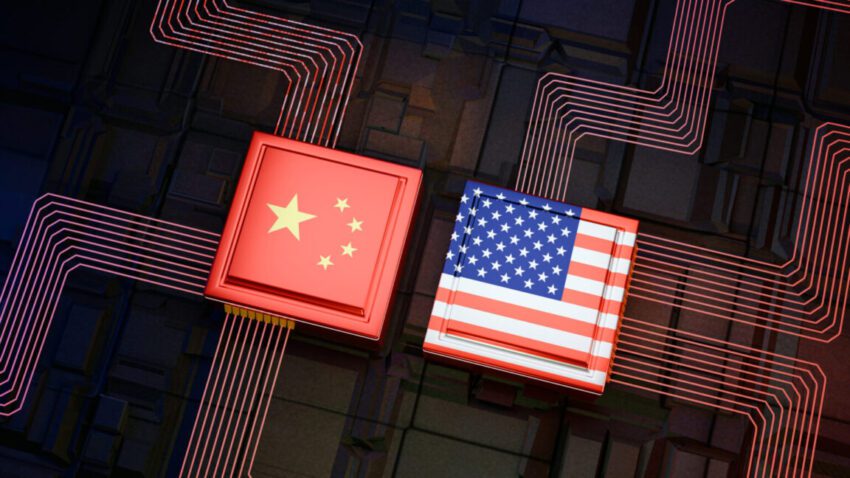
report china approves import of high-end nvidia China has officially approved the import of Nvidia’s high-end H200 artificial intelligence chips for three major technology firms, signaling a significant policy shift after weeks of uncertainty regarding shipments.
report china approves import of high-end nvidia
Approval Details
On Wednesday, reports from Reuters confirmed that China granted import approvals for Nvidia’s H200 chips to ByteDance, Alibaba, and Tencent. Collectively, these companies are set to acquire over 400,000 H200 chips. This decision marks a notable change in Beijing’s approach, particularly after a period during which shipments were delayed despite receiving clearance from the United States.
Background on Shipment Delays
The approval comes on the heels of a temporary suspension of H200 shipments by Chinese customs authorities earlier this month. Despite the U.S. granting export licenses on January 13, Chinese customs had informed agents that the H200 chips were not allowed entry into the country. This led to a backlog of orders, with Chinese technology firms reportedly seeking more than two million of these advanced chips.
The H200 chip is Nvidia’s second most powerful AI chip, following the B200. It boasts approximately six times the performance of the previous H20 chip, which was the most advanced model Nvidia could sell to China prior to the H200’s introduction. While companies like Huawei have developed products that can compete with the H20’s capabilities, they still fall short of the H200’s advanced performance metrics.
Implications of the Approval
This approval is significant for several reasons. Firstly, it reflects a potential thawing in U.S.-China relations concerning technology trade, particularly in the realm of artificial intelligence. The H200 chips are crucial for various AI applications, including machine learning, data analysis, and advanced computational tasks, which are becoming increasingly important in the global tech landscape.
Impact on Chinese Technology Firms
The acquisition of H200 chips will likely enhance the capabilities of Chinese tech giants like ByteDance, Alibaba, and Tencent. These companies are heavily invested in AI and machine learning technologies, which are foundational for their services ranging from social media to e-commerce and cloud computing. With access to the H200 chips, these firms can improve their AI models, leading to more efficient algorithms and better user experiences.
For instance, ByteDance, the parent company of TikTok, could leverage the enhanced processing power of the H200 chips to refine its recommendation algorithms, thereby increasing user engagement. Similarly, Alibaba and Tencent could utilize the chips to bolster their cloud services, making them more competitive against global players like Amazon Web Services and Microsoft Azure.
Global Competitive Landscape
The approval also has broader implications for the global technology landscape. As AI continues to evolve, the demand for high-performance chips is skyrocketing. Nvidia has positioned itself as a leader in this sector, and the H200 chips are a testament to its innovation. By allowing these chips into China, the country is not only enhancing its domestic capabilities but also ensuring that it remains competitive on the global stage.
Moreover, the approval could influence other countries’ policies regarding technology imports and exports. Nations that are closely monitoring U.S.-China relations may reassess their own strategies concerning AI technology and semiconductor imports, potentially leading to a ripple effect in global trade dynamics.
Stakeholder Reactions
The reactions to this development have been mixed among stakeholders. On one hand, Chinese technology firms have expressed optimism about the approval, viewing it as a vital step toward enhancing their AI capabilities. On the other hand, there are concerns regarding the implications for U.S. national security and the ongoing trade tensions between the two superpowers.
Chinese Technology Firms’ Perspective
Executives from ByteDance, Alibaba, and Tencent have welcomed the decision, emphasizing the importance of advanced AI technology in driving innovation and economic growth. They argue that access to high-performance chips is essential for maintaining competitiveness in an increasingly digital economy. The approval is seen as a necessary move to support the rapid advancement of AI technologies within China.
U.S. Government Concerns
Conversely, U.S. officials have expressed apprehension regarding the implications of this approval. The H200 chips are not only powerful but also integral to various AI applications that could have military and security implications. The U.S. government has been cautious about allowing advanced technology to flow to China, fearing that it could bolster China’s military capabilities or lead to the development of technologies that may threaten U.S. interests.
In light of these concerns, the U.S. may reconsider its export policies and regulations regarding semiconductor technology. The approval of the H200 chips could prompt a reevaluation of how the U.S. manages its technological exports to China, especially as tensions between the two nations continue to escalate.
Future Outlook
The approval of Nvidia’s H200 chips is a pivotal moment in the ongoing saga of U.S.-China technology relations. As both countries navigate the complexities of trade, national security, and technological innovation, the implications of this decision will likely unfold over the coming months and years.
Potential for Further Approvals
Given the significant demand for high-performance chips in China, it is possible that additional approvals for other advanced technologies may follow. If the trend continues, we could see a more open exchange of technology between the U.S. and China, albeit under careful scrutiny. This could lead to a more competitive environment in the global tech sector, with both nations striving to outpace each other in AI advancements.
Impact on Global Supply Chains
The approval may also have ramifications for global supply chains. As companies like Nvidia ramp up production to meet the demands of Chinese firms, the semiconductor industry may experience shifts in manufacturing and distribution strategies. This could lead to increased collaboration between U.S. and Chinese firms, as well as potential partnerships that could reshape the landscape of the tech industry.
Conclusion
In summary, China’s approval of Nvidia’s H200 AI chips marks a significant development in the ongoing interplay between technology and geopolitics. While it opens new avenues for Chinese technology firms to enhance their AI capabilities, it also raises questions about the implications for U.S. national security and the future of technology trade. As both nations continue to navigate this complex landscape, the outcomes of this decision will be closely monitored by stakeholders around the world.
Source: Original report
Was this helpful?
Explore more: More Hardware & Devices Tech News Blog
Last Modified: January 29, 2026 at 1:41 am
32 views