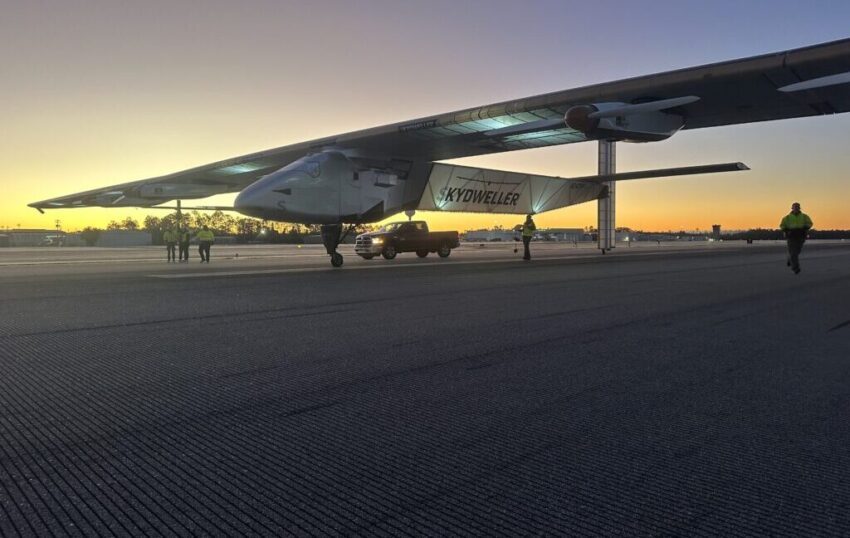
solar drone with jumbo jet wingspan broke A solar-powered drone has been lost at sea after a record-breaking flight lasting eight days between late April and early May.
solar drone with jumbo jet wingspan broke
Record-Breaking Flight
The recent flight of the solar-powered drone, known as Skydweller, has set a new benchmark in the realm of unmanned aerial vehicles (UAVs). This remarkable achievement lasted for eight consecutive days, showcasing the potential of renewable energy in aviation. The flight began in the early hours of April 26 and continued until May 4, during which the drone operated solely on solar power and battery reserves.
Skydweller’s journey was not just a test of endurance but also a demonstration of advanced aeronautical engineering. The drone is based on the Solar Impulse 2, a pioneering aircraft that previously made history with its solar-powered crossings of both the Atlantic and Pacific Oceans. The original aircraft was designed to prove that renewable energy could sustain long-duration flights, and it has now transitioned into a platform for military applications.
Technical Specifications
The Skydweller drone boasts an impressive wingspan of 236 feet (72 meters), which is comparable to that of a Boeing 747 jumbo jet. This extensive wingspan is covered with over 17,000 solar cells, allowing the drone to harness sunlight efficiently. The design enables the aircraft to achieve remarkable endurance while carrying a payload of up to 800 pounds (363 kilograms).
The drone’s carbon-fiber structure contributes to its lightweight and durable design, making it suitable for long-duration flights. The combination of solar energy and battery power allows the Skydweller to operate in various conditions, making it an ideal candidate for maritime patrol missions and other military applications.
Transition to Military Applications
Skydweller Aero, the company behind the drone, acquired and modified the original Solar Impulse 2 to serve as a test platform for what they refer to as “perpetual uncrewed flight.” This transition marks a significant shift in the application of solar-powered technology, moving from experimental aviation to practical military use.
The company has established contracts with the U.S. Navy and Air Force, focusing on maritime patrol missions. These missions are critical for surveillance and reconnaissance, allowing military forces to monitor vast areas without the need for traditional manned aircraft. The Skydweller drone’s ability to fly for extended periods without refueling makes it a valuable asset for military operations.
Implications for Military Operations
The integration of solar-powered drones into military operations could revolutionize how surveillance and reconnaissance missions are conducted. Traditional UAVs often rely on fossil fuels, which can limit their operational range and duration. In contrast, the Skydweller’s reliance on renewable energy could reduce logistical challenges associated with fuel supply and increase operational efficiency.
Moreover, the ability to conduct long-duration flights without human pilots onboard minimizes risks to personnel and allows for continuous monitoring of strategic areas. This capability could be particularly beneficial in maritime environments, where the need for persistent surveillance is paramount.
The Final Flight
On its final flight, the Skydweller drone was operating under the auspices of the U.S. military, conducting test flights designed to simulate maritime patrol scenarios. The aircraft took off in the early morning hours of April 26, embarking on what would ultimately become a historic yet tragic journey.
During the eight days of flight, the drone successfully demonstrated its capabilities, breaking records and showcasing the potential of solar-powered aviation. However, the flight ended abruptly when the drone was lost at sea, marking a significant setback for Skydweller Aero and its ambitions in the field of uncrewed flight.
Reactions from Stakeholders
The loss of the Skydweller drone has elicited a range of reactions from stakeholders involved in the project. Skydweller Aero expressed disappointment over the incident, emphasizing their commitment to advancing solar-powered aviation technology. The company has stated that they will conduct a thorough investigation to determine the cause of the crash and to learn from the experience.
Military officials have also weighed in, acknowledging the potential of solar-powered drones for future operations while recognizing the challenges that come with testing new technologies. The U.S. military has been increasingly interested in integrating innovative technologies into their operations, and the Skydweller drone was seen as a promising addition to their fleet.
Future of Solar Aviation
Despite the setback, the future of solar-powered aviation remains bright. The advancements made by Skydweller Aero and the legacy of Solar Impulse 2 continue to inspire researchers and engineers in the field. As the world increasingly focuses on sustainability and renewable energy, the potential for solar-powered aircraft to play a significant role in aviation cannot be overlooked.
Future developments in solar technology could lead to even more efficient designs and longer flight durations. Researchers are exploring new materials and energy storage solutions that could enhance the performance of solar-powered drones. As these technologies evolve, they may pave the way for a new era of aviation that prioritizes sustainability and reduces reliance on fossil fuels.
Broader Implications for Renewable Energy
The advancements in solar-powered aviation also have broader implications for the renewable energy sector. As the technology matures, it could lead to innovations that benefit other industries, such as transportation and logistics. The principles of harnessing solar energy for sustained operations can be applied to various applications, potentially transforming how goods and services are delivered.
Moreover, the success of solar-powered drones could encourage further investment in renewable energy research and development. Governments and private companies may be more inclined to support initiatives that promote sustainable technologies, leading to a more significant shift towards clean energy solutions.
Conclusion
The loss of the Skydweller drone marks a poignant moment in the journey of solar-powered aviation. While the incident is undoubtedly a setback, it also serves as a reminder of the challenges and risks associated with pioneering new technologies. The achievements of the Skydweller and its predecessor, Solar Impulse 2, have laid the groundwork for future innovations in the field.
As the aviation industry continues to explore sustainable solutions, the lessons learned from this incident will be invaluable. The commitment to advancing solar-powered flight remains strong, and the potential for these technologies to reshape the future of aviation is more promising than ever.
Source: Original report
Was this helpful?
Explore more: More Hardware & Devices Tech News Blog
Last Modified: May 14, 2026 at 12:35 pm
19 views