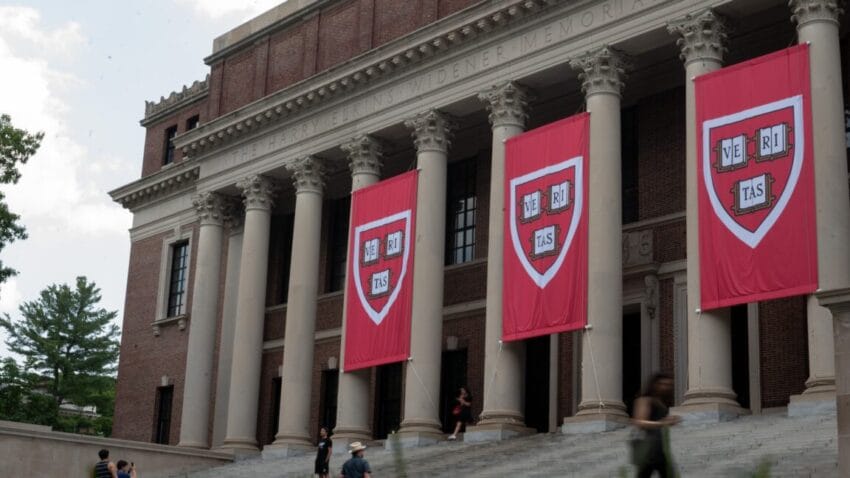
harvard beats trump as judge orders us A federal judge has ruled in favor of Harvard University, requiring the U.S. government to restore approximately $2.6 billion in funding that had been frozen by the Trump administration.
harvard beats trump as judge orders us
Background of the Case
The legal battle between Harvard University and the Trump administration has been ongoing, stemming from actions taken by the former president’s administration that were perceived as politically motivated. The Trump administration had accused Harvard of fostering an environment of antisemitism, which they claimed justified the withdrawal of federal funding. This funding freeze was part of a broader trend during Trump’s presidency, where various institutions faced scrutiny and funding cuts based on their political stances or perceived ideological biases.
Harvard, one of the most prestigious universities in the world, has long been a target for criticism from conservative circles, particularly regarding its liberal leanings and policies. The university’s response to the accusations of antisemitism was firm, arguing that the administration’s actions were not only unfounded but also part of a larger pattern of undermining academic institutions that do not align with certain political ideologies.
The Ruling
U.S. District Judge Allison Burroughs delivered a significant ruling in favor of Harvard, stating that the evidence presented indicated that the Trump administration’s decision to freeze the funding was not based on legitimate concerns about antisemitism but rather on ideological motivations. In her ruling, Judge Burroughs emphasized that the administrative record made it challenging to conclude that antisemitism was the genuine reason behind the funding withdrawal. Instead, she characterized the actions of the Trump administration as a “targeted, ideologically motivated assault” on Harvard and similar institutions.
Critique of the Supreme Court
In addition to ruling in favor of Harvard, Judge Burroughs also took the opportunity to criticize the Supreme Court for its recent decisions that appeared to disregard established legal precedents without sufficient justification. This critique highlights a growing concern among legal scholars and practitioners regarding the direction of the Supreme Court under the influence of the Trump administration and its appointees. The implications of such a trend could be far-reaching, affecting not only higher education funding but also broader legal principles and rights across various sectors.
Implications of the Ruling
The ruling has significant implications for both Harvard and other universities facing similar challenges. By restoring the funding, the court has reinforced the principle that academic institutions should be protected from politically motivated attacks. This decision may encourage other universities to pursue legal action if they find themselves in similar situations, potentially leading to a wave of litigation against government actions perceived as unjust or ideologically driven.
Moreover, the ruling may set a precedent for how federal funding is allocated to educational institutions in the future. If universities can successfully challenge funding cuts based on ideological grounds, it could lead to a more stable funding environment for higher education, allowing institutions to focus on their educational missions rather than navigating political controversies.
Reactions from Stakeholders
The reaction to the ruling has been mixed, reflecting the polarized nature of American politics. Supporters of Harvard’s position, including many in the academic community, have hailed the decision as a victory for academic freedom and institutional integrity. They argue that universities should be spaces for open dialogue and inquiry, free from political interference.
Conversely, critics of the ruling, particularly those aligned with the Trump administration, have expressed disappointment and concern. They argue that the administration’s actions were justified in light of the alleged antisemitism on campus and that the ruling undermines efforts to hold universities accountable for fostering a safe environment for all students. This divide illustrates the broader cultural and political battles playing out in the United States, particularly regarding issues of free speech, academic freedom, and the role of government in education.
Future Legal Challenges
Following the ruling, it is expected that the Trump administration will appeal the decision, potentially bringing the case before the Supreme Court. This could lead to a protracted legal battle that may further clarify the boundaries of federal funding and the extent to which political considerations can influence such decisions. The outcome of any appeal could have lasting implications for the relationship between the federal government and educational institutions, as well as for the legal standards governing funding decisions.
Legal experts are closely watching the case, as it may provide insights into how courts will navigate the complexities of academic freedom and government oversight. The potential for the Supreme Court to weigh in on this matter adds another layer of significance, as the Court’s decisions could reshape the landscape of higher education funding and the rights of institutions to operate free from political pressures.
Broader Context of Academic Funding
The Harvard case is not an isolated incident but rather part of a broader trend of increasing scrutiny and politicization of higher education funding in the United States. Over the past few years, various state and federal initiatives have sought to impose restrictions on funding based on ideological grounds, particularly concerning issues like diversity, equity, and inclusion initiatives. These efforts have raised alarms among educators and advocates for academic freedom, who argue that such measures threaten the integrity of educational institutions.
As universities grapple with these challenges, they are also facing external pressures related to enrollment, funding, and public perception. The COVID-19 pandemic has exacerbated many of these issues, leading to increased competition for students and funding. In this context, the ability of universities to secure federal funding without political interference is more critical than ever.
Conclusion
The ruling in favor of Harvard University represents a significant moment in the ongoing struggle between academic institutions and political forces. By ordering the restoration of $2.6 billion in funding, the court has reaffirmed the importance of protecting educational institutions from ideologically motivated attacks. As the case moves forward, it will undoubtedly continue to spark debate about the role of government in higher education and the principles that should guide funding decisions.
As stakeholders from various sectors weigh in on the implications of this ruling, it is clear that the intersection of politics and education will remain a contentious battleground. The outcome of any appeals will be closely monitored, as it could set important precedents for the future of academic funding and the autonomy of educational institutions in the United States.
Source: Original report
Was this helpful?
Explore more: More General Technology Tech News Blog
Last Modified: September 8, 2025 at 6:34 pm
4 views