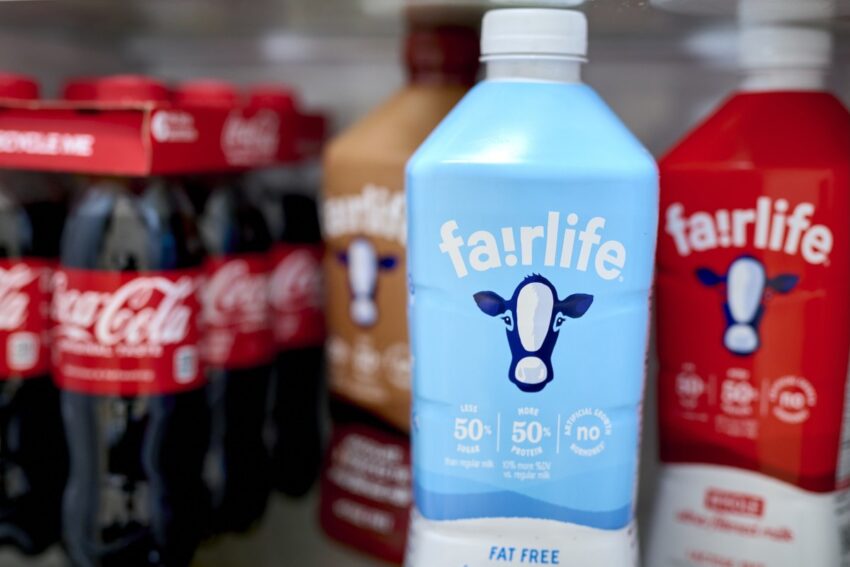
fairlife ransomware Coca-Cola said one of its dairy subsidiaries was hit by ransomware, forcing the company to temporarily suspend production at Fairlife facilities across the United States as it responds to the cyberattack. In a disclosure with the U.S. Securities and Exchange Commission, the beverage giant said the incident affected production systems at Fairlife, while operations in Canada were not impacted.
fairlife ransomware
Fairlife production halted after ransomware attack
The disclosure is the clearest public confirmation yet that the attack disrupted a major part of Coca-Cola’s dairy business. According to the company, Fairlife’s U.S. production operations are “temporarily suspended” after the ransomware incident. Coca-Cola did not say when those systems would be restored or offer a timeline for resuming normal production.
Fairlife is one of Coca-Cola’s major brands and a significant contributor to the company’s portfolio beyond carbonated drinks and bottled water. The subsidiary has grown into a large dairy business, with an estimated $4 billion in sales by 2024. That scale makes the production disruption especially notable, even though Coca-Cola has not said whether the attack affected retail distribution, customer orders, or only manufacturing systems.
What Coca-Cola disclosed
In the SEC filing referenced by the report, Coca-Cola said the cyberattack was ransomware and that it affected Fairlife’s production systems. The company also made clear that the disruption is limited to the United States, with Canadian operations remaining unaffected. Beyond that, the public details are sparse.
Coca-Cola did not identify the attackers, describe the entry point used in the intrusion, or specify whether data was stolen as part of the incident. It also did not indicate whether it is negotiating with the attackers, whether law enforcement has been notified, or whether the ransomware attack has been contained. The company’s statement focused on the operational effect: production at U.S. Fairlife sites is on hold for now.
Why this matters for food and beverage companies
Ransomware incidents in the food and beverage sector can have immediate and visible consequences because production systems are tightly linked to supply chains, logistics, and shelf availability. When those systems go down, manufacturers may be unable to process ingredients, package products, or coordinate shipments, even if corporate IT remains partially available.
Past incidents illustrate how disruptive those attacks can become. Arizona Beverages experienced a ransomware-related event in 2019, and food distributor United Natural Foods Inc. (UNFI) was hit last year, leading to weeks-long disruptions to production lines and empty grocery shelves. Those cases show how a cyberattack on an industrial operation can spread well beyond the company itself, affecting retailers, distributors, and consumers.
For a brand such as Fairlife, which sits inside a company as large and diversified as Coca-Cola, the risk is not just reputational. Any prolonged shutdown can ripple through manufacturing schedules, product availability, and contracts with suppliers and retailers. Even if the company can shift some output elsewhere, a temporary halt at a major dairy operation can still create delays.
Fairlife’s place in Coca-Cola’s business
Coca-Cola is among the world’s largest consumer companies, with a business spanning soft drinks, water, juices, and dairy products. Fairlife has become an important part of that portfolio as the company has expanded beyond its traditional beverage lines.
The reported $4 billion in sales by 2024 underscores how significant the dairy brand has become. That makes the production suspension more than a minor operational issue. Even though Coca-Cola did not provide a financial estimate of the damage, an interruption at a brand of that size could affect fulfillment, revenue timing, and operating costs tied to recovery efforts.
At the same time, the company’s statement suggests the incident is being treated as a production issue rather than a broader corporate shutdown. That distinction matters because it implies the attack may be limited to certain systems or facilities, rather than every part of the Fairlife business. Still, the lack of a restoration timeline leaves open the possibility of a longer outage.
What is known — and what is not
Based on the disclosure and the report, several points are confirmed:
- Fairlife, a Coca-Cola dairy subsidiary, was hit by ransomware.
- Production systems were affected.
- Fairlife production operations across the United States are temporarily suspended.
- Operations in Canada are unaffected.
- Coca-Cola has not said when systems will be restored.
Several important details remain unknown. Coca-Cola has not publicly said how the attackers gained access, whether any customer or employee data was accessed, whether the company has paid or will pay a ransom, or whether the incident has been fully contained. The company also has not described the specific plants or production lines impacted.
That absence of detail is common in the early stages of a ransomware disclosure, particularly when a company is still trying to assess the operational and legal consequences. Public companies often provide only the minimum information required at first, then update investors and regulators later if the situation changes or if material impacts become clearer.
Broader cyber risk for industrial operations
The Fairlife incident fits a pattern that security analysts have been watching for years: ransomware operators increasingly target organizations whose operations depend on both digital systems and physical production. In those environments, downtime carries immediate cost, which can make attackers believe their victims are more likely to pay. Even when companies refuse, restoration can take time because industrial software, production controls, and supply-chain systems may need careful rebuilding.
Food and beverage firms are particularly vulnerable because production often runs on tight schedules and narrow margins. A disruption can quickly affect freshness windows, distribution plans, and retail stock levels. That is why attacks on manufacturers and distributors often attract attention beyond cybersecurity circles. The business impact can be seen in warehouses, store shelves, and consumer availability, not just in internal incident reports.
Coca-Cola’s disclosure shows that large, well-resourced companies remain exposed to those risks. The company’s global scale and extensive brand portfolio did not prevent an attack on one of its subsidiaries, and the incident demonstrates how ransomware can affect even established consumer brands with substantial market presence.
What happens next
For now, the immediate question is how long Fairlife’s U.S. production will remain suspended. Coca-Cola has not offered a date for resumption, and the company’s wording suggests the outage could continue for an uncertain period while recovery work is underway. As is often the case after a ransomware attack, the operational timeline may depend on forensic analysis, system restoration, and the company’s confidence that the environment is secure.
Consumers may not see the effects right away if inventories remain available in stores, but prolonged downtime could eventually translate into reduced product availability. The real-world consequences of a cyberattack like this often emerge gradually, first in production delays and later in distribution or retail shortages if the disruption persists.
For investors, the episode is another reminder that cyber risk is now an operational risk as well as an IT problem. For Coca-Cola, the priority is likely restoring Fairlife production safely while limiting the broader impact on the brand, employees, and customers. The company has not said how long that process will take.
Source: Original report
Was this helpful?
Explore more: Application Audit & Review More Cybersecurity Tech News
Last Modified: July 17, 2026 at 6:37 pm
16 views