Your WordPress website is often the first impression your audience gets of your brand. It serves as your digital storefront, your marketing engine, and in many cases, your primary source of leads or revenue. Visitors expect it to be fast, secure, and easy to navigate, and when it isn’t, even small issues can leave a lasting negative impression.
What many site owners don’t realize is that problems rarely appear overnight. They build gradually, hidden beneath the surface, quietly affecting your site’s performance, user experience, and overall effectiveness.
Like any high-performing system, your website needs regular checkups to stay in top condition. Outdated plugins, inefficient code, unnoticed errors, and evolving SEO requirements can all take a toll over time. Ignoring these underlying issues doesn’t just slow your site down; it can impact your rankings, reduce conversions, and even expose you to security risks. The challenge is knowing when these issues have reached a point where professional intervention is necessary.
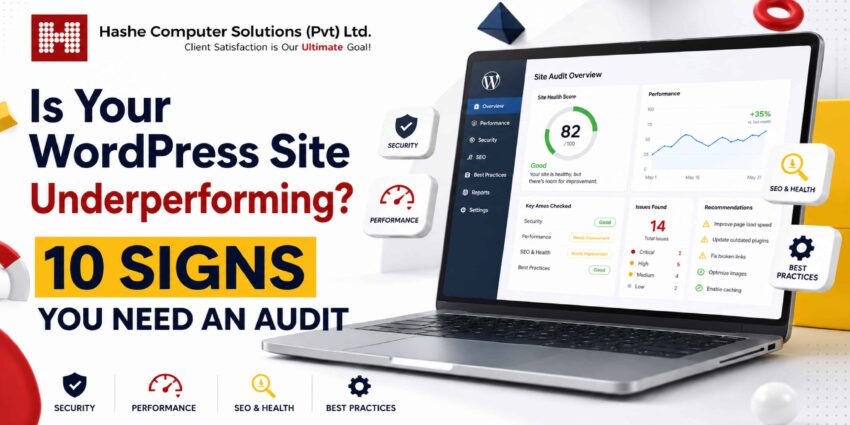
So how do you know when it’s time to call in an expert? If you’ve been relying on guesswork or haven’t conducted a thorough review of your site recently, there are clear warning signs you shouldn’t ignore. Here are 10 indicators that your WordPress site needs a professional audit right now.
Your Website Is Loading Slower Than Usual
We live in an era of instant gratification. If your website takes longer than three seconds to load, a significant portion of your visitors will abandon it before they even reach your homepage. In fact, statistics show that over 50% of mobile users leave a site that takes longer than 3 seconds to load. A sluggish site doesn’t just frustrate users; it directly impacts your conversions and weakens your SEO performance, as search engines prioritize fast, user-friendly experiences.
If your site has gradually become slower, it’s often due to factors like bloated themes, unoptimized images, excessive scripts, or poor hosting performance. The problem is that these issues accumulate quietly.
If you’ve already tried basic caching plugins and your site still feels sluggish, the issue likely runs deeper. Surface-level fixes can only do so much. A professional audit goes beyond quick tweaks to uncover the real bottlenecks, whether it’s an overloaded database, render-blocking scripts, unoptimized assets, or inefficient server configurations. Addressing these core issues can dramatically improve speed, user engagement, and overall site performance.
You are Experiencing Frequent Downtimes
If your website is constantly going offline, you’re not just facing a minor technical issue; you’re risking lost revenue and credibility. Even short outages can interrupt sales and drive visitors away. Most users won’t wait for a site to come back. Instead, they’ll leave and choose a competitor.
Frequent downtime also affects your long-term visibility. While a single outage won’t hurt your rankings, repeated accessibility issues can disrupt how search engines crawl and index your site. If your website is often unavailable when bots attempt to access it, your performance in search results may gradually decline. Over time, this compounds into reduced organic traffic and missed opportunities.
Although many hosting providers promise high uptime, real-world issues such as server limitations, plugin conflicts, or poor configuration often tell a different story. A professional audit helps identify the root cause and ensures your site remains stable, reliable, and consistently accessible.
Your Site has Security Vulnerabilities
You don’t need a dramatic “This Site Has Been Hacked” banner to know something is wrong; subtle vulnerabilities are often far more dangerous. Many WordPress security issues originate from outdated or poorly maintained third-party plugins and themes. When your site relies on aging code or unpatched components, it creates entry points for automated attacks. Once inside, hackers can add spam links, steal data, or use your server, often without you noticing.
Leaving these vulnerabilities unchecked can seriously damage both your reputation and your search visibility. If search engines detect malware or suspicious behavior, your site may be flagged with security warnings, discouraging users from visiting and reducing trust. Even before that point, hidden threats can quietly degrade your site’s performance and credibility.
A professional audit goes beyond basic security plugins by performing deep scans, identifying vulnerabilities, and safely updating outdated components. It helps uncover hidden risks and strengthens your site’s defenses to keep it secure and reliable.
Your SEO Rankings are Dropping
If you’ve noticed a steady, frustrating decline in your organic traffic, it’s rarely random. It’s often a sign of deeper technical issues. SEO is highly competitive, and the stakes are significant: studies show that the top three organic results on Google capture over 68% of all clicks. Even a small drop in rankings can dramatically reduce your visibility and traffic.
This decline is usually a symptom of hidden technical debt. Search engines prioritize websites that deliver a smooth, reliable user experience. Issues like broken links, slow loading speeds, poor mobile optimization, and indexing errors signal that your site isn’t well maintained. Combined with frequent algorithm updates that continue to raise standards for performance and content quality, outdated setups quickly fall behind.
A professional audit helps connect the dots. By analyzing your site structure, technical SEO health, and performance trends, experts can identify exactly what’s holding your rankings back. With targeted fixes, you can recover lost visibility and strengthen your position in search results.
You’re Using Too Many Plugins
It’s incredibly easy to treat the WordPress plugin repository like an all-you-can-eat buffet. Need a contact form? Install a plugin. Want a flashy image slider? Add another. Before you know it, your site is running on a stack of tools that quietly strain your infrastructure. While plugins can provide quick solutions, excessive reliance on them creates an unseen burden that may slow your site down over time.
The real issue isn’t just the number of plugins; it’s the bloat and conflicts they introduce. Each active plugin adds extra scripts, stylesheets, and database queries that must load on every page. This slows down load times, reduces responsiveness, and may create difficult-to-diagnose compatibility issues.
A professional audit goes beyond simply counting plugins. It identifies overlapping functionality, detects resource-heavy scripts, and highlights unnecessary tools that are hurting performance. By streamlining your plugin stack, you can turn a bloated setup into a faster, more stable, and more efficient website.
Your Website isn’t Mobile-Friendly
Take a quick moment to view your website on your smartphone. If the text requires pinching to read, buttons overlap, or you have to scroll horizontally, you’re actively pushing users away. Mobile usage is now dominant, with 70.4% of the world’s population using a mobile phone, reinforcing how critical mobile optimization has become.
Google uses mobile-first indexing, meaning it primarily evaluates the mobile version of your site when determining search rankings. If your site isn’t responsive, you’re not just frustrating users; you’re also putting your visibility at risk. When layouts are clunky or slow, visitors don’t try to adapt but leave and often turn to a competitor.
A professional audit takes a deeper approach by testing your site across different devices and screen sizes. It identifies layout issues, performance gaps, and usability problems, then provides clear fixes to ensure your site delivers a smooth, high-converting experience everywhere.
You Notice Broken Links or Missing Pages
As your website grows, pages get deleted, product links change, and external resources move. Over time, this naturally leads to broken links and missing pages. While it may seem minor, encountering a “404 Page Not Found” error is frustrating for users and often causes them to leave your site immediately. When visitors expect valuable content but hit a dead end instead, it damages trust and weakens your brand credibility.
Although a few broken links might not seem critical, a large number of them signal poor maintenance to search engines. Google allocates a limited crawl budget to your site, meaning its bots only scan a certain number of pages within a given timeframe. If those bots waste precious time hitting dead ends and broken page scripts, they will stop indexing your functional, revenue-driving pages, causing your overall search visibility to drop.
A professional audit helps eliminate these issues by scanning your entire site for broken links and redirect errors. It ensures that outdated URLs are properly redirected and that users are guided smoothly to the right content, improving both user experience and search performance.
Your Conversion Rates Are Declining
At its core, your website exists to turn visitors into customers, leads, or subscribers. If your traffic remains steady but conversions are dropping, it’s a clear sign something isn’t working beneath the surface. Industry benchmarks show that the global average e-commerce conversion rate is just 2.35%, meaning even small inefficiencies can significantly impact revenue.
This kind of decline is rarely caused by one major issue. More often, it’s the result of small friction points throughout the user journey, such as slow-loading pages, complicated checkout processes, broken forms, or confusing navigation. Even minor delays or layout inconsistencies, especially on mobile, can disrupt user flow and reduce conversion rates.
A professional audit reveals these hidden obstacles by examining how users navigate your site from their first visit to their final action. It pinpoints where visitors drop off, highlights performance bottlenecks, and identifies elements that disrupt the user journey, helping you refine the experience and increase conversions.
Your Content Management Feels Disorganized
As your business grows, your website naturally expands with new blog posts, landing pages, and media files. Without a clear organizational system, however, your dashboard can quickly become cluttered and difficult to manage. It isn’t just an operational issue; instead, it has a real impact. Research shows that about 65% of B2B digital content goes completely unused, often because teams struggle to locate, update, or repurpose existing assets.
When your backend is filled with uncategorized posts, duplicate tags, and inconsistent URL structures, it slows down your workflow and leads to fragmented messaging. What starts as minor disorganization can quickly turn into a system that’s difficult to scale or maintain.
This lack of structure can also lead to SEO issues like keyword cannibalization, where multiple pages compete for the same search terms. It confuses search engines and weakens your site’s authority. A professional audit resolves this by organizing your content, cleaning up categories, and creating a more streamlined, search-friendly structure.
Your Website Looks Outdated
If your website looks outdated, it can quickly erode trust before visitors even engage with your content. Design trends and user expectations evolve quickly, and first impressions matter. Research from Stanford shows that 75% of users judge a company’s credibility based on its website design.
These judgments happen almost instantly. Outdated layouts, generic stock imagery, and clunky navigation can frustrate visitors and drive them away within seconds. In many cases, older designs also come with technical limitations, such as poor mobile responsiveness or slower performance.
A professional audit goes beyond surface-level changes. It evaluates how your design aligns with modern standards and user expectations, helping you refresh your layout, improve usability, and present a brand that feels current, trustworthy, and competitive.
Wrapping Up: Revitalize Your Digital Foundation
Your website is your digital storefront and a core driver of your business—but it can only perform as well as its underlying structure allows. Ignoring warning signs like declining rankings, a cluttered backend, or falling conversion rates doesn’t just slow growth; it pushes potential customers toward your competitors.
A professional website audit removes the guesswork by identifying the exact performance issues, security risks, and structural gaps holding your site back. By optimizing your platform into a fast, secure, and user-friendly experience, you not only protect your digital asset but also create a stronger foundation for consistent growth.
Take action before a critical failure occurs. Investing in your website’s health today ensures it performs effectively, converts visitors, and supports your business in the long run.
See What’s Holding Your Website Back: Get a Free Audit!
If you’re unsure where your website stands, that’s exactly where we come in. At Hashe, we take the guesswork out of optimizing your website. Our team of experts conducts in-depth audits that go beyond surface-level fixes, analyzing performance, security, SEO, and user experience to uncover exactly what’s holding your site back.
Whether it’s hidden technical issues, slow load times, or missed conversion opportunities, we provide clear, actionable insights to help you improve fast.
To help you get started, we are currently offering a free website audit. This audit provides an initial overview of your site’s health and a roadmap to transform it into a high-performing digital asset. So, contact us today to find out what’s not and how to fix it without any upfront commitment.
Searching for premier technology partners to elevate your next project? Hashe Computer Solutions is a distinguished digital services firm delivering elite software development, mobile app development, web development, and strategic digital marketing services. Reach out today for high-performance creative web design and results-oriented digital marketing strategies.
Was this helpful?
Last Modified: June 22, 2026 at 4:12 pm
40 views