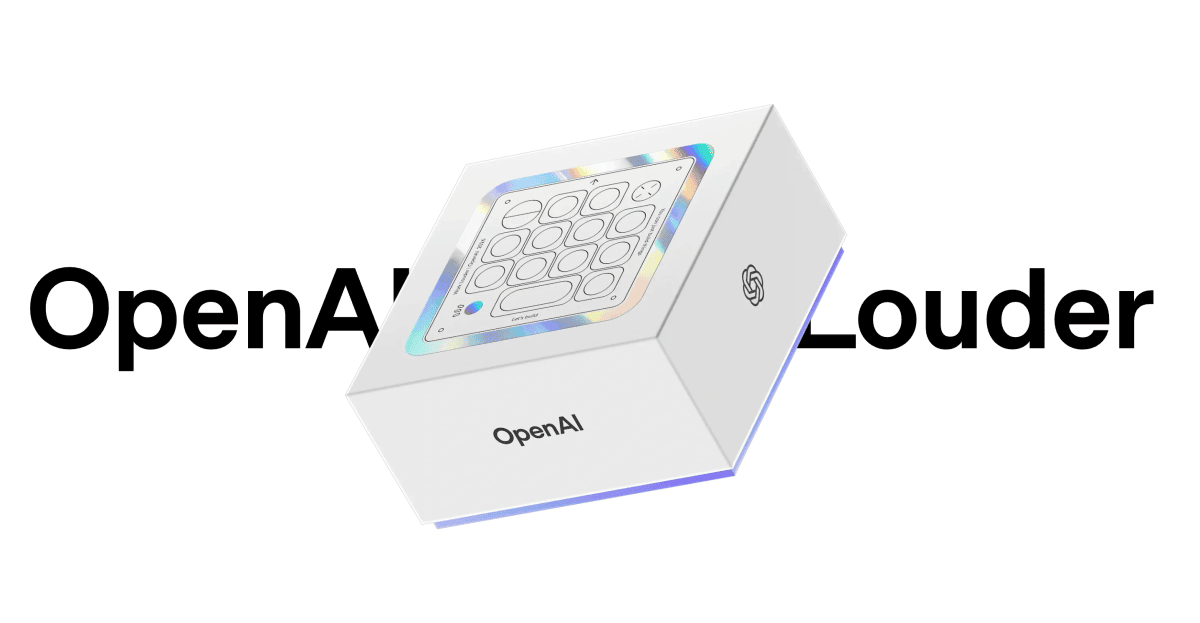
OpenAI has unveiled its first branded piece of hardware, and it is not the much-rumored smart speaker or a screenless AI wearable. Instead, the company is selling a $230 “Codex Micro,” an RGB-lit mini-keyboard designed to help users track and control multiple Codex agents with a glance and a few taps.
codex micro
A limited-run keyboard for Codex users
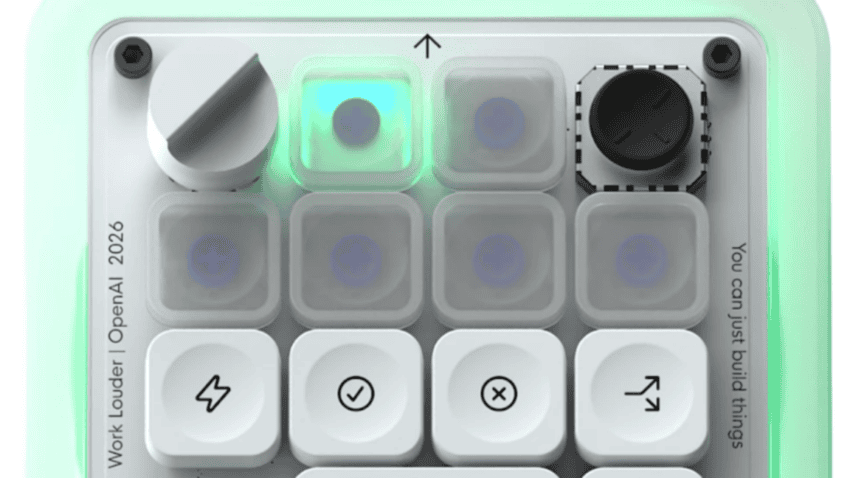
According to the report, the Codex Micro is a “limited-run collaboration” with Work Louder, a hardware maker already known for a similar-looking Creator Micro line of customizable square keyboards aimed at creative professionals. OpenAI’s version keeps the same compact form factor but adds branding and a set of six frosted keys in the top two rows that provide live, color-coded feedback for up to six Codex threads at once.
The idea is simple: instead of switching among windows or checking software dashboards, a user can look down at the device and see which agent tasks are idle, thinking, complete, waiting on a decision, or in error. The keys are intended to change color based on status, cycling from white when idle to blue while Codex is processing, green when a task finishes, amber when human input is needed, and red if a thread encounters an error.
What the lights mean
- White: idle
- Blue: Codex is thinking
- Green: task complete
- Amber: human feedback or decision required
- Red: error
Each illuminated key also works as a shortcut: tapping it opens the corresponding Codex window on-screen. That makes the accessory most useful for people working at a desk while monitoring several long-running AI agents at once, especially users who keep a laptop half-open or rely on a secondary display for ongoing work.
Physical controls with remappable functions
Below the six status keys, the Codex Micro includes another six buttons mapped by default to common Codex actions, such as accepting and rejecting changes, branching threads, and a “push to talk” function for audio prompts. The mappings are not fixed, though. OpenAI says the functions can be remapped through software, and the package includes 32 keycaps so users can change the physical labels to match their preferred workflow.
The device also supports multiple layers of customization beyond Codex itself. While the first layer is reserved for Codex-related functions, users can program and cycle through five additional function sets for general computing shortcuts. That makes the hardware more flexible than a single-purpose controller, even if the branded use case is clearly front and center.
A keyboard with a few extras
The source describes the design as a slightly modified version of existing third-party hardware rather than an entirely new OpenAI-built product. Even so, OpenAI branding is prominent on both the box and the device, along with the company’s “You can just build things” tagline, a reference to its Super Bowl advertisement.
There is also one detail that gives the accessory a little personality: the report notes an optional “yeet” key among the customization possibilities. More broadly, the device’s compact, split-apart layout is described as making it easy to separate the keyboard sections, with the pieces able to fit together in a playful sandwich-like arrangement.
Why this matters for OpenAI
Although the Codex Micro is a niche accessory, its release is still notable because it marks the first time OpenAI has put its name on consumer-facing hardware. The launch suggests the company is pushing beyond software and into physical products that sit on desks and interact directly with its AI tools.
OpenAI’s interest in hardware has been visible for some time. The report says that as early as 2023, the company was reportedly working with former Apple design chief Jony Ive. In May, OpenAI acquired Ive’s design firm LoveFrom, with the partnership reportedly focused on a handheld, screenless device that can accept audio and visual input from the user’s surroundings.
That broader hardware effort has also attracted scrutiny and speculation. The Financial Times reported in October that the project had run into technical and design problems that could delay a planned 2026 launch. And just last week, Apple filed a lawsuit alleging that an ex-Apple employee stole trade secrets related to hardware manufacturing, a development that could complicate OpenAI’s hardware ambitions further.
Limited availability, for now
The Codex Micro is being sold as a “limited run” item and orders are being taken only “while supplies last,” according to the report. A representative did not respond to questions about how many units would be available or whether the product would remain on sale beyond the initial run. The company spokesperson said the device is expected to ship “shortly after purchase.”
That language suggests OpenAI is treating the keyboard as an experiment as much as a product launch. It is available now, but the company is not committing to long-term supply or permanence. For a brand that has mostly sold access to software services, that is a meaningful shift: the hardware may be modest, but it places OpenAI’s name on a physical object that users can touch, customize, and place beside a monitor.
For now, the Codex Micro appears designed less to reinvent keyboards than to make OpenAI’s Codex agents easier to watch and manage. In practice, it is a status display, shortcut pad, and branded desk accessory rolled into one. Whether it becomes a one-off novelty or the first step toward a larger hardware lineup remains unclear. But as the first OpenAI-branded device, it signals that the company is willing to test how far its software ambitions can extend into the world of gadgets.
Source: Original report
Was this helpful?
Explore more: AI Automation Services More AI & Automation Tech News
Last Modified: July 16, 2026 at 6:37 pm
16 views