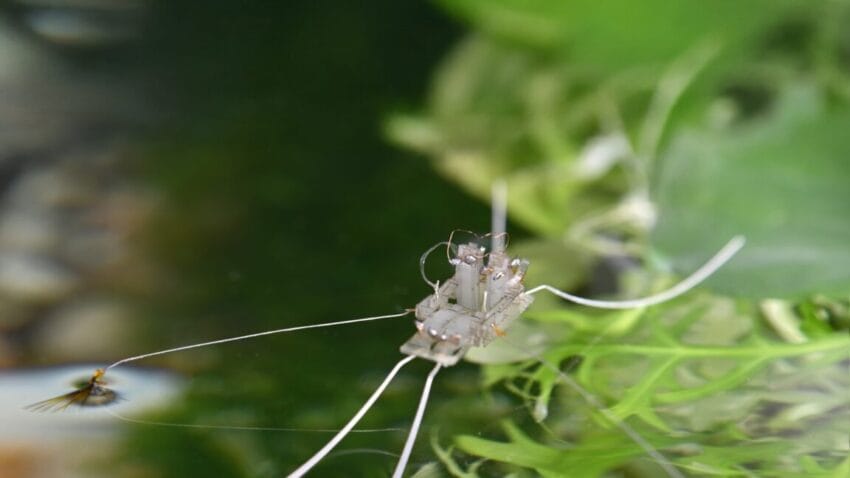
a robot walks on water thanks to — A new robotic innovation has emerged that allows a tiny robot to walk on water, mimicking the remarkable abilities of a specific group of insects known as water striders..
A new robotic innovation has emerged that allows a tiny robot to walk on water, mimicking the remarkable abilities of a specific group of insects known as water striders.
a robot walks on water thanks to
Introduction to Rhagobot
a robot walks on water thanks to: key context and updates inside.
Robots have made significant strides in various fields, from serving pizza to exploring alien terrains, swimming like marine creatures, and even performing intricate surgeries. However, the ability to walk on water has remained largely elusive. Enter the Rhagobot, a groundbreaking robotic creation inspired by the Rhagovelia water striders, also known as ripple bugs. These semiaquatic insects have long fascinated scientists due to their unique adaptations that enable them to glide effortlessly across the surface of water.
The Science Behind Water Striders
Water striders, particularly the Rhagovelia species, possess specialized adaptations that allow them to navigate the water’s surface with remarkable agility. One of the most notable features of these insects is their fan-like appendages located at the ends of their middle legs. These appendages are not merely for decoration; they play a crucial role in how the insects interact with the water beneath them.
Mechanics of Movement
The fan-like appendages of Rhagovelia are designed to open and close passively, responding to the movement of the water below. This unique mechanism allows them to adjust their position and maintain balance while gliding across the surface. Biologist Victor Ortega-Jimenez from the University of California, Berkeley, has studied these insects extensively, noting their ability to accelerate quickly and execute rapid turns, almost as if they are flying over the liquid surface.
Evolutionary Adaptations
The evolutionary adaptations seen in water striders have been honed over millions of years, allowing these insects to thrive in their aquatic environments. Their lightweight bodies and specialized leg structures enable them to exploit the surface tension of water, a phenomenon that most organisms cannot utilize effectively. Understanding these adaptations has provided valuable insights into how nature solves complex problems, which in turn has inspired robotic engineers to replicate these mechanisms.
Design and Functionality of Rhagobot
The Rhagobot is a testament to the potential of biomimicry in robotics. By studying the mechanics of the Rhagovelia, engineers have developed a robot that can mimic the insect’s ability to walk on water. The design of Rhagobot incorporates lightweight materials and a similar leg structure to that of the water strider, enabling it to take advantage of surface tension.
Technical Specifications
While specific technical details about the Rhagobot’s construction have not been disclosed, it is understood that the robot utilizes a combination of sensors and actuators to replicate the movements of its biological counterpart. The robot’s legs are engineered to mimic the fan-like appendages of the Rhagovelia, allowing it to adjust its position dynamically in response to water movement.
Testing and Performance
Initial tests of the Rhagobot have shown promising results. The robot can glide across water surfaces, demonstrating the ability to maneuver effectively, accelerate, and even perform turns. These capabilities are essential for potential applications in various fields, including environmental monitoring and search-and-rescue operations.
Implications of Rhagobot Technology
The development of the Rhagobot opens up a range of possibilities for future robotic applications. The ability to walk on water could be particularly beneficial in scenarios where traditional vehicles cannot operate effectively. For instance, in flooded areas or remote aquatic environments, the Rhagobot could be deployed to gather data or perform tasks that would otherwise be challenging.
Environmental Monitoring
One of the most significant implications of this technology lies in environmental monitoring. The Rhagobot could be used to collect samples from water bodies without disturbing the ecosystem. Its ability to traverse various water surfaces could allow researchers to monitor pollution levels, track wildlife, and assess the health of aquatic environments.
Search and Rescue Operations
In search-and-rescue operations, the Rhagobot could serve as a valuable tool. Its capacity to navigate water surfaces could aid in locating missing persons or assessing disaster-stricken areas. By deploying these robots in flooded regions, emergency responders could gather real-time data, enhancing their ability to make informed decisions during crises.
Stakeholder Reactions
The introduction of the Rhagobot has garnered attention from various stakeholders, including researchers, environmentalists, and technology enthusiasts. Many are excited about the potential applications of this technology, while others emphasize the need for responsible deployment and consideration of ecological impacts.
Research Community
Members of the research community have expressed enthusiasm regarding the insights gained from studying the Rhagovelia and how these insights can be applied to robotics. Victor Ortega-Jimenez, who has studied the biomechanics of water striders, believes that the Rhagobot represents a significant step forward in biomimetic engineering. He notes that understanding the intricacies of these insects can lead to advancements not only in robotics but also in materials science and fluid dynamics.
Environmental Concerns
While the potential applications of the Rhagobot are exciting, environmentalists have raised concerns about the impact of deploying robotic technology in natural ecosystems. There is a need for careful consideration of how these robots interact with wildlife and aquatic environments. Ensuring that the Rhagobot does not disrupt local ecosystems will be crucial as researchers explore its capabilities further.
Future Directions
The development of the Rhagobot is just the beginning. As researchers continue to refine the technology, there are several avenues for future exploration. Enhancements in materials, sensors, and artificial intelligence could lead to even more sophisticated robotic designs capable of navigating complex aquatic environments.
Integration with AI
Integrating artificial intelligence (AI) into the Rhagobot could significantly enhance its capabilities. AI algorithms could enable the robot to make real-time decisions based on environmental conditions, allowing it to adapt its movements and actions autonomously. This would be particularly beneficial in dynamic environments where conditions can change rapidly.
Collaboration with Other Technologies
Future iterations of the Rhagobot could also benefit from collaboration with other technologies. For instance, combining the water-walking capabilities of the Rhagobot with aerial drones could create a multi-modal robotic system capable of conducting comprehensive environmental assessments. Such collaborations could revolutionize how we approach environmental monitoring and disaster response.
Conclusion
The Rhagobot represents a remarkable fusion of biology and technology, showcasing how nature’s solutions can inspire innovative robotic designs. As researchers continue to explore the potential applications of this technology, the implications for environmental monitoring, search-and-rescue operations, and beyond are vast. However, it is essential to approach these advancements responsibly, ensuring that the deployment of such technologies does not come at the expense of the ecosystems they aim to serve.
Source: Original report
Further reading: related insights.
Further reading: related insights.
Further reading: related insights.
Was this helpful?
Explore more: More Hardware & Devices Tech News Blog
Last Modified: July 15, 2026 at 9:25 am
13 views