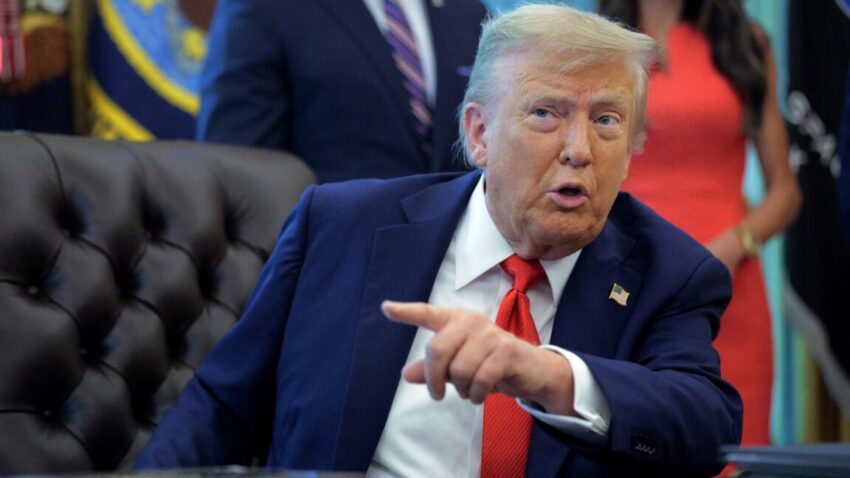
trump tries to block state ai laws President Trump has taken a significant step to counter state-level artificial intelligence (AI) regulations by issuing an executive order aimed at establishing a federal framework.
trump tries to block state ai laws
Executive Order Overview
On December 12, 2025, President Trump issued an executive order that instructs federal agencies to actively oppose state laws concerning artificial intelligence. This move comes in response to Congress’s failure to implement a national standard for AI regulation, which has left individual states to create their own laws. The executive order mandates that various federal agencies, including the Justice Department, Commerce Department, Federal Communications Commission, and Federal Trade Commission, undertake specific actions to combat what the administration views as excessive state regulations.
Key Provisions of the Order
Trump’s executive order emphasizes the need for a cohesive national standard that would prevent the fragmentation of AI regulations across states. The order states, “My Administration must act with the Congress to ensure that there is a minimally burdensome national standard—not 50 discordant State ones.” This highlights the administration’s concern that differing state laws could create confusion and hinder innovation in the AI sector.
Among the key directives in the order are:
- Federal agencies are instructed to identify and challenge state laws that conflict with the proposed national framework.
- The order specifies that state laws perceived as overly burdensome or ideologically biased should be scrutinized and potentially blocked.
- Agencies are tasked with developing guidelines that would ensure compliance with the national standard once it is established.
Concerns Over State Regulations
One of the primary motivations behind Trump’s executive order is the belief that state laws can impose ideological biases on AI models. The order cites a specific example from Colorado, where a law was enacted that the administration claims requires entities to embed ideological bias within their AI models. This assertion raises questions about the balance between ethical considerations in AI development and the potential for government overreach in regulating technology.
Implications for Innovation
The Trump administration argues that state laws could stifle innovation in the rapidly evolving field of artificial intelligence. By imposing varying regulations, states could create a patchwork of compliance requirements that complicate the development and deployment of AI technologies. This could lead to increased costs for businesses and potentially slow down advancements that could benefit society as a whole.
In the executive order, Trump states, “Until such a national standard exists, however, it is imperative that my Administration takes action to check the most onerous and excessive laws emerging from the States that threaten to stymie innovation.” This sentiment reflects a broader concern within the tech industry that regulatory uncertainty could deter investment and hinder progress.
Congressional Response
Despite Trump’s efforts, Congress has been hesitant to adopt a comprehensive federal approach to AI regulation. Recently, congressional Republicans chose not to include a Trump-backed proposal to block state AI laws in the National Defense Authorization Act (NDAA). This decision underscores the complexities and divisions within Congress regarding how best to regulate emerging technologies like AI.
Legislative Challenges
Senator Ted Cruz (R-Texas) has also been vocal about the need for federal legislation to address state AI laws. However, his attempts to garner support for punitive measures against states that enact such laws have not gained traction. The lack of consensus in Congress reflects the broader debate about the role of government in regulating technology and the potential consequences of overregulation.
Many lawmakers are concerned that a heavy-handed federal approach could stifle innovation and limit the ability of states to address specific local issues related to AI. This has led to a cautious approach among some legislators, who prefer to allow states the flexibility to experiment with their own regulations.
Stakeholder Reactions
The executive order has elicited a range of reactions from various stakeholders, including technology companies, civil rights organizations, and state governments. Many in the tech industry have expressed support for a unified national standard, arguing that it would simplify compliance and foster innovation. However, there are also concerns that the federal government could overreach in its efforts to regulate AI.
Technology Sector Perspectives
Major technology companies have generally welcomed the idea of a national framework for AI regulation. They argue that a consistent set of rules would help create a more predictable environment for investment and development. However, these companies also emphasize the importance of including ethical considerations in any regulatory framework.
Some tech leaders have voiced concerns that the executive order could lead to a one-size-fits-all approach that fails to account for the unique challenges posed by different AI applications. They advocate for a collaborative approach that involves input from industry experts, policymakers, and civil society to ensure that regulations are both effective and flexible.
Civil Rights and Advocacy Groups
On the other hand, civil rights organizations have raised alarms about the potential for federal overreach. They argue that the executive order could undermine state efforts to address issues such as bias and discrimination in AI systems. These groups contend that state regulations can serve as important safeguards against the misuse of technology and that a federal standard should not come at the expense of local accountability.
Future Considerations
As the debate over AI regulation continues, several key considerations will shape the landscape moving forward. The need for a balanced approach that fosters innovation while addressing ethical concerns will be paramount. Additionally, the role of public input in shaping regulations will be critical to ensure that diverse perspectives are considered.
Potential for Compromise
Given the complexities of AI technology and the varying needs of different states, there may be opportunities for compromise between federal and state authorities. Collaborative efforts could lead to a regulatory framework that allows for flexibility while still providing a baseline of protections against potential harms associated with AI.
Moreover, as AI continues to evolve, ongoing dialogue among stakeholders will be essential to adapt regulations to new developments in the field. This could involve regular assessments of the impact of existing laws and the need for updates to address emerging challenges.
Conclusion
President Trump’s executive order represents a significant intervention in the ongoing debate over AI regulation at the state and federal levels. While the push for a national standard aims to streamline compliance and foster innovation, it also raises important questions about the balance between federal oversight and state autonomy. As Congress grapples with these issues, the future of AI regulation remains uncertain, with stakeholders from various sectors closely monitoring developments.
Source: Original report
Was this helpful?
Explore more: More Big Tech & Platforms Tech News Blog
Last Modified: December 13, 2025 at 1:39 am
19 views