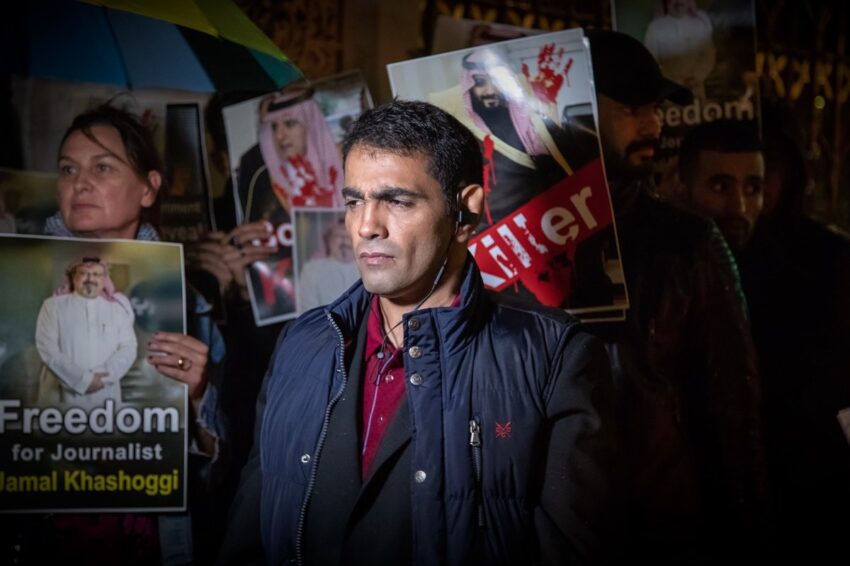
saudi satirist hacked with pegasus spyware wins A significant legal victory has been achieved by Ghanem Al-Masarir, a London-based satirist and human rights activist, who was awarded over £3 million by the London High Court after it determined that the Saudi government had unlawfully hacked his phone and was likely involved in a physical attack against him in London.
saudi satirist hacked with pegasus spyware wins
Background of the Case
Ghanem Al-Masarir is known for his sharp political satire that targets the Saudi regime, often using social media platforms to voice his criticism. His work has made him a prominent figure among activists advocating for human rights in Saudi Arabia. However, his activism has also made him a target for the Saudi government, which has a history of suppressing dissent and targeting critics both domestically and abroad.
The case against the Saudi government arose when Al-Masarir discovered that his phone had been compromised by Pegasus spyware, a sophisticated surveillance tool developed by the Israeli company NSO Group. This spyware is notorious for its ability to infiltrate smartphones, allowing attackers to access personal data, track communications, and even activate microphones and cameras without the user’s knowledge.
The Role of Pegasus Spyware
Pegasus spyware has been linked to numerous incidents of government surveillance against journalists, activists, and political dissidents worldwide. The software can be deployed through various means, including malicious links sent via text messages or emails. Once installed, it provides the attacker with extensive access to the victim’s device, raising significant concerns about privacy and security.
In Al-Masarir’s case, the spyware was reportedly used to monitor his communications and activities, which raised alarms about the extent to which the Saudi government was willing to go to silence dissent. The implications of such surveillance are profound, as it not only violates individual privacy rights but also poses a threat to freedom of expression and the safety of activists.
The Court’s Findings
The London High Court’s ruling was based on a thorough examination of the evidence presented by Al-Masarir’s legal team. The court found that the Saudi government had indeed hacked Al-Masarir’s phone and that this breach of privacy was part of a broader campaign to intimidate and silence him. The court also concluded that the Saudi authorities were likely involved in a physical attack against Al-Masarir in London, further underscoring the risks faced by those who challenge the regime.
Details of the Attack
While the specifics of the physical attack were not disclosed in detail, it was described as a targeted incident aimed at instilling fear in Al-Masarir. Such attacks are not uncommon for activists who oppose authoritarian regimes, and they highlight the lengths to which governments may go to suppress dissent. The court’s acknowledgment of this attack as part of the Saudi government’s tactics is significant, as it reinforces the notion that the regime will resort to violence to maintain control.
Legal Implications and Reactions
The ruling has far-reaching implications, both legally and politically. It sets a precedent for other activists and dissidents who may be facing similar threats from authoritarian regimes. The court’s decision to award damages not only compensates Al-Masarir for the invasion of his privacy and the physical attack but also serves as a warning to other governments about the consequences of unlawful surveillance and intimidation tactics.
Human rights organizations have welcomed the ruling, viewing it as a significant step toward holding oppressive regimes accountable for their actions. The case highlights the importance of legal recourse for individuals who are targeted for their beliefs and activism, and it may encourage others to come forward with similar claims against oppressive governments.
Stakeholder Reactions
Reactions to the court’s decision have been mixed. Human rights advocates have praised the ruling as a landmark victory for free expression and privacy rights. They argue that it sends a clear message that governments cannot act with impunity when it comes to silencing dissent. Organizations such as Amnesty International and Human Rights Watch have expressed their support for Al-Masarir and have called for greater international scrutiny of the Saudi government’s actions.
Conversely, the Saudi government has not publicly commented on the ruling, but it is likely to view the decision as an affront to its sovereignty. The regime has a history of denying allegations of human rights abuses and has often dismissed criticisms from foreign governments and organizations. This case may further strain relations between Saudi Arabia and the United Kingdom, particularly in the context of ongoing discussions about human rights and arms sales.
The Broader Context of Surveillance and Human Rights
The use of surveillance technology, particularly spyware like Pegasus, raises significant ethical and legal questions about privacy rights and state power. As technology continues to evolve, the capabilities of governments to monitor and control their citizens have expanded dramatically. This trend poses a challenge for democracies and raises concerns about the potential for abuse by authoritarian regimes.
In recent years, there has been growing awareness of the dangers posed by surveillance technologies. High-profile cases involving journalists and activists have brought attention to the issue, leading to calls for stricter regulations on the sale and use of such technologies. The Al-Masarir case is emblematic of these concerns, as it illustrates the real-world consequences of unchecked surveillance and the need for robust legal protections for individuals at risk.
Future Implications for Activists
The outcome of Al-Masarir’s case may embolden other activists to pursue legal action against governments that engage in unlawful surveillance and intimidation. It highlights the importance of international legal frameworks that protect human rights and provide avenues for redress. As more individuals come forward with similar claims, there may be increased pressure on governments to address these issues and implement reforms to safeguard privacy rights.
Furthermore, the ruling may prompt discussions among policymakers regarding the regulation of surveillance technologies. Governments may need to consider the ethical implications of allowing such tools to be used without oversight, particularly in contexts where they can be weaponized against dissenters. The balance between national security and individual rights will continue to be a contentious issue as technology advances.
Conclusion
The London High Court’s ruling in favor of Ghanem Al-Masarir marks a significant moment in the ongoing struggle for human rights and freedom of expression. It underscores the importance of legal accountability for governments that engage in unlawful surveillance and intimidation tactics. As activists around the world continue to face threats from authoritarian regimes, this case serves as a reminder of the need for vigilance in protecting individual rights and freedoms.
As the implications of this ruling unfold, it will be crucial to monitor how it influences the actions of both activists and governments. The fight for human rights is far from over, and cases like Al-Masarir’s highlight the ongoing challenges faced by those who dare to speak out against oppression.
Source: Original report
Was this helpful?
Explore more: Application Audit & Review More Cybersecurity Tech News
Last Modified: January 26, 2026 at 11:58 pm
9 views