rocket report spacex s next-gen booster fails SpaceX’s next-generation booster has encountered a setback, while Northrop Grumman’s Pegasus rocket secures a significant contract to support a NASA mission.
rocket report spacex s next-gen booster fails
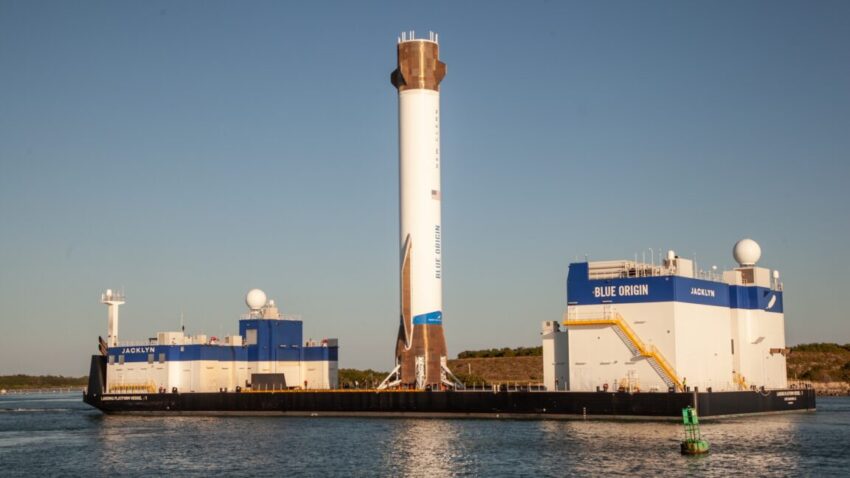
Blue Origin’s New Glenn Rocket Achieves Milestone
In recent weeks, Blue Origin has captured attention in the aerospace sector, particularly with its New Glenn rocket. On November 13, the company successfully launched and landed its second New Glenn rocket, marking a significant achievement for Jeff Bezos’ space venture. This success is particularly noteworthy as it demonstrates Blue Origin’s growing capabilities in the competitive space launch market.
Future Enhancements for New Glenn
Following the successful launch, Blue Origin unveiled a roadmap detailing plans to enhance the New Glenn rocket. The company aims to increase the vehicle’s performance by adding more engines, which will allow it to carry heavier payloads and expand its operational capabilities. This strategic move is expected to position New Glenn as a formidable competitor in the heavy-lift launch sector, which is currently dominated by companies like SpaceX and United Launch Alliance (ULA).
The enhancements are not just about increasing payload capacity; they also aim to improve reliability and reduce costs. Blue Origin’s focus on reusability, coupled with these upgrades, could make New Glenn a more attractive option for commercial satellite operators and government missions alike.
SpaceX’s Next-Generation Starship Progress
Meanwhile, in South Texas, SpaceX is making strides toward the first flight of its next-generation Starship rocket. The Starship program has been a focal point for SpaceX, as it aims to revolutionize space travel with a fully reusable spacecraft designed for missions to the Moon, Mars, and beyond.
Recent Developments
SpaceX has been conducting a series of tests and preparations at its Boca Chica launch site. These efforts are crucial as the company gears up for what could be a groundbreaking flight. The Starship is designed to carry both crew and cargo, and its successful launch could pave the way for future deep-space exploration missions.
However, the path to the first flight has not been without challenges. SpaceX has faced various technical hurdles, including issues related to the rocket’s engines and structural integrity. Despite these setbacks, the company remains optimistic about the Starship’s potential and is committed to overcoming these obstacles.
NASA’s Swift Observatory and Katalyst Space Technologies
In another significant development, Northrop Grumman’s Pegasus rocket has secured a rare contract from NASA. A startup named Katalyst Space Technologies was awarded a $30 million contract in August to develop a robotic rescue mission for NASA’s Neil Gehrels Swift Observatory, which has been operational since 2004.
The Importance of the Swift Observatory
The Swift Observatory is a unique instrument designed to study gamma-ray bursts, which are among the most powerful explosions in the universe. These bursts provide valuable insights into the nature of the cosmos, including the formation of black holes and the behavior of distant galaxies. However, the spacecraft lacks a propulsion system, making it vulnerable to atmospheric drag, which threatens its operational lifespan.
NASA has indicated that it is “racing against the clock” to boost Swift’s orbit and extend its operational life before it falls back to Earth. The mission aims to enhance the observatory’s capabilities and ensure that it can continue to contribute to our understanding of the universe.
Northrop Grumman’s Role
Katalyst Space Technologies has selected Northrop Grumman’s air-launched Pegasus XL rocket to deploy the rescue craft into orbit next year. The Pegasus XL is known for its unique air-launch system, which allows it to take off from a carrier aircraft at high altitude, providing several advantages over traditional ground launches.
This contract is significant not only for Katalyst and Northrop Grumman but also for NASA, as it highlights the agency’s commitment to innovative solutions for extending the life of critical scientific instruments. The collaboration between these entities underscores the importance of public-private partnerships in advancing space exploration and research.
Implications for the Space Industry
The developments surrounding Blue Origin, SpaceX, and Northrop Grumman illustrate the dynamic nature of the space industry. As companies continue to innovate and push the boundaries of technology, the landscape of space exploration is rapidly evolving.
Competitive Landscape
Blue Origin’s advancements with the New Glenn rocket pose a direct challenge to SpaceX’s Falcon 9 and Falcon Heavy rockets. The competition among these companies is likely to drive down launch costs and improve service reliability, benefiting commercial customers and government agencies alike.
Moreover, SpaceX’s ongoing efforts with the Starship program could redefine the parameters of space travel. If successful, Starship could facilitate missions to Mars and beyond, opening new frontiers for human exploration and habitation.
NASA’s Strategic Partnerships
The partnership between NASA and private companies like Katalyst and Northrop Grumman reflects a broader trend in the space sector. By leveraging the capabilities of startups and established aerospace firms, NASA can accelerate innovation and enhance its scientific missions. This approach not only extends the life of existing instruments but also fosters a more resilient and adaptable space exploration framework.
Looking Ahead
As we approach the end of the year, the space industry is poised for several exciting developments. With Blue Origin’s New Glenn rocket gaining momentum and SpaceX’s Starship on the verge of its first flight, the next few months will be critical for these companies. Additionally, the successful deployment of the rescue mission for the Swift Observatory could set a precedent for future collaborations between NASA and private enterprises.
The upcoming Thanksgiving holiday in the United States will pause the Rocket Report for a week, but the anticipation for the next edition is already building. The first week of December promises to bring more updates and insights from the ever-evolving world of space exploration.
As always, readers are encouraged to stay engaged and share their thoughts on the latest developments in the space industry. The landscape is changing rapidly, and staying informed is essential for anyone interested in the future of space travel.
Source: Original report
Was this helpful?
Explore more: DevOps Services More Cloud & DevOps Tech News
Last Modified: November 21, 2025 at 6:36 pm
20 views