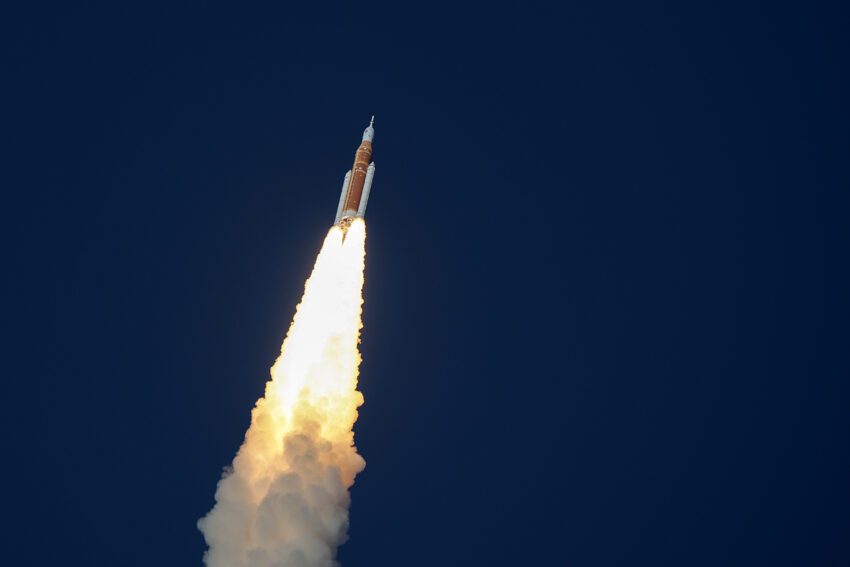
nasa launches four astronauts toward the moon NASA’s Artemis II mission has successfully launched four astronauts toward the Moon, marking a significant milestone in human space exploration after more than 50 years.
nasa launches four astronauts toward the moon
Overview of the Artemis II Mission
The Artemis II mission, which took place on Wednesday evening, is a pivotal part of NASA’s broader Artemis program, aimed at returning humans to the Moon and establishing a sustainable presence there by 2028. This mission is particularly notable as it represents the first crewed flight of the Space Launch System (SLS) rocket, a powerful vehicle designed to carry astronauts beyond low Earth orbit.
The four astronauts participating in this historic journey are Reid Wiseman, Victor Glover, Christina Koch, and Canadian astronaut Jeremy Hansen. They will travel aboard the Orion crew capsule, which is designed to support long-duration missions in deep space. The entire mission is expected to last approximately 10 days, during which the crew will orbit the Moon before returning to Earth.
Significance of the Artemis Program
The Artemis program is named after the Greek goddess of the Moon and twin sister of Apollo, symbolizing a new era of lunar exploration that builds upon the legacy of the Apollo missions of the 1960s and 1970s. The original Apollo program successfully landed humans on the Moon six times, with Apollo 11 in 1969 being the most famous, as Neil Armstrong and Buzz Aldrin became the first and second humans to set foot on the lunar surface.
NASA’s Artemis program aims to not only return humans to the Moon but also to establish a sustainable human presence there. This includes plans for lunar bases, scientific research, and the development of technologies that could facilitate future missions to Mars. The Artemis II mission is a crucial step in this direction, as it will test various systems and processes necessary for future lunar landings.
The Crew of Artemis II
Reid Wiseman
Reid Wiseman is a veteran astronaut with a background in the U.S. Navy. He has previously served as a flight engineer on the International Space Station (ISS) and brings extensive experience in both piloting and space operations to the Artemis II mission. Wiseman’s leadership skills will be vital as he navigates the complexities of a crewed lunar mission.
Victor Glover
Victor Glover is also an experienced astronaut, having flown on the SpaceX Crew-1 mission to the ISS. He is the first African American to serve as a pilot on a crewed spacecraft and has been an advocate for diversity in space exploration. Glover’s participation in Artemis II underscores NASA’s commitment to inclusivity in its missions.
Christina Koch
Christina Koch is known for her record-setting mission aboard the ISS, where she spent 328 days in space, the longest single spaceflight by a woman. Her expertise in science and engineering will be crucial for the Artemis II mission, as she will contribute to various scientific objectives during the flight.
Jeremy Hansen
Jeremy Hansen, representing the Canadian Space Agency, is the first Canadian astronaut to participate in a crewed lunar mission. His involvement highlights the international collaboration that is a hallmark of contemporary space exploration. Hansen’s experience as a fighter pilot and test pilot will be invaluable as the crew embarks on this historic journey.
The Journey Ahead
The Artemis II mission will involve a series of critical maneuvers as the crew travels to the Moon. After launch, the Orion capsule will enter a low Earth orbit before performing a series of burns to increase its velocity and trajectory toward the Moon. The mission will include a flyby of the lunar surface, allowing the crew to gather data and conduct observations that will inform future lunar landings.
During the 10-day mission, the astronauts will conduct various tests and experiments, including evaluating the performance of the Orion spacecraft and its systems in deep space. This data will be crucial for ensuring the safety and success of future missions, including Artemis III, which aims to land astronauts on the Moon.
Challenges and Delays
The Artemis II mission faced several challenges and delays leading up to its launch. Originally scheduled for earlier this year, the mission was postponed due to technical issues and the need for additional testing of the SLS rocket and Orion capsule. These delays are not uncommon in space exploration, where safety and reliability are paramount.
NASA has emphasized the importance of thorough testing and validation of all systems before embarking on crewed missions. The agency’s commitment to safety reflects lessons learned from past missions, including the Apollo program and the Space Shuttle program, both of which faced their own challenges.
Implications for Future Space Exploration
The successful launch of Artemis II has significant implications for the future of space exploration. It not only marks a return to crewed lunar missions but also sets the stage for a new era of exploration beyond Earth. The data and experience gained from this mission will inform NASA’s plans for future missions to Mars and beyond.
Moreover, the Artemis program aims to foster international collaboration in space exploration. By involving international partners like the Canadian Space Agency, NASA is promoting a cooperative approach to exploring the Moon and beyond. This collaboration is essential for addressing the complex challenges of deep space exploration, including resource management, scientific research, and the development of sustainable technologies.
Public Interest and Support
The Artemis II mission has generated significant public interest and support, reflecting a renewed enthusiasm for space exploration. Many people are eager to witness humanity’s return to the Moon and the advancements in technology that accompany it. NASA has been proactive in engaging the public through educational initiatives, outreach programs, and live broadcasts of mission events.
Social media platforms and online streaming services have allowed millions to follow the mission in real-time, fostering a sense of community among space enthusiasts. This engagement is crucial for inspiring the next generation of scientists, engineers, and explorers who will continue the legacy of space exploration.
Conclusion
The successful launch of the Artemis II mission marks a historic moment in space exploration, as NASA takes a significant step toward returning humans to the Moon. With a talented crew and a robust spacecraft, the mission is set to pave the way for future lunar landings and deeper space exploration. As we look ahead, the Artemis program promises to not only expand our understanding of the Moon but also to inspire future generations to reach for the stars.
Source: Original report
Was this helpful?
Explore more: More General Technology Tech News Blog
Last Modified: April 2, 2026 at 2:39 pm
8 views