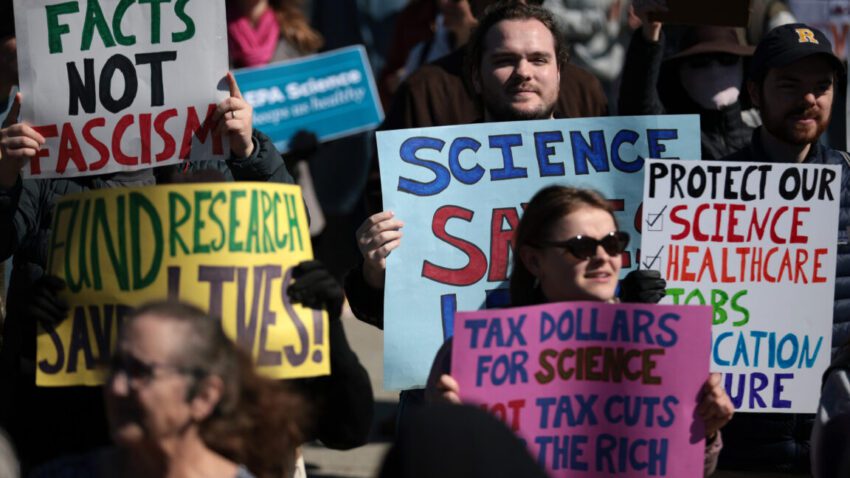
editorial it s time to step up The Office of Management and Budget’s recent proposal could significantly alter the landscape of scientific research funding in the United States.
editorial it s time to step up
Overview of the Proposed Rule
In late May, the Office of Management and Budget (OMB) introduced a new rule that aims to reshape how federal grants are managed, particularly those that underpin the majority of scientific research in the U.S. This proposal has raised alarms among scientists, researchers, and advocates for evidence-based policy, as it could prioritize political agendas over scientific merit in the allocation of funding.
Implications for Scientific Research
If formalized, this rule would fundamentally shift the criteria by which grants are awarded. Political priorities could become the primary determinant for funding decisions, effectively sidelining the expertise and recommendations of scientific professionals. This shift raises several critical concerns:
- Political Influence: The potential for political whims to dictate funding decisions could undermine the integrity of scientific research. Researchers might find their projects at risk of cancellation or alteration based on the prevailing political climate rather than their scientific validity.
- Bureaucratic Hurdles: The introduction of new layers of bureaucracy could complicate essential scientific activities. Researchers may face increased difficulty in publishing their findings or attending conferences, which are vital for collaboration and dissemination of knowledge.
- Legal Challenges: Unlike executive orders, which can be more easily challenged in court, this proposed rule would carry the force of law. This makes it significantly more challenging for stakeholders to contest decisions made under this framework.
Public Feedback Process
Before this proposal can be enacted, it must undergo a public feedback process. This step is crucial, as it allows stakeholders—scientists, educators, and the general public—to voice their concerns and potentially influence the final version of the rule. The deadline for submitting feedback is approaching quickly, set for Monday, July 13. This timeline emphasizes the urgency for those invested in the scientific community to engage in the process.
Importance of Public Engagement
Public engagement in this process is not merely a formality; it is an essential component of democratic governance. The scientific community, along with the general public, must advocate for the importance of evidence-based decision-making in research funding. Here are several reasons why participation is vital:
- Preservation of Scientific Integrity: Engaging in the feedback process can help safeguard the integrity of scientific research. By voicing concerns, stakeholders can push back against potential political interference in research funding.
- Advocacy for Evidence-Based Policy: Public feedback can serve as a reminder of the importance of basing policy decisions on scientific evidence rather than political expediency. This is particularly crucial in an era where misinformation can easily spread.
- Community Mobilization: The feedback process can galvanize the scientific community and its supporters, fostering a sense of solidarity and shared purpose. A united front can amplify the message that science should remain free from political manipulation.
Historical Context
To understand the implications of this proposed rule, it is essential to consider the historical context of federal funding for scientific research. Over the decades, federal grants have played a pivotal role in advancing knowledge across various fields, from medicine to environmental science. The National Institutes of Health (NIH) and the National Science Foundation (NSF) are two prime examples of agencies that have historically funded groundbreaking research.
However, there have been instances in the past where political considerations have influenced funding decisions. For example, during the early 2000s, funding for certain areas of research, such as stem cell research, faced significant restrictions due to political opposition. These historical precedents serve as a cautionary tale about the potential consequences of allowing political priorities to dictate scientific funding.
Potential Consequences of the Proposed Rule
The proposed rule could have far-reaching consequences for the future of scientific research in the U.S. Here are some potential outcomes:
- Stifling Innovation: By prioritizing political considerations over scientific merit, innovative research projects that do not align with current political agendas may struggle to secure funding. This could hinder progress in critical areas such as climate change, public health, and technology.
- Brain Drain: Researchers may choose to relocate to countries with more stable and supportive funding environments. This brain drain could lead to a loss of talent and expertise in the U.S., ultimately weakening the nation’s scientific standing on the global stage.
- Public Trust Erosion: If the public perceives that scientific research is being manipulated for political gain, trust in scientific institutions could erode. This could have long-term implications for public support of science and research funding.
Reactions from the Scientific Community
The scientific community has responded with concern and urgency regarding the proposed rule. Many researchers and organizations have voiced their apprehensions, emphasizing the importance of maintaining the independence of scientific research from political influence. Prominent scientific organizations have issued statements urging the OMB to reconsider the implications of the rule.
Statements from Key Stakeholders
Several key stakeholders have publicly commented on the proposed rule:
- American Association for the Advancement of Science (AAAS): The AAAS has expressed deep concern about the potential for political interference in research funding, emphasizing that scientific decisions should be based on merit and evidence.
- National Academy of Sciences: The National Academy has highlighted the importance of preserving the integrity of the scientific process, warning that the proposed rule could undermine public trust in science.
- Individual Researchers: Many scientists have taken to social media and professional networks to share their fears about the impact of the rule on their work and the broader scientific community.
Conclusion: The Call to Action
The proposed rule from the OMB represents a significant shift in how scientific research funding could be managed in the United States. As the deadline for public feedback approaches, it is imperative for those invested in the scientific community to step up and voice their opinions. Engaging in this process is not just about protecting individual research projects; it is about safeguarding the future of scientific inquiry and ensuring that evidence-based decision-making remains at the forefront of policy.
In a time when misinformation and political agendas threaten the integrity of science, the scientific community must unite and advocate for the principles that underpin rigorous research. The upcoming public feedback period is an opportunity to influence the direction of federal funding for science and to ensure that the voices of experts are heard and valued.
Source: Original report
Was this helpful?
Explore more: More General Technology Tech News Blog
Last Modified: July 2, 2026 at 6:37 pm
9 views