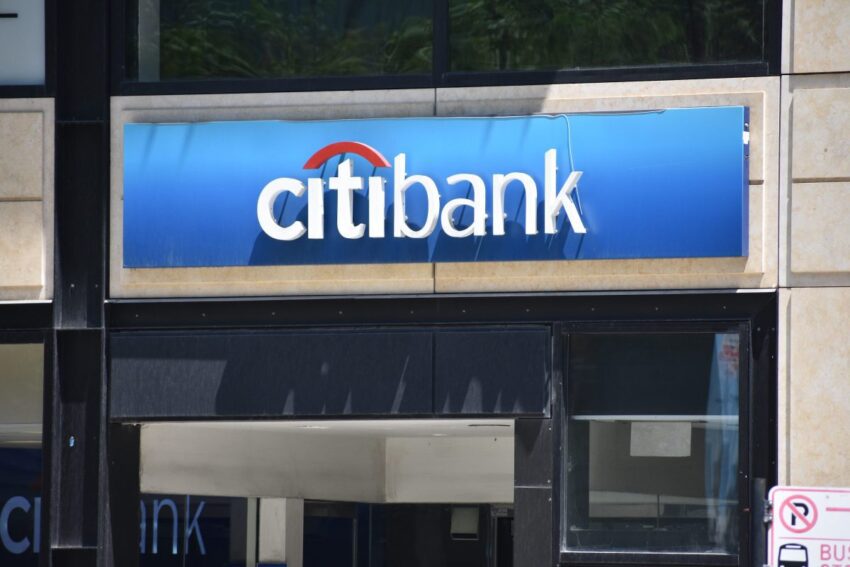
Citibank is the latest major U.S. lender to tell customers that if they hand banking access to third-party AI tools, they will be the ones on the hook when something goes wrong — including cases where the tools are hacked. The move adds to a growing wave of bank warnings as AI agents push deeper into personal finance, where convenience and automation come with new security and liability questions.
Citibank updates its rules for AI agents
Citi, the third-largest commercial bank in the United States, changed its terms of service this week to make its position clear. The bank says customers who use outside AI tools for personal finance are responsible for the outcomes, even when those tools act on the customer’s behalf in ways the customer did not intend.
According to the company, the update is meant to clarify the risks of sharing banking credentials or granting third-party AI systems access to accounts. “We recently updated our Online User Agreement to provide greater clarity about those risks and to reinforce that customers who choose to grant account access to third-party AI agents are responsible for activities conducted through those agents,” a Citi spokesperson told TechCrunch.
What banks mean by “third-party AI tools”
The tools in question can range from general-purpose frontier models to apps built specifically for personal finance. In some cases, users can give an AI agent login credentials for bank accounts and other financial portals so the system can review spending, offer advice, pay bills, or even handle transactions.
That is exactly the use case many AI startups want to promote. The pitch is straightforward: let software watch your financial life, identify savings opportunities, and take care of routine tasks. Banks, however, are signaling that once customers hand over the keys, the institutions will not absorb the fallout if the system makes a bad move.
Responsibility shifts to the customer if the AI is compromised
Citi’s revised language goes beyond saying customers are responsible for transactions their agents initiate. It also says the customer may be responsible if an AI tool leaks credentials or is hacked, and attackers then use that access to move money or otherwise manipulate the account.
That is a significant shift for consumers because it extends liability into scenarios where the direct cause may be a breach of the AI service itself. In practical terms, the bank is warning that users who connect outside agents to financial accounts are accepting a risk that could be difficult to reverse after the fact.
Other banks are following the same general playbook. JPMorgan and Bank of America, the two largest banks in the country, announced similar policies last month. PNC, the eighth-largest bank, changed its terms today.
More banks are drawing a line around AI access
Citi is not alone in trying to define the rules before AI agents become a common layer between customers and financial institutions. Citizens, another major bank, also emailed customers this week with a warning that they are responsible for what their AI assistant does, according to an email seen by TechCrunch.
The common thread is clear: banks are not eager to be the backstop for automation they do not control. Whether the activity is intentional or accidental, lenders appear to be saying that customers who authorize an AI assistant to act in their financial accounts are accepting responsibility for the assistant’s behavior.
- JPMorgan and Bank of America announced similar policies last month.
- PNC updated its terms today.
- Citi’s policy now explicitly covers cases where an AI tool is hacked or leaks credentials.
- Citizens warned customers they are responsible for actions taken by their AI assistant.
Why banks are uneasy about AI in personal finance
There are two broad reasons for the pushback: security and control. On the security side, giving an AI system direct access to financial accounts creates another place where credentials can be stolen, misused, or mishandled. On the business side, banks also see AI agents as a potential threat to the way they make money.
If consumers begin relying on AI systems to compare accounts, avoid unnecessary fees, or optimize where their money sits, banks could lose some of the margin they earn from low-interest deposits and related products. The prospect of AI tools steering people away from costly financial habits has already made markets uneasy in some cases, and lenders are unlikely to let outside platforms own that customer relationship without a fight.
Citi’s terms do note one important distinction: if customers use AI agents provided by Citi itself, they can do so without worrying about the same additional liability. That suggests the bank is comfortable with automation when it is inside its own ecosystem, but not when control is handed to outside services.
Some AI companies are already limiting what their tools can do
The banking backlash comes even as AI companies continue to explore personal finance products. Anthropic’s recently launched personal finance tool is a notable example of a more cautious approach: it is explicitly described as “read-only” and “can’t move, manage, or invest your money.”
That design choice reflects the broader tension in the market. Consumers may want automation that saves time and makes better decisions, but banks and financial platforms are wary of giving an AI system authority to move real money around. The more capability an agent gets, the more liability and trust problems it creates.
A familiar pattern as AI spreads into everyday services
The dispute over banking access fits a pattern seen across multiple industries. AI labs often promise that agents will reshape how people interact with services, but the service providers themselves frequently respond with caution, restrictions, or outright resistance. That has played out in sectors ranging from ride-hailing to food delivery, where companies want to preserve control over customer relationships and operational risk.
How those negotiations resolve will matter well beyond banking. If AI agents become a mainstream interface for managing money, the industry will have to settle questions about authorization, reimbursement, fraud, and accountability. For now, banks are making their answer simple: if you connect an outside AI agent to your account, you are taking the risk.
Source: Original report
Was this helpful?
Explore more: Application Audit & Review More AI & Automation Tech News
Last Modified: November 18, 2026 at 10:32 pm
0 views