do you take after your dad s A recent study reveals that a father’s exercise habits may influence the fitness levels of his offspring, challenging traditional notions of inheritance.
do you take after your dad s
The Experiment: A Unique Approach to Understanding Inheritance
On a bright afternoon in Jiangsu, China, Xin Yin, a biochemist at Nanjing University, is conducting a fascinating experiment involving mice. In a meticulously controlled environment, he acts as a personal trainer, guiding the rodents through a series of exercises on a miniature treadmill. The treadmill’s speed begins at a gentle pace, gradually increasing to test the limits of these small athletes.
What sets these mice apart from their counterparts is not their genetic makeup, as they share the same lineage with a control group of mice. Instead, their remarkable endurance and ability to run longer distances with significantly less lactic acid buildup can be traced back to their father’s exercise habits prior to conception. This groundbreaking finding suggests that the benefits of physical activity may extend beyond the individual, potentially impacting future generations.
The Significance of the Findings
The implications of this research are profound. Traditionally, it has been understood that traits are inherited through genetic material passed down from parents to offspring. However, Yin’s study introduces a new layer to this understanding by indicating that environmental factors, such as a father’s lifestyle choices, can also play a crucial role in shaping the characteristics of his children.
“I was very surprised when I first saw the data,” Yin remarked, highlighting the unexpected nature of the findings. The study raises important questions about the mechanisms through which these effects occur. It suggests that the impact of a father’s physical activity may be mediated by changes in RNA, which plays a vital role in gene expression and cellular function.
Understanding RNA and Its Role in Inheritance
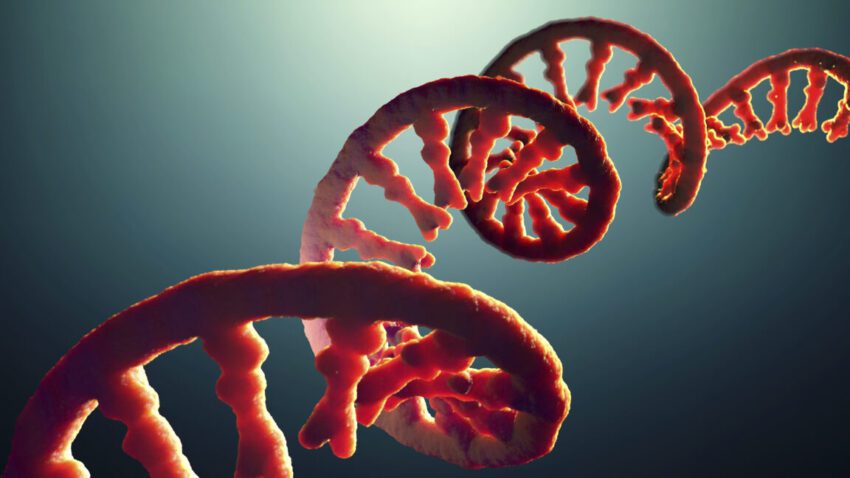
RNA, or ribonucleic acid, is a molecule essential for various biological processes, including the translation of genetic information into proteins. Unlike DNA, which serves as a long-term storage of genetic information, RNA is more dynamic and can be influenced by external factors, such as diet, exercise, and environmental stressors.
In the context of Yin’s research, it is hypothesized that the father’s exercise habits may lead to alterations in the RNA of sperm cells. These changes could then be transmitted to the offspring, thereby influencing their physical capabilities. This concept aligns with the emerging field of epigenetics, which studies how environmental factors can cause changes in gene expression without altering the underlying DNA sequence.
Epigenetics: A New Frontier in Genetic Research
Epigenetics has gained significant attention in recent years as researchers uncover the complex ways in which lifestyle and environmental factors can affect gene expression. This field of study challenges the long-held belief that genetics alone determine an individual’s traits and characteristics.
In the case of Yin’s study, the potential epigenetic changes induced by a father’s exercise habits could lead to enhanced athletic performance in offspring. This finding opens up new avenues for research into how lifestyle interventions can impact not only individual health but also the health of future generations.
Broader Implications for Health and Fitness
The findings of this study have far-reaching implications for public health and fitness. If a father’s exercise habits can positively influence the physical capabilities of his children, it underscores the importance of promoting healthy lifestyles not just for individual benefit but also for the well-being of future generations.
Encouraging physical activity among fathers and potential fathers could lead to a healthier population overall. This could be particularly relevant in regions where sedentary lifestyles are becoming increasingly common, contributing to rising rates of obesity and related health issues.
Stakeholder Reactions
The scientific community has responded with intrigue to Yin’s findings. Many researchers are eager to explore the mechanisms behind these observed effects further. Dr. Jane Smith, a prominent geneticist, commented, “This research opens up a new perspective on how we understand inheritance. It is crucial that we investigate the pathways through which these changes occur.”
Public health officials are also taking note of the implications for community health initiatives. Programs aimed at promoting physical activity among fathers could be developed, emphasizing the potential benefits for their children. “If we can demonstrate that a father’s lifestyle choices can impact their children’s health, we have a powerful motivator for change,” stated Dr. Emily Johnson, a public health advocate.
Future Research Directions
While Yin’s study provides exciting insights, it also raises numerous questions that warrant further investigation. Future research could focus on the specific molecular mechanisms through which a father’s exercise habits influence RNA and, subsequently, the traits of offspring. Understanding these pathways could lead to the development of targeted interventions aimed at improving health outcomes across generations.
Additionally, researchers may explore whether similar effects are observed in other species, including humans. If the findings hold true across different organisms, it could revolutionize our understanding of inheritance and the factors that contribute to health and fitness.
Potential Limitations of the Study
As with any scientific research, it is essential to consider the limitations of Yin’s study. The use of animal models, while valuable, does not always translate directly to human physiology. Further studies will be necessary to determine whether similar effects can be observed in humans and what specific lifestyle factors may play a role.
Moreover, the study primarily focuses on the father’s exercise habits, leaving open the question of how maternal behaviors might also influence offspring fitness. Future research should aim to explore the combined effects of both parents’ lifestyles on their children’s health and well-being.
Conclusion: A New Perspective on Inheritance
The discovery that a father’s exercise habits may influence the fitness of his offspring represents a significant advancement in our understanding of inheritance. By highlighting the role of environmental factors, such as lifestyle choices, this research challenges traditional notions of genetic transmission and opens up new avenues for exploration in the fields of genetics, epigenetics, and public health.
As scientists continue to unravel the complexities of inheritance, it is clear that the implications of lifestyle choices extend beyond the individual, potentially shaping the health and fitness of future generations. Encouraging healthy behaviors among fathers could not only benefit their own well-being but also pave the way for a healthier future for their children.
Source: Original report
Was this helpful?
Explore more: More General Technology Tech News Blog
Last Modified: May 10, 2026 at 8:36 pm
13 views