
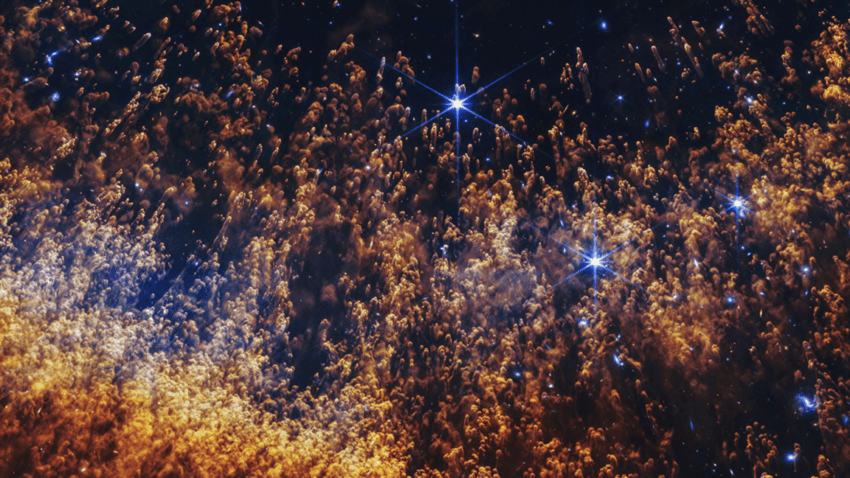
webb reveals a planetary nebula with phenomenal A recent observation from the James Webb Space Telescope has unveiled the Helix Nebula in unprecedented detail, showcasing its stunning beauty and intricate structures.
webb reveals a planetary nebula with phenomenal
Overview of the Helix Nebula
The Helix Nebula, often referred to as the “Eye of Sauron” due to its striking resemblance to the fictional character from J.R.R. Tolkien’s “The Lord of the Rings,” is one of the most recognized planetary nebulae in the night sky. Located approximately 655 light-years from Earth, it is one of the closest bright nebulae to our Solar System. This proximity allows astronomers to study it with remarkable clarity, making it a favorite subject for both amateur and professional astrophotographers.
Characteristics of the Helix Nebula
Planetary nebulae, despite their misleading name, are not related to planets. Instead, they are formed from the remnants of stars that have reached the end of their life cycles. The Helix Nebula is the result of a star similar to our Sun, albeit slightly larger, shedding its outer layers. This process occurs during the late stages of stellar evolution when the star exhausts its nuclear fuel.
As the star ages, it expands and eventually ejects a significant amount of gas and dust into space. This ejected material forms a shell around the dying star, creating a visually stunning nebula that can last for thousands of years. The Helix Nebula is particularly notable for its bright colors, intricate filaments, and complex structures, which have been captured in various images over the years.
James Webb Space Telescope’s Contribution
The James Webb Space Telescope (JWST), launched in December 2021, has revolutionized our understanding of the universe by providing unprecedented views of celestial objects. Its advanced infrared capabilities allow it to observe phenomena that are often obscured by dust and gas, revealing details that were previously hidden from view.
New Insights into the Helix Nebula
Recent observations of the Helix Nebula by the JWST have yielded stunning new images that highlight its intricate structure and vibrant colors. The telescope’s ability to capture light in the infrared spectrum has revealed features that were not visible in previous observations made by the Hubble Space Telescope and other instruments.
One of the most striking aspects of the new images is the clarity with which the nebula’s filaments and knots of gas are displayed. The JWST has captured the nebula’s complex layers, showcasing the interplay of light and shadow that gives the Helix its dramatic appearance. The colors seen in the images are a result of the different elements present in the nebula, including hydrogen, oxygen, and nitrogen, each emitting light at specific wavelengths.
Comparative Observations
While the Hubble Space Telescope has provided iconic images of the Helix Nebula over the years, the JWST’s observations represent a significant leap forward in our understanding of this celestial object. Hubble’s images, taken primarily in visible light, have captured the general shape and color of the nebula but lacked the depth and detail that infrared observations can provide.
For instance, Hubble’s images often show the Helix Nebula as a bright, colorful object, but the JWST has revealed the underlying structure of the gas and dust, providing a more comprehensive view of its composition and dynamics. This enhanced clarity allows astronomers to study the physical processes at play within the nebula, offering insights into the lifecycle of stars and the formation of planetary nebulae.
Scientific Implications
The observations made by the JWST have far-reaching implications for our understanding of stellar evolution and the life cycles of stars. By studying the Helix Nebula in such detail, astronomers can gain insights into the processes that govern the formation and evolution of planetary nebulae, as well as the chemical enrichment of the interstellar medium.
Understanding Stellar Evolution
Planetary nebulae like the Helix are crucial for understanding the later stages of stellar evolution. As stars shed their outer layers, they contribute to the chemical enrichment of the galaxy, providing the building blocks for future generations of stars and planets. The study of these nebulae allows scientists to trace the flow of elements through the universe, shedding light on the processes that lead to the formation of new stars and planetary systems.
Moreover, the Helix Nebula serves as a laboratory for studying the dynamics of gas and dust in the late stages of stellar evolution. The intricate structures observed in the JWST images can help astronomers understand how these materials interact and evolve over time, providing a clearer picture of the life cycle of stars.
Impacts on Astrobiology
The insights gained from studying the Helix Nebula also have implications for astrobiology. Understanding the processes that lead to the formation of stars and planets is essential for assessing the potential for life elsewhere in the universe. The chemical elements produced in planetary nebulae are the same elements that make up planets and, ultimately, life as we know it.
By studying the Helix Nebula and similar objects, scientists can gain a better understanding of the conditions necessary for life to emerge. This knowledge can inform the search for habitable exoplanets and help refine our models of planetary formation.
Reactions from the Scientific Community
The release of new images from the JWST has been met with enthusiasm from the scientific community. Astronomers and astrophysicists have expressed excitement about the potential for new discoveries that these observations may bring. The clarity and detail of the images have sparked discussions about the implications for our understanding of stellar evolution and the formation of planetary nebulae.
Community Engagement
Public interest in the Helix Nebula and the JWST’s findings has also been significant. The stunning visuals captured by the telescope have captivated audiences worldwide, inspiring a new generation of astronomers and space enthusiasts. Educational institutions and science communicators are leveraging these images to engage the public in discussions about astronomy, the universe, and the importance of space exploration.
Conclusion
The James Webb Space Telescope’s recent observations of the Helix Nebula have provided a breathtaking view of this iconic celestial object, revealing details that were previously hidden from view. As one of the closest bright nebulae to Earth, the Helix Nebula serves as a vital tool for understanding the processes that govern stellar evolution and the formation of planetary nebulae.
As scientists continue to analyze the data collected by the JWST, we can expect to gain deeper insights into the lifecycle of stars and the chemical enrichment of the universe. The Helix Nebula stands as a testament to the beauty and complexity of the cosmos, reminding us of the wonders that await discovery in the vast expanse of space.
Source: Original report
Was this helpful?
Explore more: More General Technology Tech News Blog
Last Modified: January 21, 2026 at 4:36 pm
12 views

![Apple TV, iTunes Store, App Store, Xcode Cloud, App Store Connect down for some users [U: Fixed] | Hashe Computer Solutions (Pvt) Ltd.](https://www.hashe.com/wp-content/smush-webp/2026/01/biggest-internet-outages-2.jpg.webp "Apple TV, iTunes Store, App Store, Xcode Cloud, App Store Connect down for some users [U: Fixed] 3")












