wear marks suggest neanderthals made ocher crayons Recent findings suggest that Neanderthals in Crimea created and used ocher crayons approximately 50,000 years ago, revealing a previously underappreciated aspect of their cognitive and artistic capabilities.
wear marks suggest neanderthals made ocher crayons
Discovery of Neanderthal Crayons
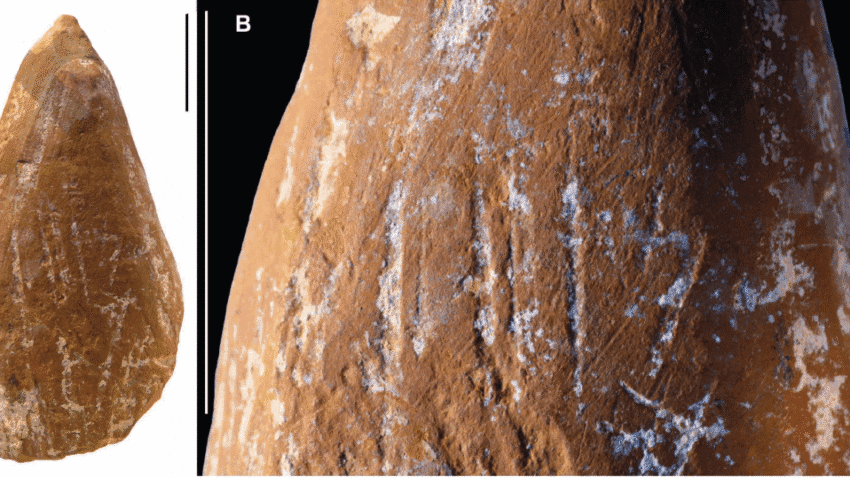
Archaeological excavations at ancient rock shelters in Crimea have led to the discovery of two chunks of ocher that researchers believe were used as crayons by Neanderthals. These artifacts were unearthed from sediment layers dated to approximately 47,000 and 46,000 years ago. The ocher pieces exhibited clear signs of intentional shaping and repeated resharpening, indicating they were not merely discarded stones but tools crafted for a specific purpose. A third piece of ocher was found to have been meticulously carved with parallel lines, further supporting the notion that these early humans engaged in artistic expression.
Significance of Ocher
Ocher is an iron-rich mineral that has been utilized by various cultures throughout history for a multitude of purposes. Its vibrant colors, ranging from red to yellow, make it an ideal pigment for artistic endeavors. Beyond its aesthetic applications, ocher has practical uses, including:
- Tanning animal hides
- Mixing with resins to create adhesives for tool hafting
- Repelling insects
- Preventing infection
The versatility of ocher makes it a valuable resource for Neanderthals, who likely exploited its properties for both functional and artistic applications. The recent findings from Crimea add to the growing body of evidence that Neanderthals possessed a level of creativity and cognitive sophistication previously underestimated.
Archaeological Context
The rock shelters where these artifacts were found are located near the modern city of Bilohirsk in Crimea, a region that was inhabited by Neanderthals between 100,000 and 33,000 years ago. These shelters provided a natural refuge for early humans, allowing them to survive in a challenging environment. Archaeologists have unearthed numerous artifacts from these sites, including tools, animal remains, and ocher chunks, which collectively paint a picture of Neanderthal life in this region.
Methods of Analysis
To gain insights into the use of ocher by Neanderthals, researchers led by D’Errico employed advanced techniques such as X-ray fluorescence and scanning electron microscopy. These methods allowed them to analyze 16 ocher chunks in detail, revealing how Neanderthals processed the mineral to extract its pigment. The analysis showed that many of the ocher pieces had flakes knocked out or grooves gouged into their surfaces, indicating that they were intentionally modified for specific uses.
Implications of the Findings
The discovery of Neanderthal crayons has significant implications for our understanding of these ancient humans. Traditionally viewed as primitive and lacking in artistic expression, Neanderthals are now being recognized for their cognitive abilities and creativity. The ability to create tools for artistic purposes suggests a level of abstract thinking that was previously attributed only to modern humans.
Artistic Expression in Prehistoric Cultures
The use of ocher for artistic purposes is not unique to Neanderthals. Various prehistoric cultures have employed similar materials to create art, including cave paintings and body decoration. The findings in Crimea contribute to a broader narrative about the role of art in human evolution. Artistic expression may have served not only as a means of communication but also as a way to foster social cohesion among groups.
Comparative Analysis with Other Neanderthal Sites
Similar discoveries at other archaeological sites have begun to reshape our understanding of Neanderthal behavior. For instance, ocher has been found in various locations across Europe, often associated with evidence of symbolic behavior. Sites such as Blombos Cave in South Africa and El Castillo Cave in Spain have yielded ocher artifacts, suggesting that the use of this material for artistic and symbolic purposes was widespread among early human populations.
Neanderthals vs. Modern Humans
The question of whether Neanderthals were capable of the same level of artistic expression as modern humans remains a topic of debate among researchers. Some argue that the cognitive abilities of Neanderthals were comparable to those of early Homo sapiens, while others maintain that significant differences existed. The discovery of ocher crayons in Crimea adds weight to the argument that Neanderthals were not merely primitive beings but rather complex individuals capable of creativity and innovation.
Reactions from the Scientific Community
The findings have sparked interest and discussion within the scientific community. Many researchers express excitement over the implications of the discovery, emphasizing the need for further studies to explore the cognitive and cultural capabilities of Neanderthals. Some have called for a reevaluation of how we interpret Neanderthal artifacts, suggesting that future research should focus on understanding the symbolic meanings behind their use of materials like ocher.
Future Research Directions
As the field of paleoanthropology continues to evolve, researchers are increasingly employing interdisciplinary approaches to study ancient human behavior. The use of advanced imaging techniques and chemical analyses has opened new avenues for understanding the complexities of prehistoric life. Future research may focus on:
- Comparative studies of ocher use across different Neanderthal sites
- Investigating the social and cultural contexts of artistic expression
- Exploring the cognitive abilities of Neanderthals through the lens of their material culture
Conclusion
The discovery of ocher crayons used by Neanderthals in Crimea marks a significant milestone in our understanding of these ancient humans. The evidence suggests that they engaged in artistic practices, challenging long-held perceptions of their cognitive and cultural capabilities. As archaeological research continues to uncover new findings, the narrative surrounding Neanderthals is likely to evolve, revealing a more nuanced picture of their lives and abilities.
Source: Original report
Was this helpful?
Explore more: More General Technology Tech News Blog
Last Modified: October 31, 2025 at 9:37 pm
19 views