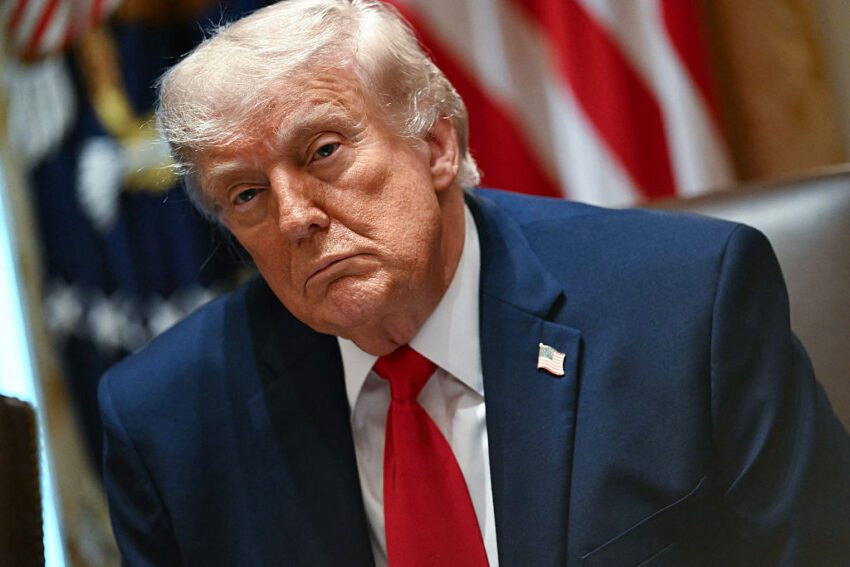
President Donald Trump has signed a narrower executive order on artificial intelligence oversight after pushback from industry figures who argued that an earlier version went too far. The order, signed Tuesday, gives the federal government a limited opportunity to review certain advanced AI models before they are released to the public, while stopping short of any mandatory approval process. It is the latest sign that the administration wants to increase visibility into frontier AI systems without imposing a licensing regime that companies say could slow development.
What the new order does
Under the order, certain AI companies are asked to voluntarily submit new models to the government for testing or evaluation 30 days before public release. That timeline is shorter than a previous draft, which had called for a voluntary review window of up to 90 days. According to the source material, AI industry insiders had been pushing for something closer to a two-week window, making the final 30-day provision a compromise between the more ambitious draft and the shorter period some companies wanted.
The language in the published order is careful to avoid creating any compulsory pre-release gate. It states: “Nothing in this section shall be construed to authorize the creation of a mandatory governmental licensing, preclearance, or permitting requirement for the development, publication, release, or distribution of new AI models, including frontier models.” That wording matters because it makes clear the administration is not, at least in this document, establishing a formal approval system for model launches.
The order therefore appears designed to give officials an earlier look at powerful models while preserving the industry’s ability to ship products without having to wait for government signoff. In practical terms, that means the policy depends on voluntary cooperation from companies developing the most advanced systems.
Industry pressure changed the timeline
Trump had been scheduled to sign a more demanding version of the order in late May, but that plan was delayed after industry pushback. The source material says the objections included criticism from venture capitalist and former White House AI czar David Sacks, who was among the people arguing against a more restrictive approach. At the time of the delay, Trump said he did not want to do anything that would get in the way of AI firms leading against China.
That statement captures one of the central tensions around AI policy in Washington: how to balance national security concerns and public oversight against the desire to keep U.S. firms moving quickly in a global race. The administration’s new order suggests Trump is still interested in some level of government review, but only in a form that avoids the industry’s most feared outcome — a licensing or preclearance framework.
Trump had also planned to sign the executive order in a more public setting, with a number of Silicon Valley CEOs in attendance. Instead, he signed the current version privately. The source material does not specify why the signing was moved behind closed doors, but the contrast with the earlier plan underscores how the order was revised and how contentious the issue became before final issuance.
A narrower approach to frontier model review
The idea of asking companies to submit models before release reflects growing concern about what increasingly capable AI systems can do and how quickly they can be deployed. The executive order is framed around “powerful AI models,” and the quoted language specifically references “frontier models,” suggesting that the policy is aimed at the most advanced systems rather than consumer AI tools in general.
However, the key feature of the order is its voluntary nature. The federal government may review or test models submitted by companies, but the order does not force developers to participate. That limitation is significant because it means the government’s ability to inspect emerging systems will depend on whether companies decide the process is worth engaging with.
The order’s 30-day review window also signals an attempt to set a default expectation for advance notice. It gives the government more lead time than the shorter two-week period some in the industry preferred, while still moving away from the 90-day version that had originally been discussed. In effect, the administration appears to be using timing as a middle ground: enough time for testing and evaluation, but not so much that it becomes a de facto slowdown mechanism.
DOJ gets a separate AI enforcement directive
Beyond model review, the executive order assigns the Department of Justice a broader enforcement role. It directs DOJ to treat crimes such as AI-assisted hacking and unauthorized access as a high-priority enforcement area. That part of the order reflects a different concern than model oversight: not what AI systems can do when released, but how they may be used to facilitate cybercrime and other unauthorized activity.
The mention of AI-assisted hacking suggests the administration wants law enforcement agencies to pay closer attention to cases where AI tools may lower the barrier to cyberattacks. Likewise, the inclusion of unauthorized access points to security issues where AI may be used to probe or exploit systems. The source material does not provide additional implementation details, but the directive indicates the government sees AI-related abuse as an area deserving immediate attention.
Part of a broader AI policy push
This is not Trump’s first executive order focused on artificial intelligence. The source material notes that last December he signed an order directing the development of “one rulebook,” described as a national AI policy framework intended to preempt state AI laws. That earlier action shows that the administration has been working on a federal approach to AI for some time, and the new order fits into that broader policy direction.
“One rulebook” implies a desire for national consistency rather than a patchwork of state-level rules. In theory, such a framework could reduce compliance complexity for companies operating across the U.S. But it also raises questions about how much authority states will retain to regulate AI on their own. The source material does not provide details on the status of that earlier order, but its mention here suggests the new model-review directive should be viewed as part of an ongoing effort to define federal AI policy.
Why the details matter to the AI industry
For AI companies, the difference between voluntary review and mandatory licensing is substantial. A voluntary system leaves firms in control of their launch schedules and product decisions, even if it invites scrutiny from the government. A licensing or preclearance regime, by contrast, could create a formal bottleneck before models are shipped or distributed.
That is likely why the order’s wording explicitly rejects any interpretation that would create “mandatory governmental licensing, preclearance, or permitting.” The administration seems to be acknowledging the political sensitivity of imposing hard controls on AI release, especially given the competitive pressure from China that Trump referenced when he delayed the earlier signing.
At the same time, a voluntary review process may have limited reach if companies decide the government should not see their models in advance. That may be acceptable to policymakers who want a channel of communication and a chance to test the most capable systems, but it could also leave open questions about how comprehensive the review will be in practice.
What the administration is signaling
Seen together, the executive order and the surrounding delay suggest a White House trying to thread a narrow policy line. On one side is the concern that advanced AI models deserve at least some government evaluation before they reach the public. On the other is the administration’s stated desire not to hinder U.S. companies in the international AI race.
The final document seems to favor flexibility over enforcement. It seeks voluntary participation rather than compulsion, shortens the proposed review period from 90 days to 30, and expressly rejects any reading that would create a licensing system. That combination points to a softer oversight model than many critics of AI might have preferred, but also one that is less likely to provoke industry resistance.
The choice to make DOJ enforcement of AI-assisted hacking a high priority further suggests the administration is focusing on concrete abuse cases rather than a broad regulatory framework for model development. That distinction could shape how the executive branch approaches AI in the months ahead: less about blocking launches, more about monitoring dangerous uses and preserving room for U.S. firms to compete.
The bigger policy question
The new order does not settle the debate over how the federal government should oversee powerful AI systems. It does, however, reveal the current boundaries of what the Trump administration is willing to attempt. The White House appears open to asking for advance model review, but not to forcing it. It wants to elevate AI-related cybercrime inside the Justice Department, but not to create a mandatory national approval mechanism for new models.
That makes the order a useful snapshot of the political moment around AI regulation. The field is important enough for the government to seek more visibility, but the industry still has enough influence to resist the kind of controls that could become binding. The result is a policy that adds structure without erecting a formal barrier, and one that may be as notable for what it does not do as for what it does.
For now, companies developing frontier models have been given a signal: the administration wants a look before release, but it is asking rather than requiring. How many firms choose to cooperate, and how meaningful the resulting reviews are, will determine whether this executive order becomes a substantive oversight tool or mostly a symbolic gesture.
Source: Original report
Was this helpful?
Explore more: AI Automation Services More AI & Automation Tech News
Last Modified: July 7, 2026 at 8:45 pm
8 views