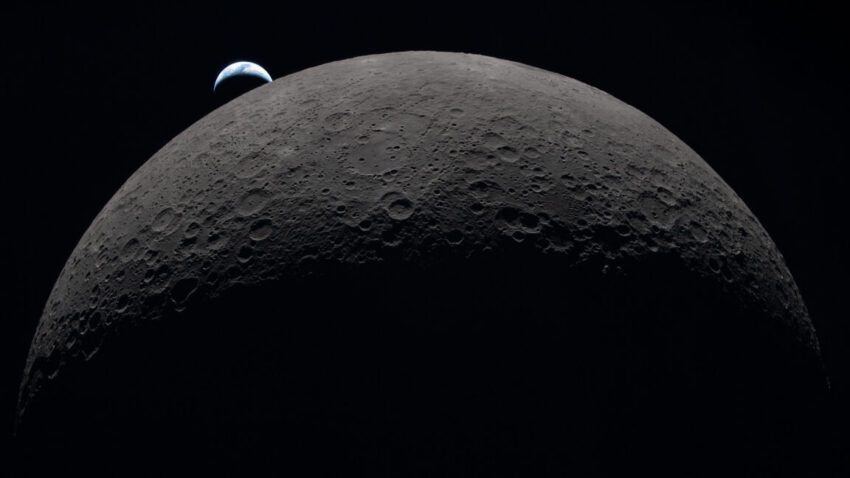
the moon is already on google maps-did The Artemis II mission has reignited interest in lunar exploration, but many are questioning whether it has provided any groundbreaking insights, especially given that the Moon is already accessible on platforms like Google Maps.
the moon is already on google maps-did
Overview of the Artemis II Mission
NASA’s Artemis II mission marks a significant milestone in the agency’s efforts to return humans to the Moon. Launched on a trajectory to orbit the Moon, the mission aims to pave the way for future lunar exploration and eventual human settlement. The mission’s primary objective is to test the Orion spacecraft’s capabilities, which will be crucial for upcoming missions, including Artemis III, which aims to land astronauts on the lunar surface.
Mission Timeline and Objectives
The Artemis II mission commenced with the launch of the Orion spacecraft, which is designed to carry astronauts beyond low Earth orbit. After successfully looping behind the far side of the Moon, the spacecraft established a laser communications link with a receiving station on Earth. This connection allowed for the rapid transmission of high-resolution images and data back to mission control.
NASA’s Artemis II mission is not just about sending astronauts to the Moon; it also serves multiple objectives:
- Testing the Orion spacecraft’s systems in deep space.
- Gathering data on the Moon’s environment for future missions.
- Demonstrating new technologies, including advanced communication systems.
The Crew
The mission features a diverse crew of four astronauts: Reid Wiseman, Victor Glover, Christina Koch, and Jeremy Hansen. Each astronaut brings unique expertise and experience, contributing to the mission’s overall success. Their roles include piloting the spacecraft, conducting experiments, and capturing high-quality images of the lunar surface.
Data Transmission and Public Release
Shortly after the spacecraft established its communication link, a cache of high-resolution images began streaming down to Earth. NASA released the first batch of these images to the public on Tuesday, showcasing stunning views of the Moon captured by the astronauts. The images were primarily taken using handheld Nikon cameras equipped with wide-angle and telephoto lenses, as well as iPhones for more casual snapshots.
Technological Innovations
The Artemis II mission has introduced several technological innovations that enhance data collection and transmission. The use of laser communications technology represents a significant advancement over traditional radio frequency communications. This technology allows for higher data rates, enabling the transmission of high-resolution images and other scientific data in real-time.
Furthermore, the handheld cameras and smartphones used by the astronauts provide a unique perspective on the lunar landscape. The combination of professional-grade photography equipment and everyday technology allows for a diverse range of images that appeal to both scientific communities and the general public.
Public Engagement and Interest
The release of these images has sparked renewed interest in lunar exploration. Social media platforms have been flooded with reactions from the public, scientists, and space enthusiasts alike. Many are captivated by the breathtaking views of the Moon, while others are questioning the necessity of the Artemis II mission in light of existing lunar imagery available on platforms like Google Maps.
Google Maps and Lunar Imagery
Google Maps has long provided users with access to detailed images of the Moon’s surface. This raises a pertinent question: what new information does Artemis II offer that isn’t already available? While Google Maps provides a comprehensive overview of the lunar landscape, the images captured by the Artemis II crew offer a fresh, human perspective that is not achievable through satellite imagery alone.
Moreover, the Artemis II mission aims to gather data that goes beyond mere visuals. The scientific instruments aboard the Orion spacecraft are designed to collect valuable information about the Moon’s environment, including its radiation levels, gravitational field, and surface composition. This data will be crucial for planning future missions and ensuring the safety of astronauts on the lunar surface.
Implications for Future Lunar Missions
The Artemis II mission serves as a critical stepping stone for NASA’s broader lunar exploration goals. The data collected during this mission will inform the planning and execution of subsequent missions, including Artemis III, which aims to land astronauts on the Moon’s South Pole. This region is of particular interest due to the presence of water ice, which could be a vital resource for future lunar habitation.
International Collaboration
The Artemis program is not solely a U.S. initiative; it involves international collaboration with various space agencies and private companies. Countries such as Canada, Japan, and the European Space Agency (ESA) are contributing to the mission’s objectives, enhancing the global effort to explore the Moon and beyond.
This collaboration underscores the importance of shared knowledge and resources in advancing space exploration. By pooling expertise and technology, these international partners can tackle the challenges of lunar exploration more effectively.
Stakeholder Reactions
The Artemis II mission has elicited a range of reactions from various stakeholders, including scientists, policymakers, and the general public. Many scientists are optimistic about the mission’s potential to yield new insights into the Moon’s environment and its suitability for human habitation.
Policymakers are also closely monitoring the mission, as it aligns with broader goals for space exploration and international cooperation. The Artemis program is seen as a way to maintain U.S. leadership in space while fostering partnerships with other nations.
Public Sentiment
Public sentiment regarding the Artemis II mission is mixed. While many are excited about the prospect of human exploration of the Moon, others express skepticism about the mission’s necessity, especially given the availability of lunar imagery on platforms like Google Maps. This skepticism highlights a broader conversation about the value of human exploration versus robotic missions and the role of public engagement in space exploration.
Conclusion
The Artemis II mission represents a significant step forward in NASA’s efforts to return humans to the Moon and explore its potential for future habitation. While the mission has sparked questions about its value in light of existing lunar imagery, it offers unique insights and data that will inform future missions. The combination of advanced technology, international collaboration, and public engagement will play a crucial role in shaping the future of lunar exploration.
As the mission continues to unfold, it will be essential to monitor the data and insights generated by the Artemis II crew. The implications of this mission extend beyond the Moon, influencing future space exploration efforts and the ongoing quest for knowledge about our solar system.
Source: Original report
Was this helpful?
Explore more: More General Technology Tech News Blog
Last Modified: April 9, 2026 at 10:36 am
16 views