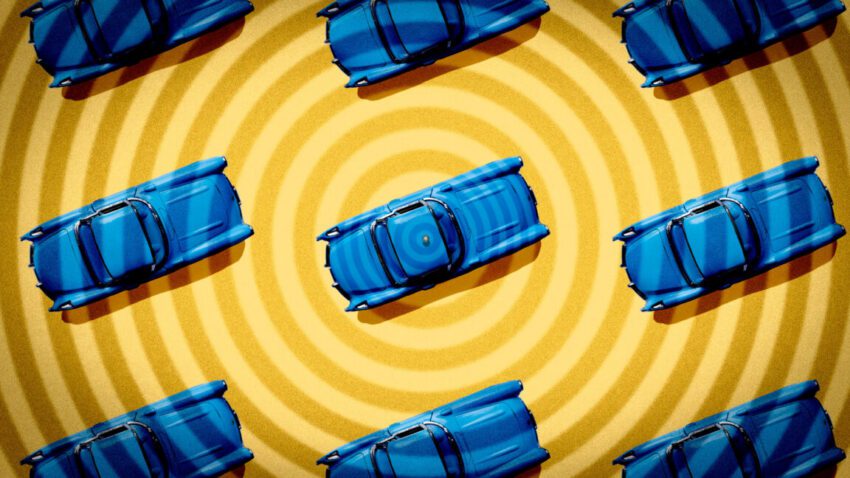
the first cars bold enough to drive The journey toward fully autonomous vehicles has deep historical roots, tracing back to early innovations in remote control technology.
the first cars bold enough to drive
The Historical Context of Autonomous Vehicles
No one knows exactly when the vehicles we drive will finally wrest the steering wheel from us. The age of the autonomous automobile isn’t some sudden Big Bang; it’s more of a slow crawl that began long before the modern era of technology. This journey started during the Roosevelt administration—specifically, Theodore Roosevelt’s time in the early 20th century. Interestingly, this pioneering work did not occur in the United States but in Spain, thanks to an engineer named Leonardo Torres Quevedo.
Leonardo Torres Quevedo: A Pioneer in Automation
Born in Santa Cruz, Spain, in 1852, Leonardo Torres Quevedo was a visionary whose contributions to engineering and automation were groundbreaking. He is perhaps best known for developing a mechanical chess machine in 1914 that could autonomously play against human opponents. However, his earlier work laid the foundation for what we now recognize as remote control technology.
In the late 19th century, Quevedo began to explore the possibilities of controlling machines from a distance. His most notable invention was the Telekino, a system that allowed for wireless control of devices. The Telekino was conceived as a safety measure to prevent airship accidents, a significant concern during an era when air travel was in its infancy.
The Telekino: The First Wireless Control System
The Telekino, a name derived from the Greek words “tele,” meaning at a distance, and “kino,” meaning movement, was patented in Spain, France, and the United States. This innovative device transmitted wireless signals to a small receiver known as a coherer. The coherer detected electromagnetic waves and transformed them into an electrical current. This current was then amplified and sent to electromagnets that slowly rotated a switch controlling the servomotor.
Quevedo’s Telekino could issue 19 distinct commands to the systems of an airship without ever requiring physical contact with the control mechanisms. This level of control was revolutionary for its time and demonstrated the potential for machines to operate autonomously, a concept that would later evolve into the autonomous vehicles we discuss today.
Implications of Early Innovations
While the Telekino was not directly related to automobiles, its principles laid the groundwork for future advancements in automation and remote control. The ability to control machines from a distance opened up new avenues for technological development, leading to innovations in various fields, including aviation, robotics, and, eventually, automotive engineering.
The Evolution of Autonomous Vehicles
Fast forward to the late 20th and early 21st centuries, and the landscape of automotive technology began to shift dramatically. The advent of computers and advanced sensors allowed for the development of systems capable of processing vast amounts of data in real time. This evolution has been marked by several key milestones in the journey toward fully autonomous vehicles.
Early Experiments and Prototypes
The first significant steps toward autonomous vehicles occurred in the 1980s and 1990s. In 1986, the Navlab project at Carnegie Mellon University produced a vehicle that could navigate through urban environments using computer vision and artificial intelligence. This project was one of the first to demonstrate the feasibility of autonomous driving, albeit in a limited capacity.
In the following years, various research institutions and automotive manufacturers began to invest in autonomous vehicle technology. The DARPA Grand Challenge in 2004 and 2005 further accelerated development by offering substantial prizes for teams that could create self-driving vehicles capable of navigating challenging terrains. These competitions spurred innovation and collaboration among engineers, researchers, and companies.
Technological Advancements
As technology progressed, several key components emerged as essential for the development of autonomous vehicles:
- Sensors: Lidar, radar, cameras, and ultrasonic sensors became crucial for vehicles to perceive their surroundings accurately.
- Artificial Intelligence: Machine learning algorithms enabled vehicles to interpret data from sensors, make decisions, and learn from experience.
- Connectivity: Vehicle-to-vehicle (V2V) and vehicle-to-infrastructure (V2I) communication systems enhanced situational awareness and safety.
These advancements have allowed manufacturers to develop increasingly sophisticated driver-assistance systems, such as Tesla’s Autopilot and General Motors’ Super Cruise, which serve as stepping stones toward full autonomy.
The Current State of Autonomous Vehicles
As of now, several companies are actively testing and deploying autonomous vehicles on public roads. Waymo, a subsidiary of Alphabet Inc., has made significant strides in developing fully autonomous taxi services in select cities. Similarly, companies like Cruise, Aurora, and Zoox are also working on their own autonomous vehicle technologies, each with unique approaches and capabilities.
Regulatory and Ethical Considerations
The rise of autonomous vehicles brings forth a myriad of regulatory and ethical challenges. Governments worldwide are grappling with how to regulate this new technology effectively. Questions arise regarding liability in the event of accidents, data privacy, and the ethical implications of programming decision-making algorithms.
For instance, if an autonomous vehicle must choose between two unfavorable outcomes, how should it be programmed to respond? These ethical dilemmas require careful consideration and collaboration among technologists, ethicists, and policymakers to ensure that autonomous vehicles are developed and deployed responsibly.
Stakeholder Reactions and Public Perception
The public’s perception of autonomous vehicles is mixed, with some expressing excitement about the potential benefits, such as reduced traffic accidents and increased mobility for those unable to drive. Others, however, voice concerns about safety, job displacement in driving professions, and the ethical implications of machine decision-making.
Automotive manufacturers are also navigating this complex landscape. Many are investing heavily in autonomous technology, recognizing its potential to redefine transportation. However, they must balance innovation with public safety and regulatory compliance, ensuring that their vehicles are not only technologically advanced but also safe and reliable.
The Road Ahead
Looking forward, the timeline for fully autonomous vehicles remains uncertain. While significant progress has been made, challenges persist. The integration of autonomous vehicles into existing transportation systems, the establishment of regulatory frameworks, and the resolution of ethical dilemmas will all play crucial roles in determining the future of this technology.
As we reflect on the journey from Leonardo Torres Quevedo’s Telekino to today’s autonomous vehicles, it is clear that the path has been long and complex. Each innovation builds upon the last, creating a tapestry of technological advancement that continues to evolve. The dream of fully autonomous vehicles may still be on the horizon, but the groundwork laid by early pioneers has paved the way for a future where cars can indeed drive themselves.
Source: Original report
Was this helpful?
Explore more: More General Technology Tech News Blog
Last Modified: February 23, 2026 at 8:38 pm
13 views