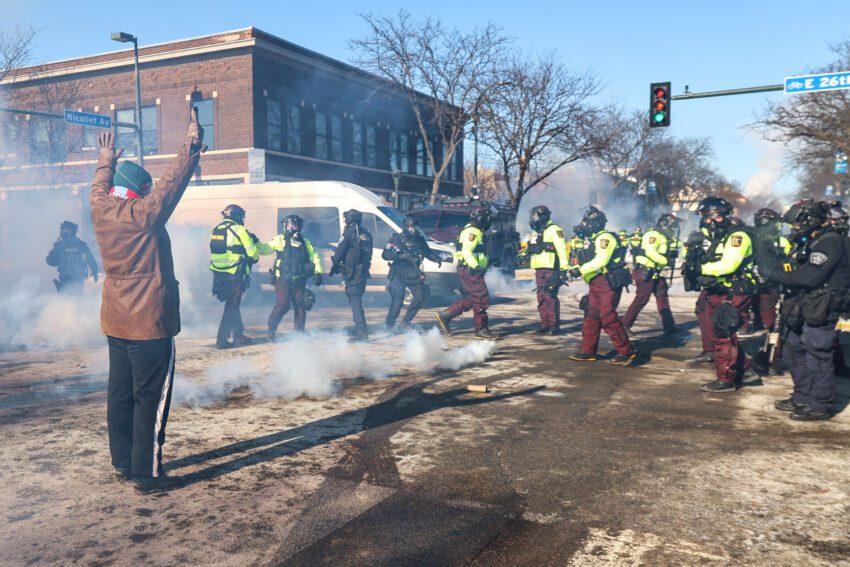
the day of the second killing On a day marked by tension and unrest, a shooting incident in Minneapolis has sparked renewed protests and discussions surrounding law enforcement practices and community safety.
the day of the second killing
Background of the Incident
The shooting that ignited the protests occurred on a day when many were already on edge due to ongoing tensions between law enforcement and community activists. This incident is part of a larger narrative in Minneapolis, where the community has been grappling with issues of police violence and accountability, particularly following the murder of George Floyd in 2020. The city has seen a series of protests and demonstrations aimed at addressing systemic injustices and advocating for reform.
Steven Garcia, a local journalist, was in the midst of covering a pond hockey event when he received news of the shooting. His experience highlights the intersection of community events and the broader societal issues at play. “I was in the middle of a frozen lake when I got the notification from the Minnesota Star Tribune that there had been a shooting,” Garcia recounted. This moment marked the beginning of a day filled with uncertainty and concern.
The Protests Erupt
Upon arriving at the scene over three hours later, Garcia found that federal officers had already cleared the area. The FBI had been involved in the initial investigation, indicating the seriousness of the situation. However, the presence of state and local law enforcement, including the Minneapolis Police Department and their SWAT team, signaled that tensions were still high.
As news of the shooting spread, community members began to gather, expressing their outrage and frustration. The protests were not merely reactions to the shooting itself but were also fueled by a broader discontent with law enforcement practices. Activists have long criticized the Minneapolis Police Department for its handling of protests and its approach to community safety.
Community Response
The community’s response to the shooting was immediate and passionate. Many residents took to social media to express their anger and sadness, sharing their thoughts on the ongoing violence and the need for change. “People were talking about how they felt unsafe,” Garcia noted, emphasizing the emotional toll that such incidents take on the community.
Protesters gathered at the site of the shooting, chanting slogans and holding signs that called for justice and accountability. The atmosphere was charged, with many participants expressing a sense of urgency in addressing the issues at hand. “We can’t keep living like this,” one protester shouted, encapsulating the sentiments of many who were present.
The Role of Law Enforcement
The involvement of law enforcement in the protests has been a contentious issue. Many community members have voiced concerns about the militarization of police and the tactics used during protests. The presence of SWAT teams and federal officers has often been perceived as an escalation rather than a means of ensuring safety.
In the wake of the shooting, law enforcement officials issued statements emphasizing their commitment to investigating the incident thoroughly. However, these assurances did little to quell the anger of protesters who felt that the police had failed to protect them in the first place. “How can we trust them?” one protester asked, highlighting the deep-seated mistrust that exists between the community and law enforcement.
Calls for Reform
The protests following the shooting have reignited calls for police reform in Minneapolis. Activists are advocating for changes that would address systemic issues within the police department and promote community-based safety measures. These calls are not new; they have been a central theme in Minneapolis since the murder of George Floyd.
Many community leaders are pushing for a reimagining of public safety that prioritizes mental health resources, community engagement, and de-escalation training for law enforcement. “We need to invest in our communities, not in militarizing the police,” one local activist stated during the protests. This sentiment reflects a growing movement towards a more holistic approach to safety that does not rely solely on traditional law enforcement methods.
Implications for the Future
The shooting and subsequent protests have significant implications for the future of policing in Minneapolis and beyond. As communities across the nation grapple with similar issues, the responses to these incidents will likely shape the discourse around law enforcement practices and community safety for years to come.
In Minneapolis, the city council has been under pressure to take meaningful action in response to community demands. Discussions around budget allocations, police oversight, and community investment are ongoing. The outcome of these discussions could set a precedent for other cities facing similar challenges.
Stakeholder Reactions
Reactions from various stakeholders have been mixed. Community members have expressed frustration with the pace of change, while some local officials have voiced their commitment to reform. “We hear you, and we are working to make things better,” one city council member stated during a recent meeting. However, many activists remain skeptical, demanding more concrete actions rather than empty promises.
Law enforcement officials have also found themselves in a challenging position. As they navigate the demands for accountability and the need to maintain public safety, the balance between community trust and effective policing remains delicate. “We want to serve and protect, but we also need to address the concerns of the community,” a police spokesperson remarked, acknowledging the complexities of the situation.
Conclusion
The shooting incident in Minneapolis serves as a stark reminder of the ongoing struggles surrounding police violence and community safety. As protests continue and calls for reform grow louder, the city finds itself at a crossroads. The actions taken in the coming weeks and months will be critical in determining the future of policing in Minneapolis and the relationship between law enforcement and the communities they serve.
As Steven Garcia reflected on the day’s events, he noted the importance of community engagement in shaping a safer future. “We need to listen to each other and work together,” he said, emphasizing the need for dialogue and understanding in the face of adversity. The path forward may be fraught with challenges, but it is clear that the community is determined to advocate for change.
Source: Original report
Was this helpful?
Explore more: More General Technology Tech News Blog
Last Modified: January 25, 2026 at 8:38 am
12 views