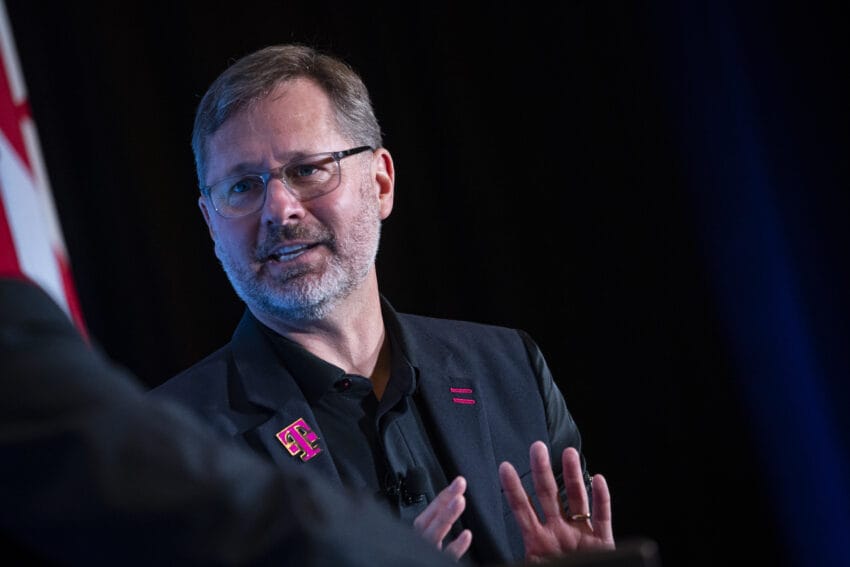
t-mobile ceo mike sievert is stepping down T-Mobile has announced that CEO Mike Sievert will step down from his position, marking a significant leadership change for the mobile carrier more than five years after he took the helm.
t-mobile ceo mike sievert is stepping down
Leadership Transition at T-Mobile
Effective November 1st, Srini Gopalan, the current Chief Operating Officer (COO), will assume the role of CEO. Sievert, who has been instrumental in T-Mobile’s growth and strategic direction since taking over from the outspoken John Legere in 2020, will transition to the role of vice chairman. This change comes at a time when T-Mobile is navigating a rapidly evolving telecommunications landscape, and Gopalan’s leadership is expected to steer the company into its next phase of innovation and growth.
Mike Sievert’s Tenure
Mike Sievert took over as CEO during a pivotal time for T-Mobile, following its merger with Sprint. Under his leadership, the company has made significant strides in expanding its market presence and enhancing its service offerings. Notably, Sievert oversaw several key acquisitions, including:
- The purchase of Mint Mobile, a budget-friendly mobile service provider that garnered attention due to its partial ownership by actor Ryan Reynolds.
- An agreement to acquire most of US Cellular, further solidifying T-Mobile’s position in the competitive U.S. telecommunications market.
In addition to these acquisitions, Sievert’s tenure has also seen T-Mobile make controversial decisions, such as the recent move to eliminate its diversity, equity, and inclusivity policies. This decision was reportedly made to facilitate the approval of T-Mobile’s acquisition of the fiber brand Lumos by FCC Chair Brendan Carr. Such actions have sparked discussions about corporate governance and the ethical implications of prioritizing business growth over social responsibility.
Succession Planning and Gopalan’s Appointment
Srini Gopalan’s appointment as COO in March 2025 was seen as a strategic move by T-Mobile, with Sievert himself acknowledging that Gopalan was hired with succession planning in mind. Gopalan brings a wealth of experience to his new role, having spent over eight years as a board member at Deutsche Telekom. His previous executive positions at Vodafone and Bharti Airtel further bolster his credentials, making him well-suited to lead T-Mobile in its next chapter.
In June, Sievert had publicly denied reports suggesting that he planned to step down before the end of his contract in April 2028. However, the recent announcement indicates that the company had been preparing for this leadership transition for some time. Gopalan’s extensive background in international telecommunications and his familiarity with T-Mobile’s corporate culture are expected to provide a seamless transition as he steps into the role of CEO.
Strategic Vision for the Future
In a press release announcing his new role, Gopalan expressed enthusiasm for leading T-Mobile’s strategic initiatives aimed at transforming the company into the most data-driven, AI-enabled, digital-first organization in the telecommunications industry. He stated, “Our culture and brand have made us the most admired and customer-centric company in our industry. What lies ahead of us is even more exciting because over the last five years, we have built America’s best network together with digital and AI capabilities that are far ahead of anyone else in our industry.”
This vision aligns with broader industry trends, where telecommunications companies are increasingly leveraging artificial intelligence and data analytics to enhance customer experiences and streamline operations. Gopalan’s emphasis on becoming a digital-first company suggests that T-Mobile will continue to invest in technology and innovation to maintain its competitive edge.
Implications for T-Mobile’s Market Position
The leadership change comes at a critical juncture for T-Mobile, as the company faces intense competition from rivals such as Verizon and AT&T. Both of these companies have made significant investments in 5G technology and infrastructure, and T-Mobile must continue to innovate to retain its market share. Gopalan’s experience in international markets may also provide T-Mobile with insights into global trends and best practices that could be beneficial as the company seeks to expand its footprint.
Moreover, the telecommunications industry is undergoing a transformation driven by advancements in technology, changing consumer preferences, and regulatory challenges. T-Mobile’s ability to adapt to these changes will be crucial for its long-term success. Gopalan’s focus on data-driven decision-making and AI capabilities could position T-Mobile to respond more effectively to market dynamics and customer needs.
Stakeholder Reactions
The announcement of Sievert’s departure and Gopalan’s promotion has elicited various reactions from stakeholders, including investors, industry analysts, and employees. While some investors may view the leadership change as a potential risk, others may see it as an opportunity for renewed growth and innovation under Gopalan’s leadership.
Industry analysts have noted that Gopalan’s extensive experience in telecommunications could be a significant asset for T-Mobile. His familiarity with both domestic and international markets may enable the company to capitalize on emerging trends and technologies. Analysts have also pointed out that Gopalan’s appointment reflects T-Mobile’s commitment to succession planning, which is essential for maintaining stability during leadership transitions.
Looking Ahead
As T-Mobile prepares for this leadership transition, the company faces several challenges and opportunities. The telecommunications landscape is rapidly evolving, with increasing demand for high-speed internet, mobile data, and innovative services. Gopalan’s leadership will be critical in navigating these changes and ensuring that T-Mobile remains competitive in the market.
Additionally, Gopalan’s focus on becoming a data-driven and AI-enabled company suggests that T-Mobile will continue to invest in technology and innovation. This could lead to the development of new services and features that enhance customer experiences and drive growth. As the telecommunications industry becomes more competitive, T-Mobile’s ability to leverage technology effectively will be a key determinant of its success.
Conclusion
The transition from Mike Sievert to Srini Gopalan as CEO marks a significant moment in T-Mobile’s history. With Gopalan at the helm, T-Mobile is poised to continue its trajectory of growth and innovation in the telecommunications industry. As the company embraces a data-driven and AI-enabled future, stakeholders will be closely watching to see how Gopalan’s leadership shapes T-Mobile’s strategic direction and market position in the coming years.
Source: Original report
Was this helpful?
Explore more: More Business & Startups Tech News Blog
Last Modified: September 22, 2025 at 6:36 pm
11 views