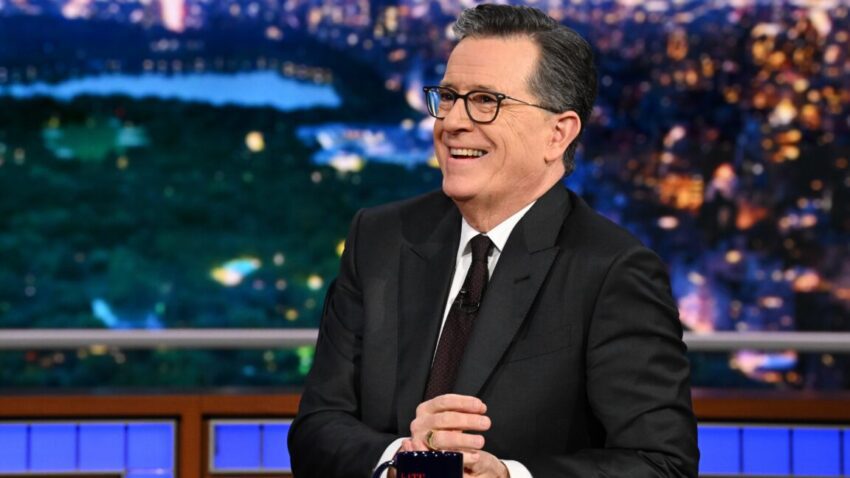
stephen colbert says cbs forbid interview of Stephen Colbert revealed that CBS prohibited him from interviewing Texas Democratic Senate candidate James Talarico due to a potential Federal Communications Commission (FCC) enforcement of the equal-time rule.
stephen colbert says cbs forbid interview of
Background on the Equal-Time Rule
The equal-time rule is a provision in U.S. law that requires broadcasters to provide equal opportunities for political candidates to appear on their platforms. This rule is designed to ensure fairness in political campaigning, allowing candidates equal access to media coverage. The rule applies to all candidates for public office, and if one candidate is given airtime, the broadcaster must offer the same opportunity to other candidates running for the same position.
Historically, the equal-time rule has been a contentious issue, especially during election cycles. It has implications for how media outlets manage their programming and the types of political content they can air. The rule has been criticized for potentially stifling free speech and limiting the diversity of political discourse on television. Critics argue that it can lead to self-censorship among broadcasters who may avoid featuring certain candidates altogether to sidestep the complexities of compliance.
Colbert’s Revelations
During a recent episode of The Late Show with Stephen Colbert, the host expressed his frustration over CBS’s decision to prevent him from featuring Talarico on the show. Colbert stated, “Talarico was supposed to be here, but we were told in no uncertain terms by our network’s lawyers, who called us directly, that we could not have him on the broadcast.” This direct communication from CBS’s legal team underscores the seriousness with which the network is treating the FCC’s recent warnings.
Colbert further elaborated on the restrictions placed upon him, saying, “Then I was told in some uncertain terms that not only could I not have him on, I could not mention me not having him on, and because my network clearly doesn’t want us to talk about this, let’s talk about this.” This statement highlights the tension between creative expression and legal compliance in the realm of political commentary on television.
The FCC’s Warning
The backdrop to Colbert’s situation is a recent warning issued by FCC Chairman Brendan Carr. Carr indicated that late-night and daytime talk shows might no longer qualify for the bona fide news exemption to the equal-time rule. This exemption has traditionally allowed such shows to air political content without being subject to the equal-time requirement, provided the content is presented as news rather than as a political advertisement.
Following this warning, the FCC initiated an investigation into ABC’s The View after the show featured an interview with Talarico. The investigation suggests that the FCC is actively scrutinizing how networks handle political candidates and their appearances on various programs. This scrutiny could have far-reaching implications for how talk shows approach political content in the future.
Implications for Late-Night Television
Colbert’s experience raises significant questions about the future of political discourse on late-night television. The equal-time rule, coupled with the FCC’s heightened scrutiny, could lead to a chilling effect on how networks choose to feature political candidates. If networks fear repercussions from the FCC, they may opt to avoid political discussions altogether, thereby limiting the diversity of viewpoints presented to audiences.
Moreover, the implications extend beyond just Colbert and CBS. Other late-night hosts may also find themselves navigating similar restrictions, potentially leading to a homogenization of political content across various platforms. This could diminish the role of late-night television as a space for political commentary and satire, which has historically been a hallmark of the genre.
Stakeholder Reactions
Reactions to Colbert’s revelations have been varied, with some commentators expressing concern over the implications for free speech and the role of media in democracy. Critics argue that the FCC’s actions could stifle important political discussions and limit voters’ access to diverse viewpoints. They contend that late-night shows play a crucial role in informing the public about political issues and candidates, and any restrictions on their ability to feature such content could undermine democratic processes.
Supporters of the FCC’s approach, on the other hand, may argue that the equal-time rule is essential for maintaining fairness in political coverage. They contend that it ensures that all candidates have a level playing field when it comes to media exposure, which is particularly important in an era where media influence can significantly impact election outcomes.
Historical Context
The equal-time rule has a long history in U.S. broadcasting, dating back to the Communications Act of 1934. The rule was established to prevent media monopolies from unduly influencing political outcomes by favoring one candidate over another. Over the years, the rule has been subject to various interpretations and legal challenges, leading to ongoing debates about its relevance in the modern media landscape.
In recent years, the rise of digital media and social platforms has further complicated the landscape of political communication. Traditional broadcasters are now competing with a myriad of online platforms where candidates can communicate directly with voters. This shift has led to questions about the applicability of the equal-time rule in a fragmented media environment.
Future Considerations
As the 2024 election cycle approaches, the implications of Colbert’s experience and the FCC’s warnings will likely continue to unfold. Networks may need to reassess their programming strategies and consider how to balance compliance with the equal-time rule while still providing a platform for political discourse. This could lead to innovative approaches to political content, as networks seek to navigate the complexities of the current regulatory environment.
Furthermore, the role of the FCC in regulating media content will be under scrutiny. As public interest in political issues grows, the agency’s actions may prompt calls for reform or reevaluation of existing regulations. Stakeholders, including media organizations, advocacy groups, and policymakers, will need to engage in discussions about the future of political coverage and the role of regulation in ensuring a fair and open media landscape.
Conclusion
Stephen Colbert’s experience with CBS and the FCC’s warnings highlight the intricate relationship between media, politics, and regulation. As the landscape of political discourse continues to evolve, the implications of these developments will be felt across the broadcasting industry. The balance between compliance with regulatory frameworks and the need for diverse political representation will be a critical issue for networks, hosts, and audiences alike.
Source: Original report
Was this helpful?
Explore more: More Big Tech & Platforms Tech News Blog
Last Modified: February 18, 2026 at 3:37 am
9 views