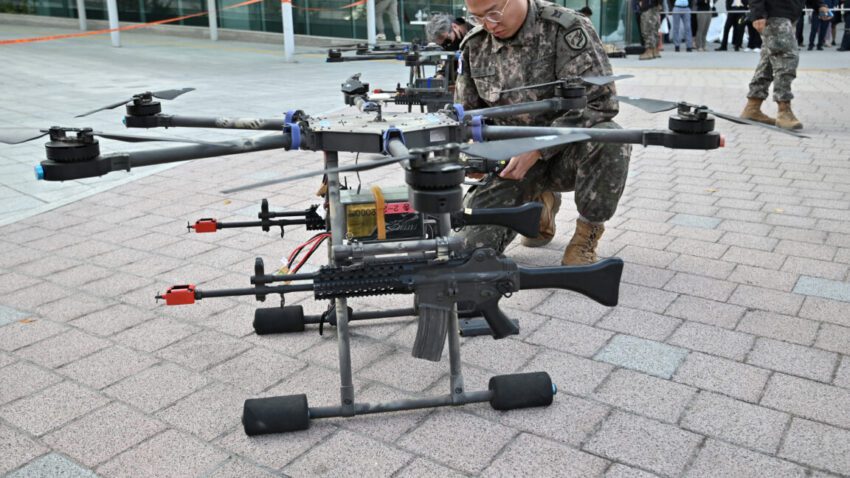
south korea plans to train entire military South Korea is set to transform its military by training all personnel to operate drones, aiming to integrate these technologies into everyday combat scenarios.
south korea plans to train entire military
Overview of the Initiative
In a significant move to bolster its defense capabilities, South Korea has announced plans to train its entire military, comprising nearly half a million personnel, to operate drones as seamlessly as they handle personal firearms. This ambitious initiative was unveiled during a briefing by Ahn Gyu-back, South Korea’s Minister of National Defense, on June 26. The primary objective is to ensure that drones become a “universal combat tool” for all troops, allowing them to utilize these devices as a “second personal weapon.” This strategy is particularly crucial given the ongoing tensions with North Korea, which has maintained a formidable military presence along the 70-year border.
Strategic Context
The decision to enhance drone capabilities comes against the backdrop of a prolonged standoff with North Korea, which has been a source of regional instability. The South Korean military recognizes the need to maintain a technological edge over its northern counterpart, which has been rapidly advancing its military capabilities. By integrating drones into the skill set of every soldier, South Korea aims to create a more versatile and responsive military force.
The Role of Drones in Modern Warfare
Drones have become increasingly pivotal in modern warfare, serving various functions from surveillance to direct strikes. The South Korean military’s initiative reflects a broader trend observed globally, where nations are investing in unmanned aerial vehicles (UAVs) to enhance operational efficiency and effectiveness. The ability to deploy drones for reconnaissance missions, target acquisition, and even offensive operations allows military units to gather intelligence and engage adversaries with reduced risk to personnel.
Training as a Core Component
The training program aims to ensure that all military personnel are proficient in drone operation. This approach not only democratizes the use of advanced technology but also fosters a culture of innovation within the ranks. By equipping soldiers with the skills to operate drones, South Korea is preparing its military for a future where unmanned systems play an integral role in combat scenarios.
Broader Military Reforms
The announcement of the drone training initiative coincides with a series of broader military reforms aimed at modernizing South Korea’s defense capabilities. These reforms include plans to equip individual military units with more affordable and expendable drones for both surveillance and strike missions. The emphasis on low-cost drones is particularly noteworthy, as it allows for greater operational flexibility and responsiveness in various combat situations.
Counter-Drone Technologies
In addition to enhancing drone capabilities, the South Korean military is also focusing on developing counter-drone technologies. This includes deploying advanced systems such as laser and microwave weapons designed to neutralize enemy drones. As drone warfare evolves, the ability to counteract adversarial UAVs becomes increasingly critical. By investing in both offensive and defensive drone technologies, South Korea aims to create a comprehensive approach to modern warfare.
Lessons from Global Conflicts
South Korea’s military reforms have been significantly influenced by recent conflicts, particularly in Ukraine and the Middle East. The Ukraine conflict has highlighted the effectiveness of drones in both reconnaissance and combat roles, prompting military leaders to rethink traditional strategies. Similarly, the Middle East has seen the successful use of drones in asymmetric warfare, where smaller, agile units can leverage technology to counter larger forces.
Collaboration with Industry
To facilitate the development and procurement of drone technology, South Korea’s former drone operations command headquarters will undergo a reorganization. This new structure will focus on collaboration with the domestic defense industry, emphasizing the importance of integrating commercial drone technologies into military applications. By fostering partnerships with local companies, South Korea aims to accelerate innovation and ensure that its military remains at the forefront of technological advancements.
Implications for Regional Security
The implications of South Korea’s drone initiative extend beyond its borders. As the country enhances its military capabilities, neighboring nations, particularly North Korea, may respond with their own advancements in drone technology and military strategy. This arms race could further escalate tensions in the region, necessitating diplomatic efforts to manage the evolving security landscape.
Stakeholder Reactions
The announcement has garnered mixed reactions from various stakeholders. Supporters argue that the initiative is a necessary step to ensure national security and maintain a technological edge over North Korea. They emphasize the importance of adapting to modern warfare dynamics and leveraging technology to enhance operational effectiveness.
Conversely, critics express concerns about the potential for increased militarization and the escalation of tensions in the region. Some analysts warn that an arms race in drone technology could lead to unintended consequences, including miscalculations that might trigger conflicts. The challenge for South Korea will be to balance its defense needs with the necessity of maintaining regional stability.
Future Prospects
As South Korea embarks on this ambitious training initiative, the future of its military operations will likely be characterized by a greater reliance on drone technology. The integration of drones into the skill set of every soldier could redefine combat strategies and enhance the military’s overall effectiveness. However, the success of this initiative will depend on several factors, including the quality of training, the adaptability of military personnel, and the ongoing evolution of drone technologies.
Conclusion
In conclusion, South Korea’s plan to train its military personnel as “drone warriors” represents a significant shift in its defense strategy. By equipping all soldiers with the skills to operate drones, the country aims to enhance its military capabilities in an increasingly complex security environment. While the initiative holds promise for improving operational effectiveness, it also raises important questions about regional stability and the potential for an arms race in drone technology. As South Korea moves forward with its plans, the international community will be watching closely to see how these developments unfold.
Source: Original report
Was this helpful?
Explore more: More General Technology Tech News Blog
Last Modified: June 27, 2026 at 12:35 pm
8 views