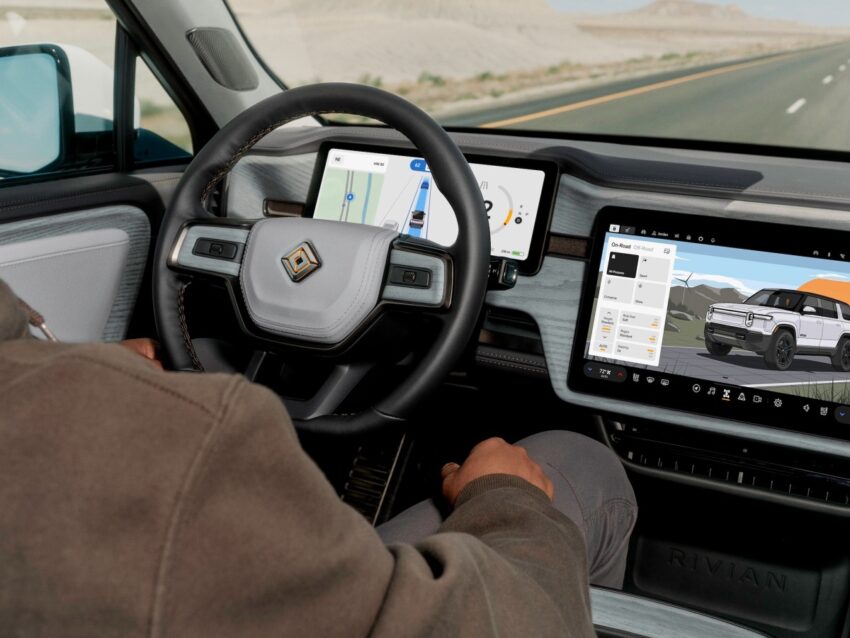
rivian goes big on autonomy with custom Rivian is making significant strides in autonomous vehicle technology, with CEO RJ Scaringe outlining an ambitious plan to enhance the self-driving capabilities of its vehicles.
rivian goes big on autonomy with custom
Rivian’s Vision for Autonomy
During a recent presentation, CEO RJ Scaringe emphasized Rivian’s commitment to developing advanced autonomous driving technologies. The company aims to not only match but potentially exceed the capabilities of its competitors in the automotive and autonomous vehicle (AV) sectors. This strategic move comes as the automotive industry increasingly shifts towards electrification and automation, with Rivian positioning itself as a key player in this transformative landscape.
Custom Silicon Development
A cornerstone of Rivian’s autonomy strategy is the development of custom silicon. Scaringe highlighted that the company is investing heavily in creating specialized chips designed to optimize the performance of its self-driving systems. These chips will enable Rivian vehicles to process vast amounts of data in real-time, which is essential for safe and efficient autonomous driving.
By designing its own silicon, Rivian aims to reduce reliance on third-party suppliers, allowing for greater control over the performance and capabilities of its vehicles. This move is particularly significant in an industry where the integration of hardware and software is crucial for achieving high levels of automation.
Integration of Lidar Technology
In addition to custom silicon, Rivian is also incorporating lidar technology into its vehicles. Lidar, which uses laser light to measure distances and create detailed 3D maps of the environment, is becoming a standard component in many advanced driver-assistance systems (ADAS) and fully autonomous vehicles. Scaringe noted that Rivian’s use of lidar will enhance the vehicle’s ability to perceive its surroundings, improving safety and navigation capabilities.
The integration of lidar represents a significant investment in safety and reliability. As autonomous vehicles navigate complex environments, the ability to accurately detect and respond to obstacles is paramount. Rivian’s approach aims to ensure that its vehicles can operate safely in a variety of conditions, from urban settings to rural landscapes.
Hints at Robotaxi Services
Another intriguing aspect of Rivian’s strategy is the potential introduction of robotaxi services. Scaringe hinted at the possibility of deploying a fleet of autonomous vehicles for ride-hailing purposes in the future. This move aligns with broader trends in the automotive industry, where companies are exploring new business models centered around shared mobility.
The concept of robotaxis presents both opportunities and challenges. On one hand, it could provide a new revenue stream for Rivian, allowing the company to capitalize on the growing demand for on-demand transportation services. On the other hand, the regulatory landscape surrounding autonomous vehicles remains complex, and Rivian will need to navigate various legal and safety considerations before launching such a service.
Market Context and Competition
Rivian’s advancements in autonomy come at a time when competition in the electric vehicle (EV) and autonomous driving markets is intensifying. Established automakers such as Tesla, Ford, and General Motors are investing heavily in their own self-driving technologies. Additionally, tech companies like Waymo and Cruise are making significant progress in developing fully autonomous vehicles.
To differentiate itself, Rivian is focusing on creating a unique value proposition that combines electric vehicle performance with cutting-edge autonomous capabilities. The company’s emphasis on adventure-oriented vehicles, such as its R1T pickup truck and R1S SUV, sets it apart from competitors that primarily focus on urban mobility solutions.
Implications for Rivian’s Future
The successful implementation of Rivian’s autonomy strategy could have far-reaching implications for the company’s future. If Rivian can deliver on its promises of enhanced self-driving capabilities, it may attract a broader customer base, including those interested in both adventure and advanced technology. Furthermore, the introduction of robotaxi services could position Rivian as a leader in the emerging mobility-as-a-service market.
However, the path to achieving these goals is fraught with challenges. Rivian will need to ensure that its technology is not only advanced but also safe and reliable. As the company navigates the complexities of regulatory approval and public perception, it will be crucial to maintain transparency and build trust with consumers.
Stakeholder Reactions
Reactions from stakeholders in the automotive and technology sectors have been mixed. Some industry experts have praised Rivian’s ambitious plans, noting that the integration of custom silicon and lidar technology could give the company a competitive edge. Others, however, express skepticism about the feasibility of Rivian’s timeline and the challenges associated with scaling autonomous technology.
Investors are closely monitoring Rivian’s progress, as the company’s stock performance is closely tied to its ability to deliver on its promises. A successful rollout of autonomous features could boost investor confidence and drive up stock prices, while any setbacks could have the opposite effect.
Conclusion
Rivian’s commitment to advancing autonomous vehicle technology is a bold move that reflects the company’s ambition to become a leader in the rapidly evolving automotive landscape. With a focus on custom silicon, lidar integration, and the potential for robotaxi services, Rivian is positioning itself to compete with established players and disrupt traditional mobility models.
As the company continues to develop its technology, the automotive industry will be watching closely. The success of Rivian’s autonomy strategy could not only shape the future of the company but also influence the broader trajectory of the electric and autonomous vehicle markets.
Source: Original report
Was this helpful?
Explore more: More Hardware & Devices Tech News Blog
Last Modified: December 11, 2025 at 10:43 pm
24 views