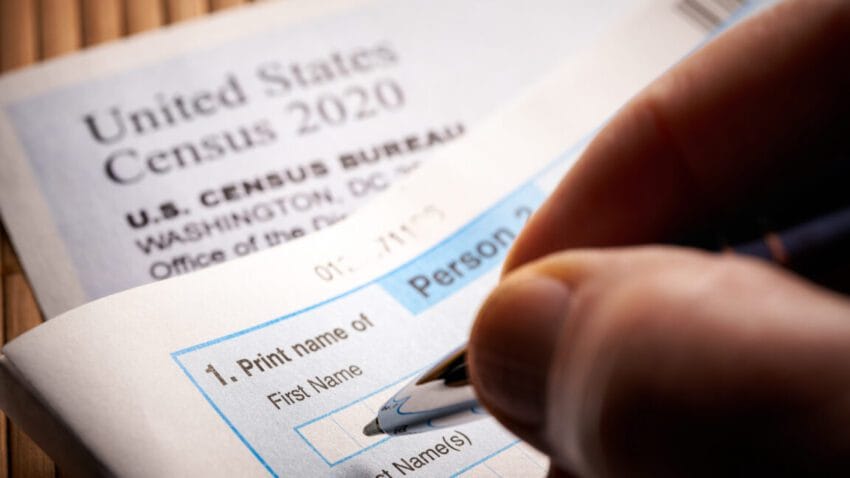
republican plan would make deanonymization of census Recent developments indicate a renewed effort by the Republican Party to influence the U.S. census process, particularly concerning the privacy of individual respondents.
republican plan would make deanonymization of census
Background on the U.S. Census
The U.S. Census, conducted every ten years, serves as a critical tool for understanding the demographic makeup of the nation. It impacts federal funding allocations, congressional representation, and various public policy decisions. The census collects data on a wide range of topics, including age, race, and household composition, but has historically avoided questions that could compromise individual privacy, particularly regarding sensitive issues like immigration status.
In recent years, the census has become a focal point for political debates, especially as demographic shifts have raised concerns about representation and resource allocation. The inclusion of a citizenship question was one of the most contentious issues during the Trump administration, culminating in a Supreme Court ruling in 2019 that blocked the attempt to add such a question. The court found that the administration’s rationale for including the question was insufficient and potentially misleading.
The Current Republican Strategy
Following the Supreme Court’s decision, the Republican Party has pivoted its strategy towards a different aspect of census data management: the implementation of differential privacy. This algorithmic approach was designed to enhance the privacy of respondents by adding statistical noise to the data, making it more difficult to identify individuals while still allowing for accurate aggregate data analysis.
What is Differential Privacy?
Differential privacy is a mathematical framework that ensures individual data points cannot be easily isolated from the larger dataset. By introducing controlled randomness into the data, it allows researchers and policymakers to access useful information without compromising the privacy of respondents. This method was adopted by the U.S. Census Bureau for the 2020 census, a decision that has drawn scrutiny from various political factions.
Allegations Against Differential Privacy
Republican leaders have begun to allege that the differential privacy system has rendered the 2020 census data inaccurate. They argue that the added noise could distort demographic information, leading to misallocations of federal resources and misrepresentation in Congress. This narrative has gained traction among certain political circles, with claims that the privacy measures are a cover for inaccuracies that could disadvantage Republican-leaning areas.
Experts in data privacy and census methodology have pushed back against these claims, emphasizing that differential privacy was implemented to protect individual identities and that the overall integrity of the data remains intact. They argue that the system is robust and that concerns about inaccuracy are largely unfounded.
Implications of the GOP’s Focus on Census Data
The Republican Party’s renewed focus on census data and the differential privacy framework raises several important implications for both policy and public trust in governmental institutions.
Impact on Representation and Resource Allocation
One of the most significant implications of altering how census data is interpreted could be its effect on congressional representation. The census determines how many seats each state receives in the House of Representatives, based on population counts. If the GOP’s allegations lead to changes in how census data is utilized, it could result in shifts in representation that favor certain states or districts over others.
Moreover, census data is used to allocate billions of dollars in federal funding for various programs, including education, healthcare, and infrastructure. Any perceived inaccuracies could lead to misallocations, further exacerbating disparities between urban and rural areas, or between states with differing demographic compositions.
Public Trust and Perception of Government
The ongoing debate over the accuracy of census data and the methods used to protect individual privacy could erode public trust in the census process. If citizens believe that their data is being manipulated or that their privacy is not adequately protected, they may be less likely to participate in future censuses. This could lead to undercounts in certain populations, further skewing data and impacting policy decisions.
Reactions from Experts and Stakeholders
The response from experts in data privacy, sociology, and public policy has been largely critical of the GOP’s claims regarding differential privacy. Many argue that the focus on alleged inaccuracies serves a political agenda rather than a genuine concern for data integrity.
Expert Opinions
In discussions with various experts, several key points emerged:
- Data Integrity: Many experts assert that the differential privacy framework was rigorously tested and that the resulting data from the 2020 census is reliable for policy-making purposes.
- Privacy Protection: The primary goal of differential privacy is to enhance respondent confidentiality, a crucial aspect of maintaining public trust in the census process.
- Political Manipulation: Some experts contend that the GOP’s narrative is an attempt to undermine the credibility of the census to serve their political interests, particularly in light of changing demographics that may not favor them.
Public and Political Reactions
Public reactions to the GOP’s claims have been mixed, with some segments supporting the party’s concerns while others view them as unfounded. Advocacy groups focused on civil rights and data privacy have rallied against the GOP’s narrative, emphasizing the importance of maintaining robust privacy protections in the face of political pressure.
Political analysts note that the GOP’s focus on census data could be a strategic move to galvanize their base ahead of upcoming elections. By framing the issue as one of accuracy and fairness, they may seek to mobilize voters who are concerned about representation and resource allocation.
Future Considerations
As the debate over census data continues, several key considerations will shape the future of this issue:
Legislative Actions
It remains to be seen whether the Republican Party will attempt to introduce legislation aimed at altering how census data is collected or reported. Such actions could have far-reaching implications for the integrity of the census and the privacy of respondents.
Public Engagement
Engaging the public in discussions about the importance of the census and the measures taken to protect individual privacy will be crucial. Educational campaigns may be necessary to counter misinformation and encourage participation in future censuses.
Technological Developments
As technology continues to evolve, so too will the methods used to collect and analyze census data. Future advancements may provide new solutions for balancing privacy concerns with the need for accurate demographic information.
Conclusion
The Republican Party’s renewed focus on the U.S. census and the differential privacy framework highlights the intersection of politics, data privacy, and public policy. As the debate unfolds, it will be essential to navigate these complex issues carefully to ensure that the integrity of the census is maintained while also protecting the privacy of individual respondents.
Source: Original report
Was this helpful?
Explore more: More Big Tech & Platforms Tech News Blog
Last Modified: October 29, 2025 at 7:37 pm
5 views