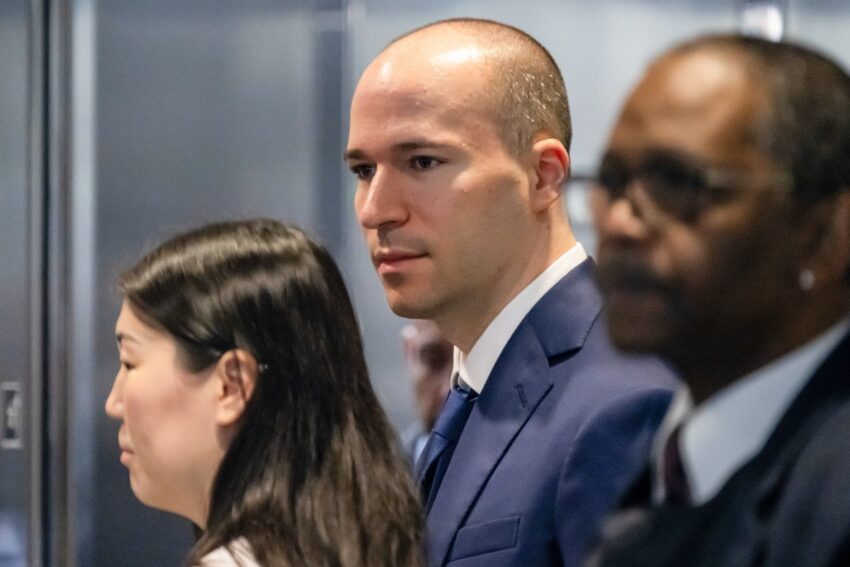
openai co-founder greg brockman reportedly takes charge OpenAI has announced a significant leadership change, with co-founder Greg Brockman reportedly taking charge of the company’s product strategy.
openai co-founder greg brockman reportedly takes charge
Background on OpenAI’s Leadership Structure
OpenAI, founded in December 2015, has been at the forefront of artificial intelligence research and development. The organization was established with the mission to ensure that artificial general intelligence (AGI) benefits all of humanity. Over the years, OpenAI has made substantial advancements in AI technologies, including natural language processing, reinforcement learning, and robotics. The leadership team has played a crucial role in steering the direction of these innovations.
Greg Brockman, who co-founded OpenAI and served as its Chief Technology Officer, has been instrumental in shaping the company’s vision and technological advancements. His expertise in AI and product development has been pivotal in launching various products, including the widely popular ChatGPT and Codex. With Brockman’s new role focusing on product strategy, there is a renewed emphasis on aligning OpenAI’s offerings with market needs and user expectations.
Combining ChatGPT and Codex
One of the most notable developments under Brockman’s leadership is the reported plan to merge ChatGPT with Codex. ChatGPT, a conversational AI model, has gained immense popularity for its ability to generate human-like text responses, while Codex specializes in understanding and generating code. The integration of these two powerful tools could create a more versatile platform that caters to a broader audience, including developers and non-developers alike.
The Rationale Behind the Integration
The decision to combine ChatGPT and Codex is likely driven by several factors:
- Enhanced User Experience: By merging the capabilities of both models, OpenAI aims to provide a seamless experience for users who require both conversational and coding assistance. This integration could simplify workflows for developers who often need to switch between coding and communication tasks.
- Market Demand: As the demand for AI-driven tools continues to grow, OpenAI is positioning itself to meet the needs of a diverse user base. The integration could attract a wider audience, including businesses looking for efficient solutions to streamline their operations.
- Innovation and Development: Combining the two technologies may lead to new features and functionalities that were previously unattainable. This could foster innovation within the AI space and keep OpenAI at the forefront of technological advancements.
Potential Challenges
While the integration of ChatGPT and Codex holds promise, it is not without challenges. Some potential hurdles include:
- Technical Complexity: Merging two sophisticated AI models requires significant technical expertise and resources. Ensuring that both models work harmoniously will be a complex task that may take time to perfect.
- User Adaptation: Existing users of ChatGPT and Codex may need time to adapt to the new integrated platform. OpenAI will need to provide adequate support and resources to facilitate this transition.
- Market Competition: As OpenAI moves forward with this integration, it faces competition from other tech companies that are also developing AI tools. Maintaining a competitive edge will be crucial for OpenAI’s success.
Stakeholder Reactions
The announcement of Brockman’s new role and the integration of ChatGPT and Codex has elicited a range of reactions from stakeholders across the tech industry.
Industry Experts
Many industry experts have expressed optimism about the potential benefits of merging ChatGPT and Codex. Some believe that this move could lead to groundbreaking advancements in AI technology. “The integration of these two models could redefine how we interact with AI,” said Dr. Jane Smith, an AI researcher at a leading tech firm. “It opens up new possibilities for developers and non-developers alike.”
Investors
Investors have also reacted positively to the news, viewing it as a strategic move that could enhance OpenAI’s market position. The potential for increased user engagement and revenue generation has led to a surge in interest from venture capitalists and other funding sources. “OpenAI’s ability to innovate and adapt is what sets it apart,” noted John Doe, a prominent venture capitalist. “This integration could be a game-changer for the company.”
Users
Current users of ChatGPT and Codex have expressed mixed feelings about the integration. Some are excited about the prospect of a more comprehensive tool, while others are concerned about potential disruptions to their existing workflows. “I love using ChatGPT for writing, but I also rely on Codex for coding tasks,” said a software developer who wished to remain anonymous. “I hope the integration doesn’t complicate things.”
Implications for the Future of AI
The decision to combine ChatGPT and Codex under Brockman’s leadership could have far-reaching implications for the future of AI technology. As AI continues to evolve, the integration of different capabilities will likely become a trend in the industry.
Broader Applications
The merging of conversational and coding capabilities could lead to broader applications of AI in various sectors, including education, healthcare, and customer service. For instance, educators could use the integrated platform to create interactive learning experiences, while healthcare professionals could leverage it for patient communication and data analysis.
Ethical Considerations
As OpenAI moves forward with this integration, ethical considerations will also come into play. The company has a responsibility to ensure that its AI technologies are used responsibly and do not perpetuate biases or misinformation. Transparency in how the integrated platform operates will be essential to maintain user trust.
Conclusion
Greg Brockman’s new role in overseeing product strategy at OpenAI marks a pivotal moment for the company as it embarks on an ambitious plan to integrate ChatGPT and Codex. The potential benefits of this integration are significant, but it also presents challenges that will require careful navigation. As stakeholders react to these developments, the implications for the future of AI technology remain profound. OpenAI’s commitment to innovation and user-centric design will be critical as it seeks to redefine the landscape of artificial intelligence.
Source: Original report
Was this helpful?
Explore more: AI Automation Services More AI & Automation Tech News
Last Modified: May 16, 2026 at 8:36 pm
16 views