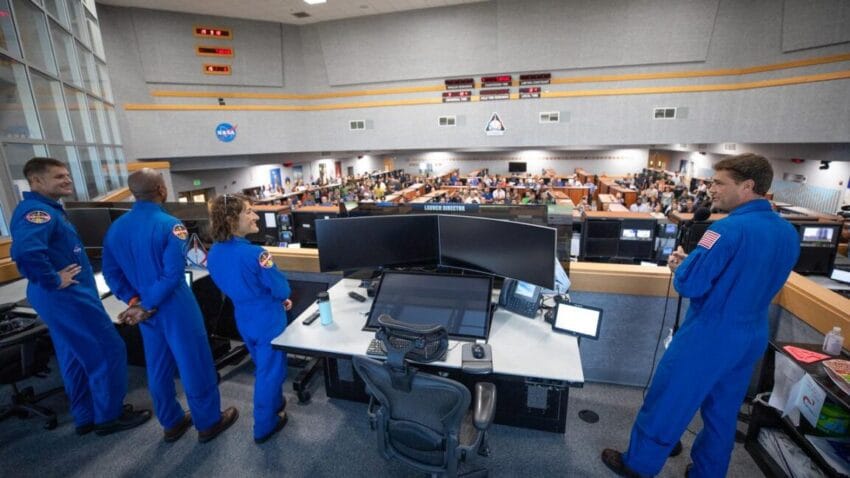
nasa targeting early february for artemis ii NASA is making significant strides toward the Artemis II mission, aiming for a launch window that opens on February 5, 2026, marking the first time humans will venture beyond low-Earth orbit in over fifty years.
nasa targeting early february for artemis ii
Overview of the Artemis II Mission
The Artemis II mission is a pivotal component of NASA’s broader Artemis program, which seeks to return humans to the Moon and establish a sustainable presence there by the end of the decade. This mission will not only serve as a precursor to future lunar landings but also as a vital step in preparing for human exploration of Mars.
Mission Objectives
The primary objective of Artemis II is to send four astronauts on a journey around the Moon and back to Earth. This mission will last approximately ten days and will be the first crewed mission to venture beyond low-Earth orbit since Apollo 17 in December 1972. The astronauts selected for this historic flight are:
- Reid Wiseman: A veteran NASA astronaut with previous experience on the International Space Station (ISS).
- Victor Glover: The first African American to live and work on the ISS for an extended duration.
- Christina Koch: Known for her record-setting 328 days in space, she has also participated in multiple spacewalks.
- Jeremy Hansen: The first Canadian astronaut to participate in a crewed lunar mission.
This diverse crew brings a wealth of experience and expertise, reflecting NASA’s commitment to inclusivity and representation in space exploration.
Current Status of Preparations
During a recent news conference at Johnson Space Center, NASA officials outlined the current status of preparations for Artemis II. While significant work remains, the agency is optimistic about meeting the targeted launch window. Key milestones include:
- Finalizing spacecraft systems and conducting rigorous testing.
- Training the crew for various mission scenarios, including emergency procedures.
- Coordinating with international partners and stakeholders involved in the Artemis program.
NASA’s Administrator, Bill Nelson, emphasized the importance of this mission, stating, “Artemis II is not just about going to the Moon; it’s about laying the groundwork for future exploration, including Mars.” This sentiment underscores the mission’s broader implications for human spaceflight.
Technological Innovations
Artemis II will utilize the Space Launch System (SLS) rocket and the Orion spacecraft, both of which represent significant advancements in space technology. The SLS is designed to be the most powerful rocket ever built, capable of carrying astronauts and cargo beyond low-Earth orbit. Orion, equipped with advanced life support systems, will ensure the safety and well-being of the crew during their journey.
One of the key technological innovations being tested during Artemis II is the spacecraft’s ability to perform in-space maneuvers, including a lunar flyby. This capability is crucial for future missions that will involve landing on the Moon and potentially Mars.
Significance of the Artemis Program
The Artemis program is not merely a return to lunar exploration; it represents a paradigm shift in how humanity approaches space. The program aims to establish a sustainable presence on the Moon, which will serve as a testing ground for technologies and systems that will be essential for future Mars missions.
International Collaboration
NASA’s Artemis program is characterized by its collaborative approach, involving partnerships with various international space agencies. Countries such as Canada, Japan, and members of the European Space Agency (ESA) are contributing to the program, enhancing its capabilities and fostering global cooperation in space exploration.
For instance, the Canadian Space Agency is providing the Canadarm3, a robotic system that will play a crucial role in lunar operations. Such collaborations not only enhance the mission’s technical capabilities but also promote a shared vision for humanity’s future in space.
Public Engagement and Education
NASA is also focused on engaging the public and inspiring the next generation of explorers. The Artemis program includes educational initiatives aimed at fostering interest in science, technology, engineering, and mathematics (STEM) fields. Through outreach programs, educational resources, and live broadcasts of mission events, NASA seeks to involve the public in this historic journey.
Challenges Ahead
Despite the excitement surrounding Artemis II, several challenges remain. The complexities of space travel, particularly beyond low-Earth orbit, necessitate meticulous planning and execution. Some of the challenges include:
- Ensuring the safety of the crew during the mission, particularly during launch and re-entry.
- Addressing technical issues that may arise during testing and operations.
- Managing the logistics of international collaboration and coordination among various stakeholders.
NASA officials have acknowledged these challenges but remain confident in their ability to overcome them. The agency’s extensive experience with previous missions, combined with the lessons learned from the Artemis I uncrewed test flight, positions them well for success.
Future Implications of Artemis II
The successful execution of Artemis II will have far-reaching implications for human space exploration. It will serve as a critical stepping stone toward the Artemis III mission, which aims to land astronauts on the lunar surface, including the first woman and the next man. This mission is expected to take place in 2025, contingent on the success of Artemis II.
Broader Impact on Space Exploration
The Artemis program is also expected to stimulate advancements in commercial spaceflight and encourage private sector involvement in space exploration. By establishing a sustainable presence on the Moon, NASA aims to create opportunities for commercial partnerships that could lead to new technologies and innovations.
Moreover, the knowledge gained from lunar exploration will inform future missions to Mars and beyond, paving the way for humanity’s next giant leap into the cosmos. As NASA continues to push the boundaries of human exploration, the Artemis program stands as a testament to what can be achieved through collaboration, innovation, and a shared vision for the future.
Conclusion
As NASA targets early February 2026 for the Artemis II mission, the agency is not only preparing for a historic journey around the Moon but also laying the groundwork for a new era of space exploration. With a diverse crew, advanced technology, and a commitment to international collaboration, Artemis II represents a significant milestone in humanity’s quest to explore the cosmos.
As the countdown to launch begins, the world watches with anticipation, eager to witness the next chapter in space exploration history. The Artemis program promises to inspire future generations and unlock the mysteries of the universe, reaffirming humanity’s place among the stars.
Source: Original report
Was this helpful?
Explore more: More General Technology Tech News Blog
Last Modified: September 23, 2025 at 10:38 pm
11 views