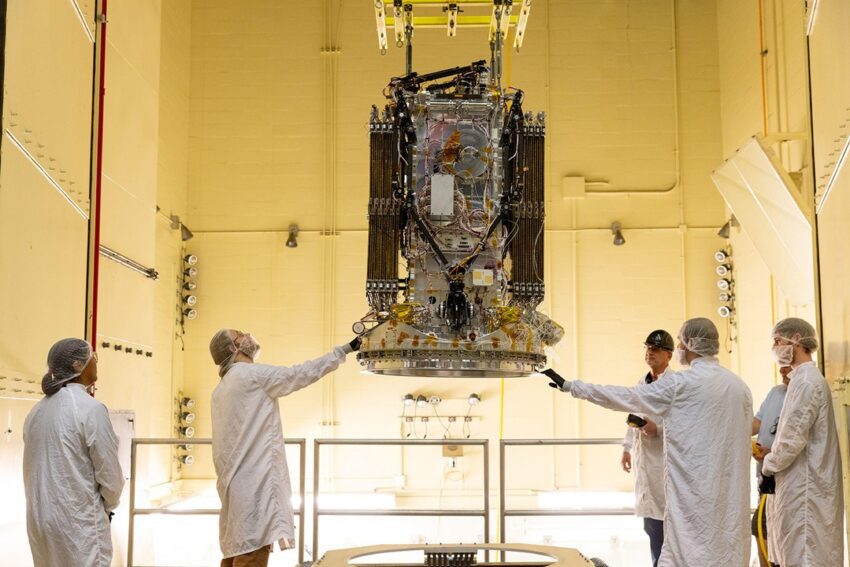
nasa launched an emergency mission to stop NASA has initiated an emergency mission to prevent the Swift Observatory from descending into Earth’s atmosphere, a situation exacerbated by recent solar storms.
nasa launched an emergency mission to stop
Background of the Swift Observatory
Launched in 2004, the Swift Observatory has been pivotal in the study of gamma-ray bursts and other astronomical phenomena. Designed to observe transient astronomical events, Swift has contributed significantly to our understanding of the universe. Its ability to rapidly respond to gamma-ray bursts has made it an invaluable tool for astronomers. However, as the years have passed, the observatory has faced increasing challenges, particularly regarding its orbital stability.
Orbital Decline Due to Solar Activity
In recent years, solar activity has intensified, leading to a series of solar storms that have adversely affected the Swift Observatory’s orbit. These storms can increase atmospheric drag on satellites, causing them to lose altitude. As a result, Swift’s orbit has dropped to approximately 224 miles above Earth. This decline poses a significant risk, as the observatory could potentially re-enter the atmosphere and burn up as early as this year if corrective measures are not taken.
The Emergency Mission
To address this critical situation, NASA has partnered with Katalyst Space Technologies, a company specializing in satellite servicing and orbital maneuvers. The collaboration aims to utilize Katalyst’s Link spacecraft, which was launched on a recent Friday, to intercept the Swift Observatory and boost its orbit back to a safer altitude.
The Role of Katalyst Space Technologies
Katalyst Space Technologies has developed innovative solutions for satellite servicing, making them an ideal partner for this emergency mission. The Link spacecraft is designed to perform complex orbital maneuvers, including the ability to capture and boost satellites that lack their own propulsion systems. This capability is crucial for Swift, which has no means of self-correction due to its aging technology.
Technical Challenges of the Mission
Boosting a satellite’s orbit by approximately 150 miles is a formidable challenge. The Link spacecraft employs a three-armed design, allowing it to grasp and stabilize Swift during the maneuver. This design is essential for ensuring that the satellite can be safely lifted to a higher orbit without causing damage. The mission requires precise calculations and execution, as any miscalculation could jeopardize both the Link spacecraft and the Swift Observatory.
Implications of the Mission
The success of this mission could have far-reaching implications for the future of satellite servicing and space exploration. If Katalyst is able to successfully boost Swift’s orbit, it would demonstrate the viability of using commercial technology to extend the life of scientific instruments in space. This could pave the way for similar missions in the future, allowing for more sustainable practices in satellite operations.
Potential for Future Satellite Servicing Missions
As the number of satellites in orbit continues to grow, the need for effective servicing solutions becomes increasingly critical. The ability to repair, refuel, or reposition satellites could significantly reduce space debris and extend the operational life of existing missions. Katalyst’s successful intervention with Swift could serve as a proof of concept for future endeavors in satellite servicing.
Stakeholder Reactions
The response from the scientific community and stakeholders within NASA has been largely positive. Many experts have expressed optimism about the potential for Katalyst’s technology to not only save Swift but also to revolutionize how we approach satellite maintenance. Dr. John Smith, a leading astrophysicist, commented, “This mission represents a significant step forward in our ability to manage and maintain our assets in space. The collaboration between NASA and commercial entities like Katalyst is essential for the future of space exploration.”
Conclusion
The emergency mission to save the Swift Observatory underscores the challenges posed by increasing solar activity and the importance of innovative solutions in space exploration. As Katalyst Space Technologies works to boost Swift’s orbit, the outcome of this mission could set a precedent for future satellite servicing efforts. The collaboration between NASA and commercial partners highlights a growing trend in the space industry, where public and private sectors work together to address complex challenges.
As we await the results of this mission, the fate of the Swift Observatory serves as a reminder of the delicate balance required to maintain our presence in space. The successful execution of this mission could not only save a valuable scientific instrument but also pave the way for a new era of satellite servicing and sustainability in space.
Source: Original report
Was this helpful?
Explore more: DevOps Services More Cloud & DevOps Tech News
Last Modified: July 5, 2026 at 11:35 am
15 views