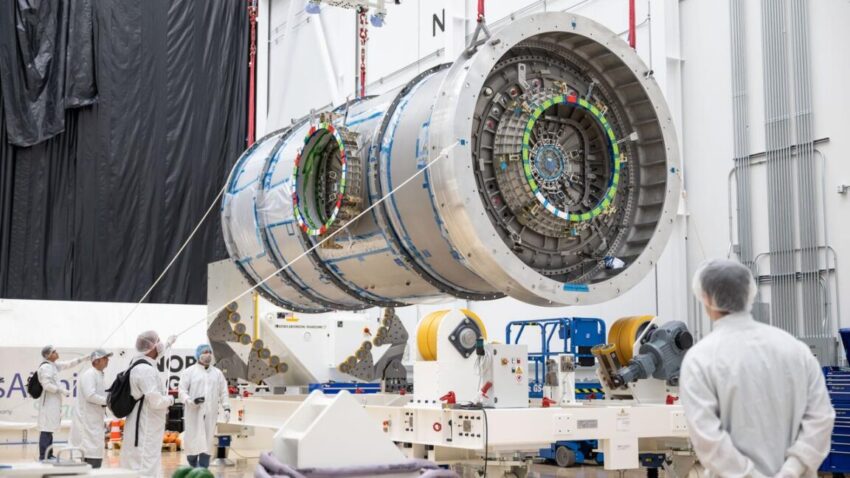
nasa asks northrop grumman to stop working NASA has directed Northrop Grumman to halt work on the Lunar Gateway’s Habitation and Logistics Outpost (HALO) module, marking a significant shift in the agency’s lunar exploration strategy.
nasa asks northrop grumman to stop working
Background on NASA’s Lunar Plans
In recent years, NASA has made substantial investments in its lunar exploration initiatives, particularly with the Artemis program, which aims to return humans to the Moon by the mid-2020s. This program includes plans for a Lunar Gateway, a space station intended to orbit the Moon and serve as a staging point for lunar landings and deep space exploration.
However, in March 2023, NASA announced a pivotal change in its approach to lunar exploration. During a high-profile event at its Washington, DC headquarters, the agency revealed that it would shift its focus from the Lunar Gateway to establishing a base on the Moon’s surface. This decision reflects a broader strategy to prioritize sustainable lunar exploration and the development of technologies that could support future missions to Mars and beyond.
The Lunar Gateway and Its Components
The Lunar Gateway was initially conceived as a multi-module space station that would orbit the Moon, providing a platform for scientific research and a staging area for lunar landings. The Gateway was to consist of several key components, including:
- Power and Propulsion Element (PPE): This module was designed to provide power and propulsion for the Gateway, facilitating its orbit around the Moon.
- Habitation and Logistics Outpost (HALO): This pressurized module was intended to house astronauts during their missions to the Gateway, providing living quarters and essential life support systems.
As NASA announced its shift in focus, it indicated that work on the Lunar Gateway would be paused. The agency confirmed that the Power and Propulsion Element would be repurposed for a nuclear-electric propulsion demonstration in deep space, but the future of the HALO module remained uncertain.
NASA’s Decision to Pause HALO Development
In a recent development, NASA has formally requested Northrop Grumman to stop work on the HALO module. This decision comes as the agency reassesses its lunar strategy and considers the implications of focusing on a lunar surface base instead of an orbital station. The HALO module, which is approximately 6.1 meters long, was intended to be a critical component of the Lunar Gateway, providing astronauts with a place to live and work during their missions.
NASA awarded contracts worth $1.1 billion to Northrop Grumman for the design, construction, and integration of the HALO module with the Power and Propulsion Element. However, with the agency’s pivot away from the Lunar Gateway, the investment in HALO may not yield the intended benefits. The decision to pause development raises questions about the future of the module and its potential applications in other missions.
Implications of the Decision
The decision to halt work on the HALO module has several implications for NASA and its lunar exploration efforts:
- Resource Allocation: By pausing the development of HALO, NASA can reallocate resources and funding to support the establishment of a lunar base. This shift may allow the agency to focus on technologies and infrastructure that are more aligned with its long-term goals.
- Impact on Contractors: Northrop Grumman and other contractors involved in the HALO project may face challenges as a result of this decision. The pause in development could lead to delays in contracts, layoffs, or a reassessment of project priorities.
- Future Missions: The HALO module was designed for use in the Lunar Gateway, but its future applications remain unclear. NASA may explore alternative uses for the module, including potential integration into other lunar or deep space missions.
Stakeholder Reactions
The decision to pause work on the HALO module has elicited a range of reactions from stakeholders in the aerospace industry and the scientific community. Some experts have expressed support for NASA’s shift in focus, emphasizing the importance of establishing a sustainable presence on the Moon’s surface.
Dr. John Logsdon, a prominent space policy expert, commented, “NASA’s decision to prioritize a lunar base over an orbital station reflects a pragmatic approach to lunar exploration. A surface base will allow for more extensive scientific research and the development of technologies that can support future missions to Mars.”
Conversely, some industry insiders have raised concerns about the implications of halting the HALO module’s development. A representative from Northrop Grumman stated, “We are committed to supporting NASA’s vision for lunar exploration, but the pause in HALO development presents challenges for our team and the broader supply chain involved in this project.”
Future of Lunar Exploration
NASA’s decision to pause work on the HALO module is part of a broader reevaluation of its lunar exploration strategy. The agency is now focused on developing a sustainable lunar presence that can support long-term scientific research and technology development. This shift aligns with the goals of the Artemis program, which aims to establish a human presence on the Moon and prepare for future missions to Mars.
As NASA moves forward, it will need to address several key challenges:
- Infrastructure Development: Establishing a lunar base will require significant investment in infrastructure, including habitats, power systems, and life support technologies. NASA will need to collaborate with industry partners to develop these capabilities.
- International Collaboration: The success of lunar exploration efforts may depend on international partnerships. NASA has already engaged with various space agencies, including the European Space Agency (ESA) and the Japan Aerospace Exploration Agency (JAXA), to explore collaborative opportunities.
- Technological Innovation: Developing new technologies for lunar exploration will be critical. This includes advancements in propulsion systems, habitat design, and in-situ resource utilization to support long-duration missions.
Conclusion
NASA’s recent decision to pause work on the HALO module signifies a pivotal moment in the agency’s lunar exploration strategy. As it shifts focus from an orbital space station to a sustainable lunar base, the implications of this decision will reverberate throughout the aerospace industry and the scientific community. While the future of the HALO module remains uncertain, NASA’s commitment to establishing a human presence on the Moon is unwavering. The agency’s ability to adapt its plans and priorities will be crucial as it navigates the challenges of lunar exploration and prepares for the next frontier in space.
Source: Original report
Was this helpful?
Explore more: DevOps Services More Cloud & DevOps Tech News
Last Modified: June 19, 2026 at 2:35 am
35 views