google unveils two new tpus designed for Google has introduced its latest Tensor Processing Units (TPUs), marking a significant advancement in AI hardware designed for the evolving landscape of artificial intelligence.
google unveils two new tpus designed for
Introduction to Google’s TPU Evolution
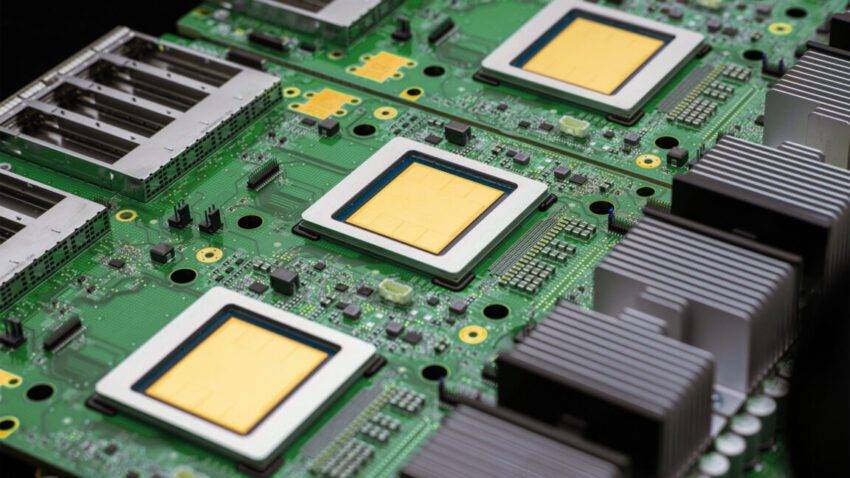
In a landscape where many companies are heavily reliant on Nvidia’s AI accelerators, Google has opted for a different strategy. The tech giant has invested in developing its own custom Tensor Processing Units (TPUs), which form the backbone of its cloud AI infrastructure. Following the announcement of the seventh-generation Ironwood TPU in 2025, Google has now unveiled its eighth-generation TPUs. However, these new chips are not merely faster versions of their predecessors; they represent a fundamental shift in how AI hardware is designed and utilized.
The Agentic Era: A New Paradigm in AI
Google is promoting the concept of the “agentic era,” a term that signifies a transformative phase in AI development. This era is characterized by AI systems that possess a higher degree of autonomy and capability compared to earlier models. As AI applications become more complex and integrated into various sectors, the need for specialized hardware to support these advancements becomes increasingly critical. Google asserts that the traditional approaches to AI hardware are no longer sufficient, necessitating a new generation of TPUs tailored for the demands of this new era.
Introducing TPU8t and TPU8i
The eighth-generation TPUs come in two distinct variants: the TPU8t, designed specifically for training AI models, and the TPU8i, optimized for inference tasks. This dual approach allows Google and its customers to leverage a more efficient and powerful AI platform.
TPU8t: Revolutionizing AI Training
The TPU8t is engineered to significantly reduce the time required to train frontier AI models. Traditionally, training such models could take several months, but with the TPU8t, Google aims to cut this timeframe down to mere weeks. This acceleration in training time is crucial for organizations looking to stay competitive in an increasingly AI-driven market.
Training AI models involves processing vast amounts of data and performing complex calculations. The TPU8t is designed to handle these tasks more efficiently, allowing researchers and developers to iterate on their models more rapidly. This capability is particularly important as organizations strive to develop more sophisticated AI applications that can adapt to real-world scenarios.
TPU8i: Enhancing Inference Capabilities
On the other hand, the TPU8i focuses on inference, which is the process of applying a trained model to new data to generate predictions or insights. As AI applications become more prevalent across industries, the demand for efficient inference solutions has grown. The TPU8i is designed to provide faster and more accurate inference, enabling businesses to deploy AI solutions that can respond to user needs in real-time.
Technical Specifications and Innovations
While Google has not disclosed all the technical specifications of the TPU8 series, some key innovations have been highlighted. The new TPUs are built on advanced semiconductor technology, which allows for increased processing power while maintaining energy efficiency. This is particularly important given the growing concerns around the environmental impact of data centers and AI training.
Additionally, the TPU8 series incorporates enhancements in memory bandwidth and interconnectivity, which are crucial for handling the large datasets typically used in AI training and inference. These improvements enable the TPUs to work more effectively in parallel, further accelerating both training and inference processes.
Implications for AI Development
The introduction of the TPU8 series is likely to have far-reaching implications for AI development. As organizations adopt these new chips, they may find themselves able to push the boundaries of what is possible with AI. This could lead to breakthroughs in various fields, including healthcare, finance, and autonomous systems.
Moreover, the TPU8’s ability to reduce training times could democratize access to advanced AI technologies. Smaller companies and startups, which may have previously been unable to afford the lengthy training periods associated with complex models, could now compete more effectively with larger organizations. This shift could foster innovation and creativity across the tech landscape.
Stakeholder Reactions
The announcement of the TPU8 series has garnered attention from various stakeholders in the tech industry. AI researchers and developers are particularly enthusiastic about the potential of the TPU8t to expedite the training process. Many have expressed optimism that this will enable them to explore more ambitious projects that were previously constrained by time and resource limitations.
On the other hand, some industry analysts have raised questions about the competitive landscape. While Google has made significant strides with its TPUs, Nvidia remains a dominant player in the AI accelerator market. Analysts are keen to see how the TPU8 series will perform in real-world applications compared to Nvidia’s offerings. The competition between these two tech giants could lead to further innovations and improvements in AI hardware.
Google’s Commitment to AI
Google’s investment in developing its own TPUs underscores its long-term commitment to advancing AI technology. The company has been at the forefront of AI research and development for years, and the TPU8 series is a testament to its ongoing efforts to innovate in this space. By providing a robust platform for AI training and inference, Google aims to solidify its position as a leader in the AI ecosystem.
Future Prospects
Looking ahead, the introduction of the TPU8 series may set the stage for even more advancements in AI hardware. As the demand for AI capabilities continues to grow, companies like Google will likely continue to invest in developing specialized hardware that meets the evolving needs of the industry.
Furthermore, as AI systems become more integrated into everyday life, the implications of these advancements will extend beyond the tech sector. Industries such as healthcare, transportation, and education stand to benefit significantly from the enhanced capabilities offered by the TPU8 series. The potential for AI to drive efficiency, improve decision-making, and enhance user experiences is immense.
Conclusion
Google’s unveiling of the TPU8 series marks a pivotal moment in the evolution of AI hardware. With the introduction of the TPU8t and TPU8i, the company is not only addressing the current demands of AI development but also anticipating the future needs of the industry. As organizations begin to adopt these new chips, the landscape of AI applications is likely to change dramatically, paving the way for innovations that could transform various sectors.
As we enter this new “agentic era,” the implications of these advancements will be felt across the globe. The TPU8 series represents a significant step forward in making advanced AI technologies more accessible and efficient, ultimately driving the next wave of innovation in artificial intelligence.
Source: Original report
Was this helpful?
Explore more: More Hardware & Devices Tech News Blog
Last Modified: April 23, 2026 at 12:38 am
19 views