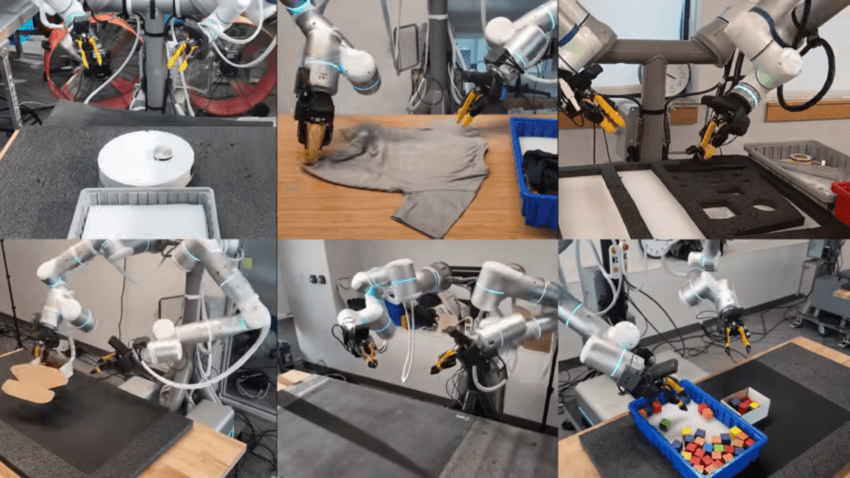
from folding boxes to fixing vacuums gen-1 Generalist, a pioneering robotic machine learning company, has unveiled its latest innovation, the GEN-1 robotics model, which boasts a remarkable 99% reliability across a diverse array of physical tasks that traditionally required human dexterity.
from folding boxes to fixing vacuums gen-1
Introduction to GEN-1
Generalist’s GEN-1 represents a significant leap in the realm of robotics, particularly in its ability to perform complex physical tasks with a level of precision and adaptability that has not been seen before. Unlike its predecessor, the GEN-0 model, which served primarily as a proof of concept, GEN-1 is being marketed as a production-ready solution capable of handling a variety of manual tasks ranging from folding boxes to repairing household appliances like vacuums.
Key Features of GEN-1
High Reliability and Versatility
One of the standout features of the GEN-1 model is its impressive reliability rate of 99%. This level of performance is particularly noteworthy given the complexities involved in robotic manipulation of physical objects. The model is designed to tackle a broad spectrum of tasks, which is a significant advancement over previous robotic systems that were often limited to specific functions.
Improvisation and Problem-Solving Capabilities
Another groundbreaking aspect of GEN-1 is its ability to improvise in the face of disruptions. This capability allows the robot to adapt its movements and strategies based on real-time feedback, making it more effective in dynamic environments. According to Generalist, GEN-1 can “connect ideas from different places in order to solve new problems,” a feature that could revolutionize how robots interact with their surroundings.
Building on Previous Models
GEN-1 builds on the foundation laid by the GEN-0 model, which was introduced in November as a demonstration of the potential benefits of scaling laws in robotics training. The GEN-0 model highlighted how increasing the amount of pre-training data and computational resources could enhance the performance of robotic systems post-training. This principle has been crucial in developing GEN-1, which has taken these insights to the next level.
The Challenge of Data in Robotics
One of the significant hurdles in advancing robotic capabilities has been the lack of quality data regarding how humans manipulate objects. While large language models have access to vast amounts of text data from the Internet, robotic models do not have a similar reservoir of information. This gap has made it challenging to train robots effectively for physical tasks.
Innovative Data Collection Techniques
To address this issue, Generalist has developed a unique solution involving “data hands.” These wearable pincers are designed to capture micro-movements and visual information as humans perform manual tasks. This innovative approach has allowed Generalist to collect over half a million hours of physical interaction data, amounting to petabytes of information. This extensive dataset serves as the backbone for training the GEN-1 model, enabling it to learn from human-like movements and refine its skills accordingly.
Implications for Various Industries
The introduction of GEN-1 has far-reaching implications across multiple sectors. Its ability to perform tasks with high reliability and adaptability could transform industries such as manufacturing, logistics, and even healthcare.
Manufacturing and Logistics
In manufacturing, GEN-1 could streamline assembly lines by taking over repetitive tasks that require precision and consistency. This would not only improve efficiency but also reduce the risk of human error. In logistics, the model’s ability to handle various physical tasks could enhance warehouse operations, from sorting packages to loading and unloading goods.
Healthcare Applications
In the healthcare sector, GEN-1 could assist in tasks ranging from managing inventory in pharmacies to aiding in surgical procedures. Its adaptability and reliability could prove invaluable in environments where precision is critical, potentially improving patient outcomes and operational efficiency.
Stakeholder Reactions
The announcement of GEN-1 has elicited a range of reactions from industry stakeholders, including investors, researchers, and potential users. Many are optimistic about the potential applications of the technology, while others express caution regarding the implications of increased automation.
Investor Enthusiasm
Investors have shown considerable interest in Generalist’s advancements, viewing GEN-1 as a game-changer in the robotics landscape. The model’s high reliability and versatility make it an attractive option for companies looking to automate processes and reduce labor costs. This enthusiasm is reflected in the funding rounds that Generalist has successfully completed, allowing the company to further develop its technology.
Concerns Over Automation
On the flip side, there are concerns regarding the broader implications of increased automation. Some stakeholders worry about job displacement and the ethical considerations surrounding the deployment of robots in various sectors. As GEN-1 and similar technologies become more prevalent, discussions about the future of work and the role of humans in increasingly automated environments are likely to intensify.
Future Prospects
The launch of GEN-1 marks a significant milestone in the evolution of robotics, but it also raises questions about the future trajectory of the industry. As Generalist continues to refine its technology, the potential for further advancements is substantial.
Continued Research and Development
Generalist is expected to invest heavily in ongoing research and development to enhance the capabilities of GEN-1. This could involve integrating advanced machine learning algorithms, improving the data collection process, and expanding the range of tasks that the robot can perform. The company may also explore partnerships with other organizations to leverage additional expertise and resources.
Broader Adoption and Integration
As GEN-1 proves its reliability and effectiveness in real-world applications, broader adoption across industries is likely. Companies may begin to integrate GEN-1 into their operations, leading to a shift in how work is performed. This integration could pave the way for new business models and operational strategies that capitalize on the strengths of robotic systems.
Conclusion
The introduction of the GEN-1 robotics model by Generalist signifies a transformative moment in the field of robotics. With its impressive reliability, adaptability, and innovative data collection methods, GEN-1 is poised to impact various industries significantly. While the excitement surrounding this technology is palpable, it is essential to consider the broader implications of increased automation and the future of work. As Generalist continues to push the boundaries of what is possible in robotics, the conversation around these topics will undoubtedly evolve.
Source: Original report
Was this helpful?
Explore more: AI Automation Services More AI & Automation Tech News
Last Modified: April 7, 2026 at 7:37 am
17 views