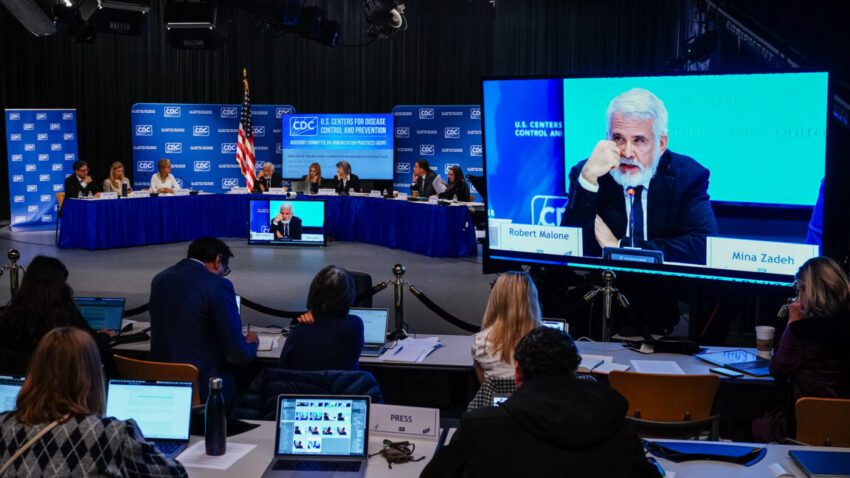
after court loss rfk jr gives himself Robert F. Kennedy Jr., known for his controversial stance against vaccines, has recently made significant changes to the charter of a federal vaccine advisory panel, seemingly consolidating his authority in the selection of its members.
after court loss rfk jr gives himself
Background on the Advisory Committee
The Advisory Committee on Immunization Practices (ACIP) is a critical component of the Centers for Disease Control and Prevention (CDC), tasked with providing expert recommendations on the use of vaccines in the United States. Established in 1964, ACIP plays a vital role in shaping public health policy and ensuring that vaccination strategies are based on sound scientific evidence. The committee comprises a diverse group of experts, including epidemiologists, pediatricians, and public health professionals, who collectively assess the safety and efficacy of vaccines.
In recent years, the role of ACIP has come under scrutiny, particularly as vaccine hesitancy has surged amid the COVID-19 pandemic. This has led to increased attention on the qualifications and backgrounds of committee members, as well as the political influences that may affect their recommendations. The recent actions taken by Kennedy, who was appointed as Health Secretary, have intensified this scrutiny.
Recent Changes to the Charter
According to a notice published in the Federal Register, Kennedy has amended the charter of ACIP to allow for greater flexibility in the appointment of its members. These changes come in the wake of a federal court ruling that temporarily blocked the advisors Kennedy had previously selected. This ruling was issued by U.S. District Judge Brian Murphy, who found that Kennedy’s choices largely lacked the requisite expertise in relevant fields.
The amendments to the charter include:
- Loosening membership requirements, potentially allowing individuals with less relevant experience to serve on the committee.
- Granting Kennedy more authority to hand-pick members, which raises concerns about the impartiality and scientific integrity of the advisory panel.
These changes have sparked considerable debate among public health experts, lawmakers, and advocates for vaccine safety. Many are concerned that the modifications could undermine the credibility of ACIP and jeopardize public trust in vaccination programs.
Legal Context and Court Ruling
The court ruling that prompted these changes was a significant setback for Kennedy. Judge Murphy’s decision emphasized the importance of maintaining a “fairly balanced” representation of viewpoints within the relevant scientific community. In his ruling, Murphy stated, “A committee of non-experts cannot be said to embody ‘fairly balanced… points of view’ within the relevant scientific community.” This assertion highlights the necessity for ACIP to consist of members who possess the expertise and qualifications to make informed recommendations regarding vaccines.
The judge’s ruling was based on the premise that advisory committees must adhere to federal regulations, which stipulate that they should represent a diverse range of perspectives within the relevant fields. Kennedy’s initial selections were criticized for being predominantly aligned with anti-vaccine sentiments, raising concerns about the potential for bias in the committee’s recommendations.
Implications of the Changes
The amendments to ACIP’s charter could have far-reaching implications for public health policy and vaccine acceptance in the United States. By granting himself increased power over member selection, Kennedy may be positioning the committee to reflect his views rather than those of the broader scientific community. This could lead to recommendations that are not grounded in robust scientific evidence, ultimately affecting vaccination rates and public health outcomes.
Experts warn that a committee lacking in diverse expertise may struggle to address the complexities of vaccine-related issues, including safety, efficacy, and public perception. The potential for a skewed representation of viewpoints could hinder the committee’s ability to provide balanced and credible recommendations, which are essential for guiding vaccination strategies across the nation.
Stakeholder Reactions
The response to Kennedy’s actions has been mixed, with various stakeholders expressing their concerns and support. Public health advocates and medical professionals have voiced alarm over the potential erosion of scientific integrity within ACIP. They argue that the committee’s credibility is paramount in fostering public trust in vaccines, especially in light of the ongoing challenges posed by vaccine misinformation.
Dr. Anthony Fauci, former director of the National Institute of Allergy and Infectious Diseases, stated, “The integrity of advisory committees is crucial for public health. We cannot afford to compromise on the expertise that guides our vaccination policies.” His comments underscore the importance of maintaining a committee that is representative of the scientific community’s consensus on vaccine safety and efficacy.
On the other hand, some supporters of Kennedy’s approach argue that a more diverse range of perspectives could lead to a more comprehensive understanding of vaccine-related issues. They contend that including individuals with differing viewpoints may foster constructive dialogue and ultimately enhance the committee’s recommendations. However, this perspective raises questions about the qualifications and expertise of those who may be appointed under the new charter.
Public Health Consequences
The potential consequences of these changes extend beyond the immediate composition of ACIP. Public health experts warn that a lack of credible recommendations could exacerbate vaccine hesitancy, particularly among populations already skeptical of vaccines. Misinformation surrounding vaccines has proliferated in recent years, and any indication that the advisory committee is not grounded in scientific expertise could further erode public trust.
In a time when vaccination is critical for controlling infectious diseases, the ramifications of Kennedy’s amendments could be profound. Vaccination programs rely on public confidence to achieve high coverage rates, which are essential for herd immunity. If the recommendations from ACIP are perceived as biased or lacking in scientific rigor, it could lead to decreased vaccination rates and increased vulnerability to outbreaks of vaccine-preventable diseases.
The Role of Transparency
Transparency in the decision-making processes of advisory committees is vital for maintaining public trust. As Kennedy consolidates power over ACIP, the question of transparency becomes increasingly pertinent. Stakeholders are calling for clear communication regarding the selection process for committee members and the criteria used to evaluate their qualifications.
Moreover, there is a growing demand for accountability in the recommendations made by ACIP. Public health advocates emphasize the need for the committee to operate independently of political influences, ensuring that its recommendations are based solely on scientific evidence. This independence is crucial for preserving the integrity of vaccination programs and safeguarding public health.
Conclusion
The recent changes to the ACIP charter by Robert F. Kennedy Jr. represent a significant shift in the governance of vaccine advisory practices in the United States. By granting himself greater authority in member selection and loosening membership requirements, Kennedy raises concerns about the potential for bias and the erosion of scientific integrity within the committee.
As public health experts and advocates continue to scrutinize these developments, the implications for vaccination policy and public trust in vaccines remain uncertain. The ongoing debate surrounding the role of ACIP underscores the importance of maintaining a committee that reflects the diverse expertise of the scientific community, ensuring that recommendations are grounded in robust evidence and free from political influence.
Source: Original report
Was this helpful?
Explore more: More Big Tech & Platforms Tech News Blog
Last Modified: April 7, 2026 at 7:35 am
13 views