explanation for why we don t see Recent research has challenged a long-standing theory regarding the extinction of giant insects, particularly the two-foot-long dragonflies that once dominated the skies.
explanation for why we don t see
The Era of Giant Insects
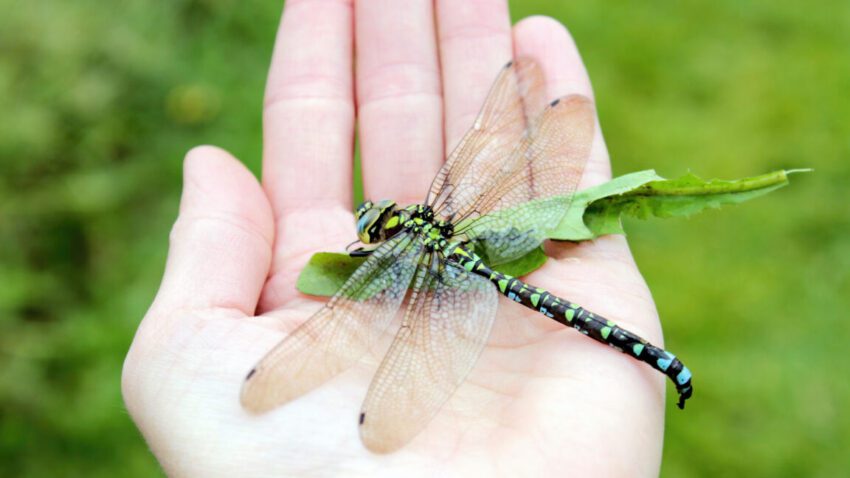
Three hundred million years ago, during the late Palaeozoic era, the Earth was home to an astonishing variety of life forms, including some of the largest insects ever to exist. Among these ancient creatures was Meganeuropsis permiana, a predatory insect that bore a striking resemblance to modern-day dragonflies. This remarkable insect boasted a wingspan exceeding 70 centimeters (approximately 28 inches) and weighed around 100 grams (about 3.5 ounces). The sheer size of these insects has fascinated biologists and paleontologists for decades, prompting them to investigate why such gigantic forms no longer exist today.
The Oxygen Constraint Hypothesis
For over thirty years, scientists have largely accepted the “oxygen constraint hypothesis” as the primary explanation for the decline of giant insects. This hypothesis posits that the atmospheric oxygen levels during the Palaeozoic era were significantly higher than they are today, allowing insects to grow to enormous sizes. As the Earth’s atmosphere evolved and oxygen levels dropped, it became increasingly difficult for large insects to survive. The reasoning behind this theory is rooted in the unique respiratory systems of insects.
Insect Respiration Explained
Unlike mammals, which possess a centralized pair of lungs and a closed circulatory system that efficiently delivers oxygen-rich blood to tissues, insects utilize a different mechanism for respiration. They breathe through a network of internalized tubes known as the tracheal system. This system allows air to diffuse directly into their tissues, but it is less efficient than the respiratory systems found in larger animals. As a result, it has been suggested that larger body sizes would require a higher concentration of oxygen in the atmosphere to meet their metabolic needs.
Edward Snelling’s Perspective
Edward Snelling, a professor of veterinary science at the University of Pretoria, has been a prominent voice in the debate surrounding the oxygen constraint hypothesis. He acknowledges the appeal of this explanation, describing it as “a simple, elegant explanation.” However, Snelling argues that this theory is fundamentally flawed. His research has led him to conclude that the relationship between insect size and atmospheric oxygen levels is not as straightforward as previously believed.
Recent Research Findings
In a recent study, Snelling and his colleagues conducted a comprehensive analysis of the physiological constraints that govern insect size. Their findings suggest that factors other than atmospheric oxygen levels play a critical role in determining the maximum size of insects. The research team examined various species of insects and their respiratory systems, looking for patterns that could explain the limitations on size.
Physiological Constraints
One of the key insights from Snelling’s research is that the tracheal system, while efficient for small insects, becomes increasingly less effective as body size increases. Larger insects face significant challenges in delivering oxygen to their tissues, which can lead to metabolic limitations. However, this does not necessarily imply that atmospheric oxygen levels are the sole determinant of insect size.
Alternative Explanations
Snelling’s work has opened the door to alternative explanations for the decline of giant insects. One possibility is that ecological factors, such as predation and competition, may have played a more significant role in shaping insect size than previously thought. As ecosystems evolved, the introduction of new predators and competitors could have created pressures that favored smaller body sizes.
Implications for Evolutionary Biology
The implications of Snelling’s research extend beyond the realm of entomology. Understanding the factors that limit insect size can provide valuable insights into evolutionary biology as a whole. The study of ancient insects like Meganeuropsis permiana offers a unique window into the evolutionary pressures that have shaped life on Earth over millions of years.
Ecological Dynamics
By examining the ecological dynamics of ancient ecosystems, researchers can gain a better understanding of how various species interacted with one another. The decline of giant insects may have been influenced by a complex interplay of factors, including changes in climate, habitat availability, and the emergence of new species. These dynamics can inform our understanding of contemporary biodiversity and the ongoing challenges faced by many species today.
Reactions from the Scientific Community
As Snelling’s findings circulate within the scientific community, reactions have been mixed. Some researchers have expressed skepticism about the dismissal of the oxygen constraint hypothesis, arguing that it still holds merit in certain contexts. Others have welcomed the new perspective, viewing it as an opportunity to re-evaluate long-held assumptions about insect evolution.
Future Research Directions
The debate surrounding the decline of giant insects underscores the need for further research in this area. Future studies may focus on a variety of factors, including genetic adaptations, metabolic rates, and the influence of environmental changes on insect physiology. By employing advanced technologies, such as genetic sequencing and computational modeling, researchers can develop a more nuanced understanding of the evolutionary history of insects.
Conclusion
The story of giant insects like Meganeuropsis permiana serves as a fascinating chapter in the history of life on Earth. While the oxygen constraint hypothesis has dominated discussions for decades, recent research by Edward Snelling and his colleagues challenges this notion, suggesting that a more complex interplay of factors has shaped the evolution of insect size. As scientists continue to explore this intriguing topic, they may uncover new insights that not only illuminate the past but also inform our understanding of the present and future of biodiversity.
Source: Original report
Was this helpful?
Explore more: More General Technology Tech News Blog
Last Modified: March 28, 2026 at 8:36 pm
15 views