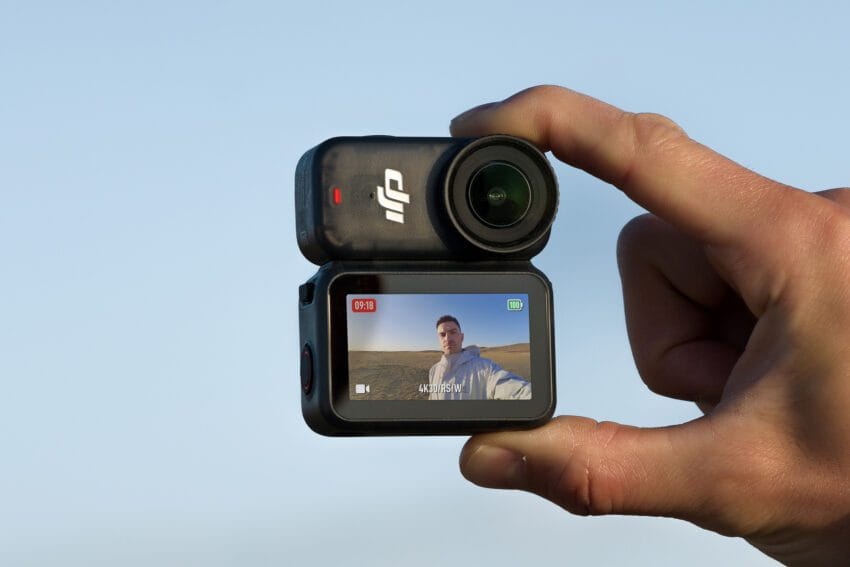
dji s smallest action camera will start DJI has unveiled its latest innovation in the action camera market with the introduction of the Osmo Nano, a compact device designed to deliver high-quality recording capabilities while maintaining a lightweight profile.
dji s smallest action camera will start
Overview of the Osmo Nano
The DJI Osmo Nano is positioned as the company’s smallest action camera to date, boasting a sleek and lightweight design. It features a 1 / 1.3-inch sensor that offers an impressive 13.5 stops of dynamic range, allowing for superior image quality and versatility in various lighting conditions. The camera is capable of recording in 4K at 120 frames per second (fps), making it suitable for capturing fast-paced action with clarity and detail.
In a market increasingly dominated by compact devices, the Osmo Nano stands out not only for its size but also for its performance. The camera is designed to be paired with the Multifunctional Vision Dock, a modular accessory that provides a touchscreen interface and enhances battery life. This pairing is reminiscent of competitor products like the Insta360 Go Ultra, which also emphasizes modularity and ease of use.
Launch Details and Availability
Despite the excitement surrounding its launch, DJI has confirmed that the Osmo Nano will not be immediately available in the U.S. market. According to DJI spokesperson Daisy Kong, “The Osmo Nano will not be available officially in the U.S. market on official websites upon its global launch on September 23.” This decision reflects DJI’s ongoing strategy to adapt to evolving local conditions while remaining committed to serving its U.S. customer base.
The Osmo Nano is set to launch in several other regions, including Canada, where the pricing starts at $309 USD for the model with 64GB of built-in storage. In the UK, the starting price is £239, while in France, Germany, and Spain, it will retail for €279. For those seeking additional storage, a version with 128GB will be available for $339 USD, £259, and €309, respectively.
Design and Build Quality
One of the most notable aspects of the Osmo Nano is its compact design. The camera measures just 57mm in length and weighs a mere 52 grams, making it significantly lighter than its predecessor, the Action 2, which was released in 2021. The Action 2 featured a square design and a modular approach that allowed for various accessories to be magnetically attached, enhancing its functionality and battery life. In contrast, the Osmo Nano adopts a pill-shaped form factor that prioritizes portability.
When compared to the Osmo Action 5 Pro, which weighs 146 grams, the Osmo Nano is a lightweight alternative. Even when connected to the touchscreen dock, the total weight of the Osmo Nano is just 124 grams, making it an attractive option for those who prioritize ease of transport and minimal bulk during their adventures.
Battery Life and Performance
The Osmo Nano’s battery performance is designed to meet the demands of action enthusiasts. It offers approximately 55 to 60 minutes of recording time at 4K / 30fps, which is adequate for capturing short bursts of action. For those who prefer a lower resolution, the camera can record up to 90 minutes at 1080p / 24fps. When connected to the Multifunctional Vision Dock, the battery life significantly increases, allowing for 125 to 135 minutes of recording at 4K / 30fps and up to 200 minutes at 1080p / 24fps.
However, users should be aware that utilizing features such as the pre-record option, which saves footage captured just before the recording starts, may impact battery life. This feature can be particularly useful for capturing spontaneous moments, but it requires careful consideration of power management during extended use.
Water Resistance and Durability
For outdoor enthusiasts, the Osmo Nano is designed to withstand various environmental conditions. It is waterproof to depths of up to 10 meters, making it suitable for activities such as snorkeling or capturing footage in the rain. However, the Multifunctional Vision Dock, while providing additional functionality, has a limited IPX4 splash resistance rating, meaning it is not fully waterproof and should be protected from submersion.
Innovative Features
The Osmo Nano incorporates several innovative features aimed at enhancing user experience and convenience. One standout feature is the ability to connect two wireless microphones directly to the camera without the need for an additional receiver. This capability simplifies the audio capture process, allowing users to achieve high-quality sound without cumbersome equipment.
Another notable feature is the camera’s gesture control functionality. Users can start recording by gently patting the camera or nodding their head if the camera is mounted on a hat or helmet. This hands-free operation is particularly beneficial for extreme sports or activities where traditional button pressing may be impractical. Such intuitive controls enhance the usability of the device, allowing users to focus on their activities rather than fiddling with buttons.
Comparison with Competitors
The action camera market is highly competitive, with several brands vying for consumer attention. The Osmo Nano’s lightweight design and modular capabilities position it as a strong contender against products like the Insta360 Go Ultra and GoPro’s HERO series. While the GoPro HERO series is known for its robust features and extensive accessory ecosystem, the Osmo Nano’s unique design and user-friendly features may attract a different segment of the market.
For instance, the Insta360 Go Ultra emphasizes portability and ease of use, similar to the Osmo Nano. However, DJI’s offering may appeal to users looking for a balance between compactness and advanced recording capabilities. The ability to record in 4K at 120fps sets the Osmo Nano apart, particularly for content creators who prioritize high-resolution footage.
Stakeholder Reactions
The announcement of the Osmo Nano has garnered mixed reactions from consumers and industry experts alike. Many are excited about the camera’s lightweight design and advanced features, particularly the gesture control and modular capabilities. However, some users have expressed disappointment over the delayed U.S. release, which may hinder its initial market penetration.
Industry analysts have noted that DJI’s decision to focus on international markets first may be a strategic move to gauge consumer interest and refine their offerings based on feedback. This approach could ultimately benefit the U.S. launch by ensuring that the product meets the specific needs and preferences of American consumers.
Conclusion
The DJI Osmo Nano represents a significant advancement in the realm of compact action cameras. With its lightweight design, impressive recording capabilities, and innovative features, it is poised to attract a diverse range of users, from casual adventurers to serious content creators. While its initial unavailability in the U.S. market may pose challenges, the global launch is likely to generate interest and excitement among action camera enthusiasts worldwide.
As the action camera market continues to evolve, the Osmo Nano’s unique features and design may set new standards for what consumers can expect from compact recording devices. Whether it can successfully carve out its niche in a crowded market remains to be seen, but the potential for success is certainly present.
Source: Original report
Was this helpful?
Explore more: More Hardware & Devices Tech News Blog
Last Modified: September 23, 2025 at 5:41 pm
18 views