building ordered polymers with metal Recent advancements in polymer science have led to the development of ordered structures that could revolutionize various applications, as recognized by the Nobel Prize Committee.
building ordered polymers with metal
The Evolution of Polymers
Polymers are ubiquitous in our daily lives, found in everything from packaging materials to medical devices. Traditionally, these polymers have been characterized by their disordered structures, where long chains of atoms are tangled and intertwined. This disorganization limits the functionality and efficiency of these materials. However, since the early 1990s, chemists have made significant strides in developing techniques that allow for the construction of polymers with precisely defined structures.
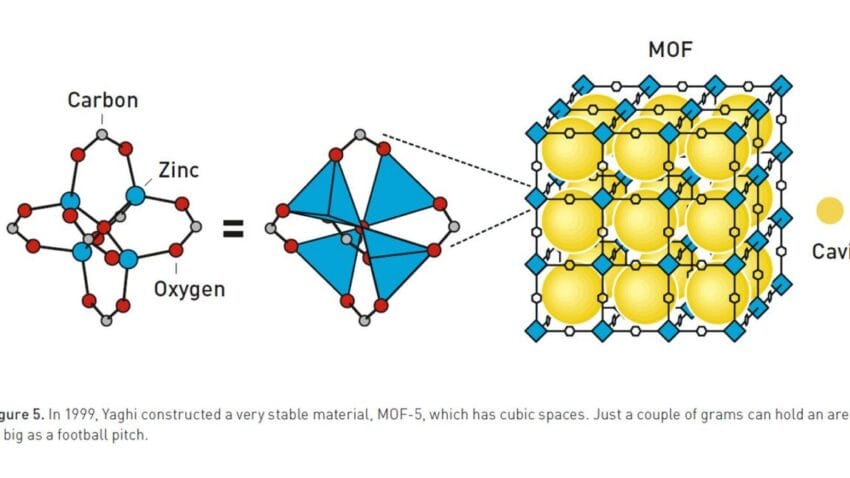
The breakthrough came with the advent of metal-organic frameworks (MOFs), a class of compounds that combine metal ions with organic molecules. These frameworks are notable for their highly ordered structures, which provide distinct chemical properties that can be tailored for specific applications. The large pores within MOFs enable them to filter or store gases effectively, while catalytic centers embedded within the polymer can facilitate chemical reactions. This versatility has opened new avenues in fields such as gas storage, catalysis, and drug delivery.
Nobel Prize Recognition
On Wednesday, the Nobel Prize Committee honored three pioneering researchers for their contributions to the development of MOFs. Richard Robson was recognized for demonstrating the first MOF, while Susumu Kitagawa and Omar Yaghi were celebrated for their efforts in expanding the potential and applications of these materials. Their work has not only advanced the field of polymer chemistry but has also paved the way for practical applications that could significantly impact various industries.
Richard Robson’s Contributions
Richard Robson’s initial work in the 1990s laid the groundwork for the field of MOFs. He successfully synthesized the first metal-organic framework, demonstrating that it was possible to create a stable structure using metal ions and organic ligands. This foundational research was critical, as it provided a proof of concept that inspired further exploration into the potential of MOFs.
Susumu Kitagawa’s Innovations
Following Robson’s pioneering work, Susumu Kitagawa expanded the field by exploring the structural diversity of MOFs. He developed new synthetic methods that allowed for the creation of a wide variety of frameworks with different metal centers and organic linkers. Kitagawa’s research has been instrumental in demonstrating the tunability of MOFs, enabling scientists to design materials with specific properties tailored for particular applications. His work has led to advancements in gas storage, particularly hydrogen and carbon dioxide, which are critical for energy and environmental applications.
Omar Yaghi’s Impact
Omar Yaghi has also played a significant role in the development of MOFs, particularly in their application for gas storage and catalysis. He is known for his innovative approaches to synthesizing new frameworks and for his research into their potential uses in capturing carbon dioxide from the atmosphere. Yaghi’s work has highlighted the importance of MOFs in addressing pressing global challenges, such as climate change and energy sustainability. His contributions have not only advanced the scientific understanding of these materials but have also demonstrated their practical applications in real-world scenarios.
Understanding the Structure of MOFs
At the core of MOFs’ functionality is their unique structure. Unlike traditional polymers, which are often characterized by a random arrangement of molecules, MOFs are built from a repeating unit of metal ions coordinated to organic ligands. This arrangement creates a three-dimensional network with well-defined pores and channels. The size and shape of these pores can be manipulated by altering the metal ions or organic linkers used in the synthesis process.
This ordered structure allows MOFs to exhibit properties that are not typically found in conventional polymers. For instance, the large surface area of MOFs makes them ideal candidates for gas storage applications. They can adsorb significant amounts of gases such as hydrogen, methane, and carbon dioxide, making them valuable for energy storage and environmental remediation. Additionally, the presence of catalytic centers within the framework can enhance the efficiency of chemical reactions, making MOFs useful in various industrial processes.
Applications of Metal-Organic Frameworks
The versatility of MOFs has led to a wide range of applications across different fields. Some of the most notable applications include:
- Gas Storage: MOFs can store gases at high densities, making them suitable for applications in hydrogen fuel cells and natural gas vehicles.
- Catalysis: The catalytic properties of MOFs can be harnessed to facilitate chemical reactions, potentially leading to more efficient industrial processes.
- Drug Delivery: The porous structure of MOFs allows for the encapsulation of drugs, enabling targeted delivery and controlled release.
- Environmental Remediation: MOFs can capture pollutants from the air or water, providing a means to address environmental challenges.
Gas Storage and Separation
One of the most promising applications of MOFs is in gas storage and separation. The ability to store gases at high densities is crucial for the development of clean energy technologies. For instance, hydrogen fuel cells require efficient storage solutions to be viable for widespread use. MOFs have shown great potential in this area, with some frameworks capable of storing hydrogen at pressures significantly lower than traditional methods.
Moreover, MOFs can selectively adsorb specific gases, making them ideal for separation processes. This property is particularly valuable in carbon capture technologies, where MOFs can be used to selectively capture carbon dioxide from industrial emissions or the atmosphere, contributing to efforts to mitigate climate change.
Catalysis
The catalytic properties of MOFs are another area of significant interest. The presence of metal ions within the framework can provide active sites for chemical reactions, enhancing the efficiency of various processes. Researchers are exploring the use of MOFs in catalyzing reactions for the production of fine chemicals, pharmaceuticals, and renewable fuels. The tunability of MOFs allows for the design of catalysts with specific properties tailored to particular reactions, potentially leading to more sustainable industrial practices.
Drug Delivery
In the field of medicine, MOFs are being investigated for their potential in drug delivery applications. The porous structure of these frameworks allows for the encapsulation of therapeutic agents, enabling targeted delivery to specific tissues or cells. This approach could improve the efficacy of treatments while minimizing side effects. Additionally, the controlled release of drugs from MOFs can enhance treatment outcomes by maintaining therapeutic levels over extended periods.
Environmental Applications
MOFs are also being explored for their potential in environmental remediation. Their ability to capture pollutants from air and water makes them valuable tools for addressing environmental challenges. For example, researchers are investigating the use of MOFs to remove heavy metals and organic contaminants from wastewater, contributing to cleaner water sources. Furthermore, their capacity to adsorb greenhouse gases could play a role in efforts to combat climate change.
Future Directions in MOF Research
The recognition of Richard Robson, Susumu Kitagawa, and Omar Yaghi by the Nobel Prize Committee underscores the importance of continued research in the field of metal-organic frameworks. As scientists explore new synthesis methods and applications, the potential for MOFs to address global challenges becomes increasingly apparent.
Future research may focus on enhancing the stability and scalability of MOF production, making them more accessible for industrial applications. Additionally, the exploration of new metal ions and organic linkers could lead to the discovery of novel frameworks with unique properties. As the field evolves, collaborations between chemists, engineers, and industry stakeholders will be crucial in translating laboratory discoveries into practical solutions.
Conclusion
The development of metal-organic frameworks represents a significant advancement in polymer science, with the potential to transform various industries. The contributions of Richard Robson, Susumu Kitagawa, and Omar Yaghi have laid the foundation for ongoing research and innovation in this field. As scientists continue to explore the possibilities of MOFs, their impact on energy storage, catalysis, drug delivery, and environmental remediation could be profound, offering solutions to some of the most pressing challenges of our time.
Source: Original report
Was this helpful?
Explore more: More General Technology Tech News Blog
Last Modified: October 8, 2025 at 10:37 pm
6 views