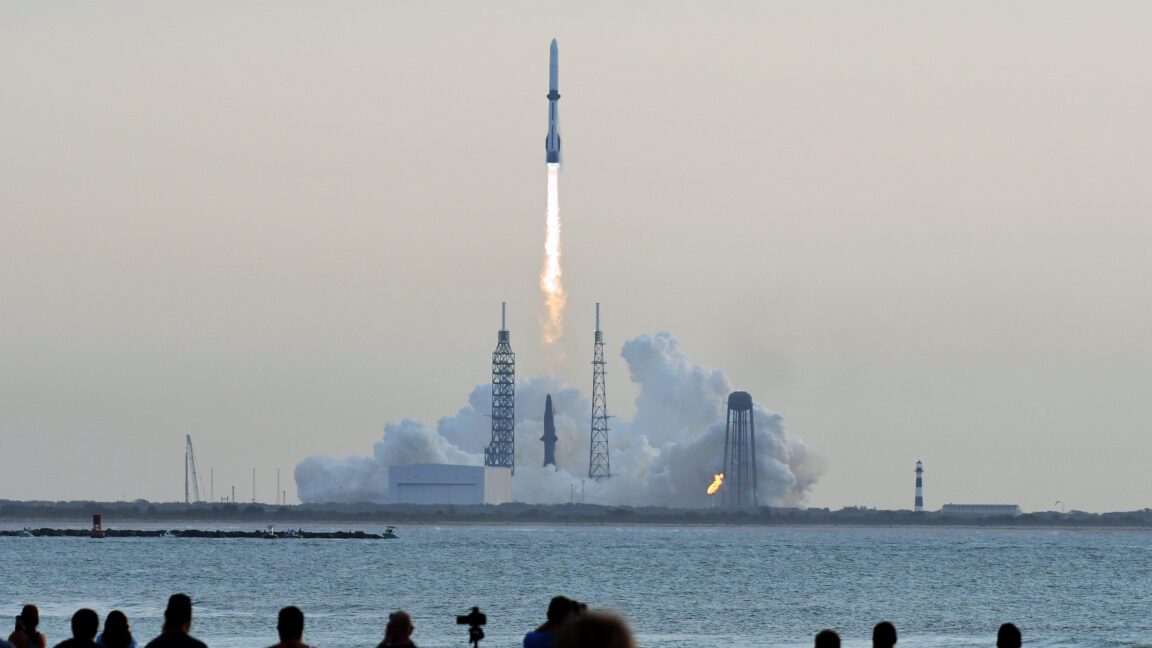
blue origin successfully reused its new glenn Blue Origin has marked a significant milestone in space exploration with the successful reuse of its New Glenn rocket during the launch of AST SpaceMobile’s BlueBird 7 satellite.
blue origin successfully reused its new glenn
Overview of the Launch
On the scheduled launch date, Blue Origin’s New Glenn rocket lifted off successfully, carrying the BlueBird 7 satellite into space. This mission represents a noteworthy achievement for Blue Origin, as it is the second successful launch and landing of the New Glenn’s first stage booster. The rocket’s ability to return safely to its landing pad demonstrates the company’s commitment to developing reusable launch vehicles, a concept that has gained traction in the aerospace industry.
Significance of Reusable Rockets
The concept of reusable rockets has transformed the landscape of space travel. Traditionally, rockets were single-use, leading to high costs and significant waste. By developing reusable technology, companies like Blue Origin and SpaceX aim to reduce the financial burden associated with space missions. The successful landing of the New Glenn booster is a testament to the advancements in engineering and technology that make this possible.
Details of the Mission
Despite the successful landing of the New Glenn rocket, the mission faced challenges regarding the deployment of the BlueBird 7 satellite. The satellite was intended to operate as a cell-tower-in-space, designed to provide mobile connectivity in remote areas. However, the second stage of the launch vehicle delivered the satellite to a lower orbit than anticipated, rendering it functionally ineffective.
AST SpaceMobile’s Statement
In response to the mission’s outcome, AST SpaceMobile released a statement acknowledging the partial success of the launch. The company confirmed that while the satellite successfully separated from the launch vehicle and powered on, the lower-than-expected orbit compromised its operational capabilities. This outcome highlights the complexities involved in satellite deployment and the critical role that precise orbital insertion plays in mission success.
Technical Challenges and Implications
The challenges faced during this mission underscore the technical difficulties inherent in space launches. Achieving the correct orbit is crucial for satellites designed to provide specific services, such as telecommunications. The failure to reach the intended orbit for BlueBird 7 raises questions about the reliability of the launch vehicle’s second stage and its ability to execute precise maneuvers.
Impact on AST SpaceMobile
For AST SpaceMobile, the implications of this mission are significant. The company has invested considerable resources into developing its satellite technology, and the failure to achieve the desired orbit may delay its plans for expanding mobile connectivity. The BlueBird 7 satellite was expected to play a vital role in bridging the connectivity gap in underserved regions, and this setback could hinder those efforts.
Future of Blue Origin and New Glenn
Despite the challenges faced during this mission, Blue Origin’s successful reuse of the New Glenn rocket is a positive development for the company. The ability to launch and land the same rocket multiple times is a crucial step toward achieving cost-effective space travel. Blue Origin aims to continue refining its technology and expanding its launch capabilities, with plans for future missions that could further demonstrate the reliability of the New Glenn rocket.
Broader Industry Context
The aerospace industry is witnessing a competitive landscape, with multiple companies vying for dominance in the space launch market. Blue Origin, founded by Jeff Bezos, is one of several players in this arena, alongside SpaceX, Rocket Lab, and others. Each company is focused on developing innovative technologies to enhance the efficiency and cost-effectiveness of space missions.
Stakeholder Reactions
The reactions from stakeholders in the aerospace industry have been mixed following the launch. While many experts commend Blue Origin for its achievement in reusable rocket technology, there is also concern regarding the implications of the satellite’s failure to reach its intended orbit. Industry analysts have pointed out that while the successful landing is a significant milestone, the ultimate goal of any launch is to deliver payloads effectively.
Community and Investor Perspectives
Investors and community members have expressed cautious optimism about Blue Origin’s future. The successful reuse of the New Glenn rocket may bolster investor confidence, as it demonstrates the company’s capability to innovate and reduce costs. However, the partial failure of the BlueBird 7 mission could lead to increased scrutiny regarding the reliability of Blue Origin’s launch vehicles.
Looking Ahead
As Blue Origin continues to refine its technology and expand its launch capabilities, the company faces the challenge of ensuring that future missions achieve their objectives. The aerospace industry is evolving rapidly, and the ability to adapt and learn from setbacks will be crucial for Blue Origin’s long-term success.
Upcoming Missions
Blue Origin has several upcoming missions planned, which will provide opportunities to demonstrate the reliability of its New Glenn rocket and its ability to deliver payloads to the correct orbits. These missions will be closely watched by industry experts and stakeholders, as they will serve as indicators of the company’s progress and potential in the competitive space launch market.
Conclusion
The recent launch of AST SpaceMobile’s BlueBird 7 satellite aboard Blue Origin’s New Glenn rocket represents a pivotal moment in the evolution of reusable rocket technology. While the successful landing of the booster is a significant achievement, the mission’s partial failure highlights the complexities of satellite deployment and the importance of precise orbital insertion. As Blue Origin moves forward, the lessons learned from this mission will be instrumental in shaping its future endeavors and contributing to the broader goals of the aerospace industry.
Source: Original report
Was this helpful?
Explore more: More Hardware & Devices Tech News Blog
Last Modified: April 20, 2026 at 12:36 pm
9 views