blue origin s rocket reuse achievement marred Blue Origin’s recent launch marked a significant milestone in rocket reusability, but the mission concluded with an unexpected complication involving the upper stage of its New Glenn rocket.
blue origin s rocket reuse achievement marred
Launch Overview
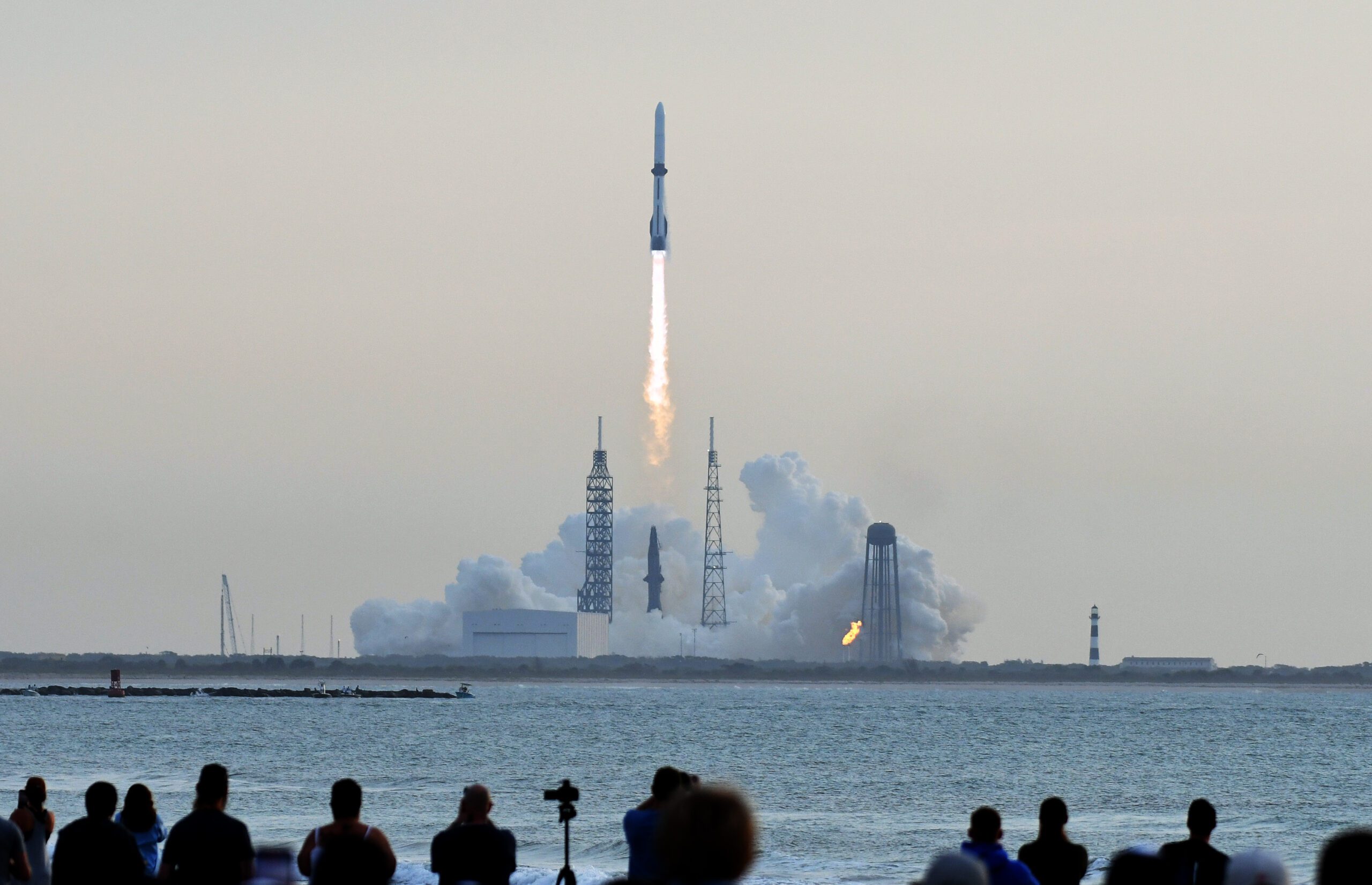
On Sunday, the third flight of Blue Origin’s heavy-lift New Glenn launcher commenced, showcasing the company’s first successful reflight of an orbital-class booster. This achievement is particularly noteworthy as it plays a crucial role in NASA’s Artemis lunar program, which aims to return humans to the Moon and establish a sustainable presence there.
Launch Details
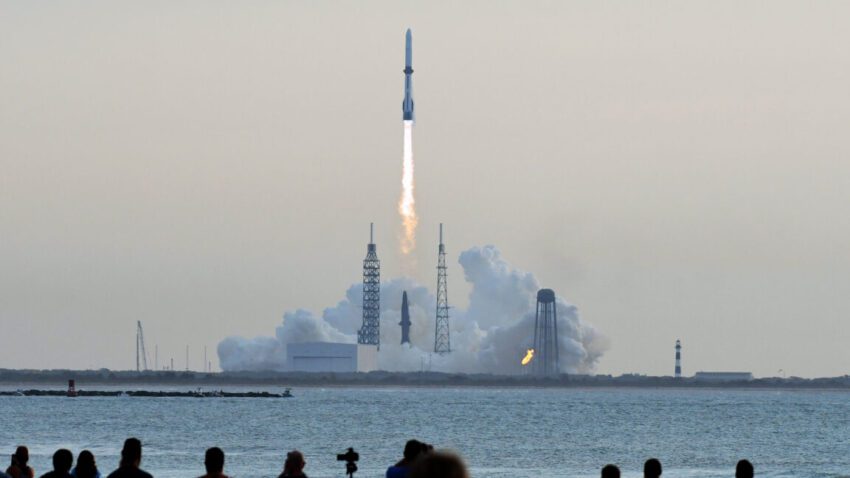
The New Glenn launch vehicle, standing at an impressive 321 feet (98 meters) tall, ignited its seven methane-fueled BE-4 engines at 7:25 am EDT (11:25 UTC) from the launch pad at Cape Canaveral Space Force Station in Florida. The BE-4 engines are designed to produce over half a million pounds of thrust each, propelling the rocket into the atmosphere.
Approximately one and a half minutes into the flight, the New Glenn rocket surpassed the speed of sound, a critical milestone in any space launch. This rapid acceleration is essential for overcoming Earth’s gravitational pull and reaching the necessary altitude for orbital insertion.
Booster Separation
Three minutes into the flight, the booster successfully shut down its engines and detached from the upper stage of the New Glenn rocket. The upper stage was powered by two BE-3U engines, which utilize a combination of liquid hydrogen and liquid oxygen as propellants. This separation is a vital phase in any multi-stage rocket launch, as it allows the upper stage to continue its journey into orbit while the booster returns to Earth for refurbishment and reuse.
Upper Stage Complications
Despite the initial success of the booster reflight, the mission encountered a significant setback with the upper stage. Reports indicate that the upper stage experienced an anomaly, which has yet to be fully detailed by Blue Origin. Such complications can arise from a variety of factors, including engine performance issues, guidance system failures, or unexpected environmental conditions during flight.
The implications of this upper stage failure are considerable. The New Glenn rocket is designed to support a range of missions, including satellite deployments and crewed spaceflights under NASA’s Artemis program. Any malfunction in the upper stage could jeopardize future missions and raise questions about the reliability of the rocket system.
Impact on NASA’s Artemis Program
The Artemis program is a cornerstone of NASA’s plans for lunar exploration and eventual missions to Mars. The program aims to land the first woman and the next man on the Moon by the mid-2020s, utilizing various launch vehicles, including the Space Launch System (SLS) and commercial partners like Blue Origin.
Blue Origin’s New Glenn rocket is expected to play a pivotal role in delivering payloads to lunar orbit and supporting lunar lander missions. The upper stage failure raises concerns about the timeline and reliability of these missions, as NASA relies on commercial partners to meet its ambitious goals.
Reactions from Stakeholders
The reaction to the launch and subsequent upper stage failure has been mixed among industry experts and stakeholders. Many view the successful reflight of the booster as a positive step toward achieving reusable rocket technology, which can significantly reduce the cost of access to space.
Industry Perspectives
Experts in the aerospace industry have expressed optimism about the potential of reusable rockets. “The successful reflight of the New Glenn booster is a testament to Blue Origin’s engineering capabilities,” said Dr. Emily Carter, a prominent aerospace engineer. “However, the upper stage anomaly is a reminder that spaceflight is inherently risky, and continuous improvements are necessary for reliability.”
Others have pointed out that setbacks are common in the development of new rocket systems. “Every launch is a learning opportunity,” noted Tom Jones, a former NASA astronaut. “While the upper stage failure is disappointing, it is not uncommon in the early stages of a rocket’s operational life.”
Blue Origin’s Response
In response to the upper stage failure, Blue Origin has stated that it is conducting a thorough investigation to determine the root cause of the anomaly. The company emphasized its commitment to safety and reliability, stating that it will take the necessary steps to address any issues before future flights.
Blue Origin’s founder, Jeff Bezos, expressed confidence in the team’s ability to resolve the issue. “We are dedicated to making spaceflight more accessible and reliable,” he said. “This setback will only strengthen our resolve to improve our systems and ensure the success of future missions.”
Future Prospects for New Glenn
Despite the challenges faced during this launch, the future of the New Glenn rocket remains promising. The successful reflight of the booster demonstrates the potential for cost-effective space access through reusability. As the aerospace industry continues to evolve, the demand for reliable launch vehicles is expected to grow, particularly with increasing interest in satellite deployment and crewed space missions.
Commercial Launch Market
The commercial launch market is becoming increasingly competitive, with several companies vying for contracts to deliver payloads to orbit. SpaceX, with its Falcon 9 and Falcon Heavy rockets, has established a strong foothold in this market. However, Blue Origin’s New Glenn offers unique capabilities, particularly with its heavy-lift capacity and reusability features.
As the demand for satellite launches increases, Blue Origin’s ability to deliver payloads efficiently and reliably will be crucial. The company has already secured contracts with various clients, including government agencies and commercial enterprises, which could provide a steady stream of revenue as it continues to develop its launch capabilities.
Technological Advancements
Looking ahead, Blue Origin is expected to make further advancements in rocket technology. The company has invested heavily in research and development, focusing on improving engine performance, enhancing safety features, and optimizing the overall design of the New Glenn rocket.
Moreover, the lessons learned from the recent upper stage failure will likely inform future designs and operational procedures. Continuous testing and iteration are essential components of aerospace engineering, and Blue Origin’s commitment to learning from setbacks will be vital for long-term success.
Conclusion
Blue Origin’s third flight of the New Glenn rocket showcased a significant achievement in reusable rocket technology with the successful reflight of its booster. However, the upper stage failure serves as a reminder of the complexities and challenges inherent in spaceflight. As the company investigates the anomaly and works to enhance the reliability of its systems, the future of the New Glenn rocket remains bright, with the potential to play a pivotal role in NASA’s Artemis program and the broader commercial launch market.
Source: Original report
Was this helpful?
Explore more: More Hardware & Devices Tech News Blog
Last Modified: April 20, 2026 at 10:36 am
17 views