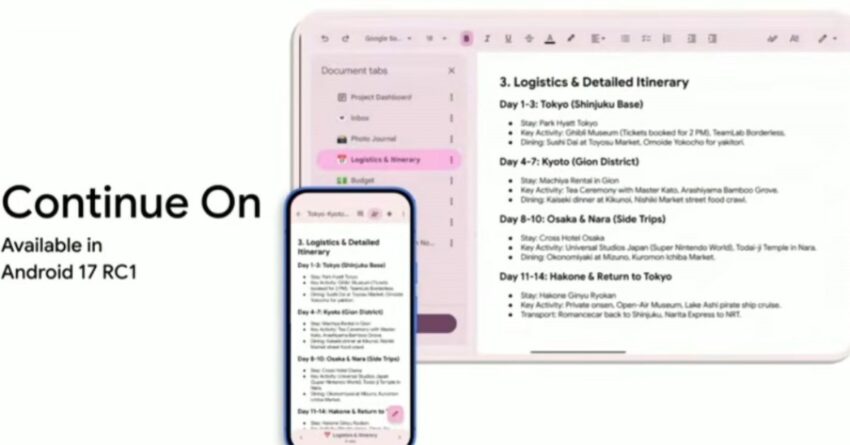
android 17 s continue on will let Google is introducing a new feature in Android 17 called “Continue On,” which will allow users to move tasks seamlessly between Android devices, similar to Apple’s Handoff functionality.
android 17 s continue on will let
Overview of the “Continue On” Feature
As mobile technology continues to evolve, the demand for seamless integration across devices has become increasingly important. Google’s “Continue On” feature aims to address this need by enabling users to transition tasks from one Android device to another without interruption. This functionality is particularly relevant in a world where users frequently switch between smartphones, tablets, and other devices throughout their day.
How “Continue On” Works
The “Continue On” feature is designed to create a fluid user experience. When a user is engaged in a task on one Android device, they can easily transfer that task to another device. For example, if a user is browsing the web on their smartphone and wishes to continue reading an article on their tablet, they can do so with a simple gesture or command. This feature is expected to utilize Google’s existing cloud infrastructure, allowing for real-time synchronization of tasks across devices.
Comparison with Apple’s Handoff
Apple’s Handoff feature has been a hallmark of its ecosystem, allowing users to start a task on one Apple device and finish it on another. This includes activities such as composing emails, browsing the web, or even playing games. Google’s “Continue On” is positioned as a direct competitor to this feature, aiming to provide a similar level of convenience for Android users.
While both features share the same fundamental goal of enhancing cross-device functionality, there are key differences in their implementation. Apple’s Handoff relies heavily on its tightly integrated ecosystem, which includes iCloud and continuity features across macOS and iOS devices. In contrast, Google’s approach with “Continue On” will likely leverage its expansive Android ecosystem, which includes a variety of manufacturers and device types.
Implications for Users
The introduction of “Continue On” could have significant implications for Android users. As multitasking becomes a more integral part of daily life, the ability to switch tasks between devices without losing context can enhance productivity. This feature is particularly beneficial for professionals who may need to transition between devices while working on projects or for students who utilize multiple devices for learning.
Enhanced Productivity
With “Continue On,” users can expect to see an increase in productivity. The ability to move tasks seamlessly means less time spent searching for where they left off. For instance, a user who starts drafting a report on their smartphone can easily switch to their tablet to make edits or finalize the document. This fluidity can lead to more efficient workflows and a reduction in the cognitive load associated with switching between devices.
Potential Challenges
Despite the benefits, there are potential challenges that Google may face in rolling out “Continue On.” One significant concern is compatibility across different devices and manufacturers. Android is known for its diversity, with numerous manufacturers producing devices that run on the operating system. Ensuring that “Continue On” works seamlessly across all these devices will be crucial for its success.
Another challenge could be user adoption. While some users may embrace the new feature, others may be hesitant to change their established workflows. Google will need to provide clear guidance and support to help users understand how to utilize “Continue On” effectively.
Stakeholder Reactions
The announcement of “Continue On” has garnered a range of reactions from stakeholders within the tech community. Industry analysts have expressed optimism about the feature, viewing it as a necessary step for Google to enhance its ecosystem. Many believe that this feature could help Google compete more effectively with Apple, particularly among users who value cross-device functionality.
Developer Perspectives
Developers are also weighing in on the potential impact of “Continue On.” Many see it as an opportunity to create applications that leverage this new functionality. By integrating “Continue On” into their apps, developers can enhance user engagement and retention. For instance, productivity apps could be designed to take advantage of this feature, allowing users to start a task on one device and finish it on another seamlessly.
User Feedback
Initial user feedback has been mixed. Some users are excited about the prospect of enhanced multitasking capabilities, while others express skepticism about how well the feature will work in practice. Concerns about privacy and data security also arise, as users may be wary of how their information is synchronized across devices. Google will need to address these concerns transparently to build trust among its user base.
Technical Considerations
From a technical standpoint, the implementation of “Continue On” will require significant infrastructure support. Google’s cloud services will play a crucial role in ensuring that tasks are synchronized in real-time. This means that users will need a stable internet connection for the feature to work effectively. Additionally, Google will need to ensure that the feature is optimized for various device specifications, including different screen sizes and processing capabilities.
Privacy and Security Measures
As with any feature that involves data synchronization, privacy and security will be paramount. Google has a responsibility to protect user data and ensure that the transition of tasks between devices does not compromise personal information. Implementing robust encryption and providing users with clear privacy settings will be essential to alleviate concerns surrounding data security.
Future Developments
Looking ahead, the introduction of “Continue On” could pave the way for further innovations within the Android ecosystem. As Google continues to refine this feature, it may explore additional functionalities that enhance cross-device interactions. For instance, future updates could introduce features that allow users to share files or media between devices with even greater ease.
Integration with Other Google Services
Moreover, “Continue On” could be integrated with other Google services such as Google Drive, Google Docs, and Google Assistant. This integration would create a more cohesive experience for users, allowing them to manage tasks across various platforms seamlessly. For example, a user could start a document in Google Docs on their smartphone and continue editing it on their laptop without any interruptions.
Conclusion
The introduction of the “Continue On” feature in Android 17 represents a significant advancement in cross-device functionality for Android users. By allowing seamless task transitions between devices, Google aims to enhance productivity and user experience. While challenges remain in terms of compatibility and user adoption, the potential benefits of this feature could position Google as a formidable competitor to Apple in the realm of multitasking capabilities. As the rollout approaches, stakeholders will be closely monitoring its implementation and user reception, setting the stage for what could be a transformative addition to the Android ecosystem.
Source: Original report
Was this helpful?
Explore more: Mobile App Development More Mobile Technology Tech News
Last Modified: May 20, 2026 at 5:36 am
14 views