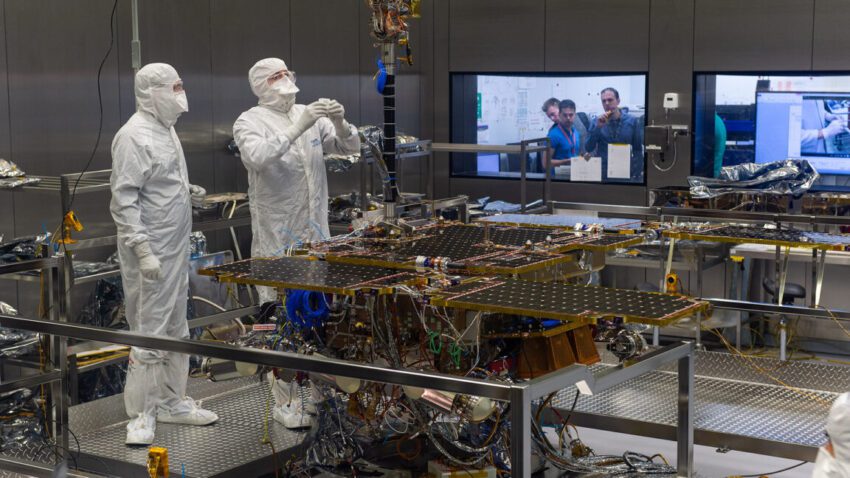
after a saga of broken promises a NASA has confirmed that SpaceX will launch the European Space Agency’s Rosalind Franklin Mars rover, potentially as early as late 2028, using a Falcon Heavy rocket from Kennedy Space Center in Florida.
after a saga of broken promises a
Background of the Rosalind Franklin Mission
The journey of the Rosalind Franklin mission has been a complex saga that spans nearly 25 years. The European Space Agency (ESA) first conceptualized the idea of sending a rover to Mars shortly after NASA successfully landed its first rover, Sojourner, on the Martian surface in 1997. This ambitious project was part of a broader program known as Aurora, which aimed to explore the solar system and enhance Europe’s capabilities in space exploration.
Initially, the ESA planned to launch the rover in 2009, relying on Russia to provide a Soyuz rocket for the mission. However, various delays and political complications hindered progress. Over the years, the project faced numerous setbacks, including budgetary constraints, shifting priorities within the ESA, and the need for technological advancements to ensure the rover could survive and operate effectively on Mars.
Shifting Partnerships and Political Challenges
The geopolitical landscape has significantly influenced the Rosalind Franklin mission. The collaboration with Russia was initially seen as a promising partnership, but the relationship began to sour due to various international tensions. The most significant turning point came with Russia’s invasion of Ukraine in 2022, which prompted many nations, including those in Europe, to reassess their partnerships with Russia in the field of space exploration.
As a result, the ESA was left in a precarious position. With the Russian Soyuz rocket no longer a viable option, the agency had to explore alternative launch providers. This led to discussions with NASA and SpaceX, both of which have established themselves as key players in the commercial space sector.
The Role of NASA and SpaceX
NASA’s involvement in the launch of the Rosalind Franklin rover is a notable development in international space collaboration. The U.S. space agency has been a pioneer in space exploration, and its partnership with the ESA underscores the importance of collaborative efforts in achieving ambitious scientific goals. NASA’s decision to utilize SpaceX’s Falcon Heavy rocket for the mission reflects a growing trend of relying on commercial partners for space launches.
SpaceX, founded by Elon Musk, has revolutionized the space industry with its reusable rocket technology, significantly reducing the cost of space travel. The Falcon Heavy, one of the most powerful rockets currently in operation, is capable of carrying large payloads to various orbits, making it an ideal choice for launching the Rosalind Franklin rover.
Technical Specifications of the Falcon Heavy
The Falcon Heavy is designed to lift heavy payloads into space, boasting a maximum payload capacity of over 64 metric tons to low Earth orbit. Its three booster cores, each equipped with nine Merlin engines, provide the necessary thrust to propel large missions beyond Earth’s atmosphere. The rocket’s reusability further enhances its cost-effectiveness, making it an attractive option for the ESA.
Scientific Objectives of the Rosalind Franklin Rover
The primary goal of the Rosalind Franklin mission is to search for signs of past or present life on Mars. The rover is equipped with a suite of scientific instruments designed to analyze the Martian soil and atmosphere. One of its key features is the drill, which can bore down to two meters below the surface to collect samples that may have been preserved from ancient microbial life.
In addition to its life-detection capabilities, the rover will also study the planet’s geology and climate, providing valuable insights into Mars’ history and its potential for habitability. The data collected by Rosalind Franklin will contribute to our understanding of Mars and inform future missions, including potential human exploration.
Implications of the Mission
The successful launch and operation of the Rosalind Franklin rover could have far-reaching implications for both Europe and the global scientific community. For the ESA, this mission represents a significant step forward in its capabilities and ambitions in space exploration. It will enhance Europe’s position as a leader in planetary science and could pave the way for future collaborative missions with NASA and other international partners.
Moreover, the findings from the Rosalind Franklin mission could reshape our understanding of life beyond Earth. The search for extraterrestrial life is one of the most profound questions in science, and the data collected by the rover may provide crucial evidence regarding the conditions that could support life on other planets.
Stakeholder Reactions
The announcement of SpaceX’s involvement in the Rosalind Franklin mission has elicited a range of reactions from various stakeholders. ESA officials have expressed optimism about the partnership, emphasizing the importance of collaboration in achieving ambitious scientific goals. The agency’s Director General, Josef Aschbacher, noted that the collaboration with NASA and SpaceX represents a new era of international cooperation in space exploration.
NASA officials have also welcomed the opportunity to work with the ESA on this groundbreaking mission. They recognize the significance of the Rosalind Franklin rover in advancing our understanding of Mars and the potential for future discoveries related to life beyond Earth.
SpaceX, for its part, has positioned itself as a leader in the commercial space sector, and this mission further solidifies its reputation. The company has already demonstrated its capabilities through successful launches and landings, and the opportunity to launch a flagship European mission adds to its portfolio of achievements.
Future Prospects
As the Rosalind Franklin mission moves closer to its launch date, there are several key milestones to anticipate. The rover is currently undergoing final preparations and testing, with engineers working to ensure that all systems are functioning optimally. The timeline for the mission is contingent on various factors, including the readiness of the Falcon Heavy rocket and the alignment of Earth and Mars for the launch window.
Once launched, the rover will embark on a journey of approximately six to nine months to reach Mars. Upon arrival, it will begin its scientific operations, which are expected to last for several years. The data collected during this period will be transmitted back to Earth for analysis, contributing to our understanding of the Martian environment and its potential for supporting life.
Conclusion
The Rosalind Franklin mission represents a significant milestone in the quest to explore Mars and search for signs of life beyond our planet. The collaboration between NASA, SpaceX, and the ESA highlights the importance of international partnerships in advancing scientific knowledge. As we look forward to the launch of the rover, the mission promises to provide valuable insights into the history of Mars and the potential for life in the universe.
Source: Original report
Was this helpful?
Explore more: More General Technology Tech News Blog
Last Modified: April 17, 2026 at 6:37 pm
12 views