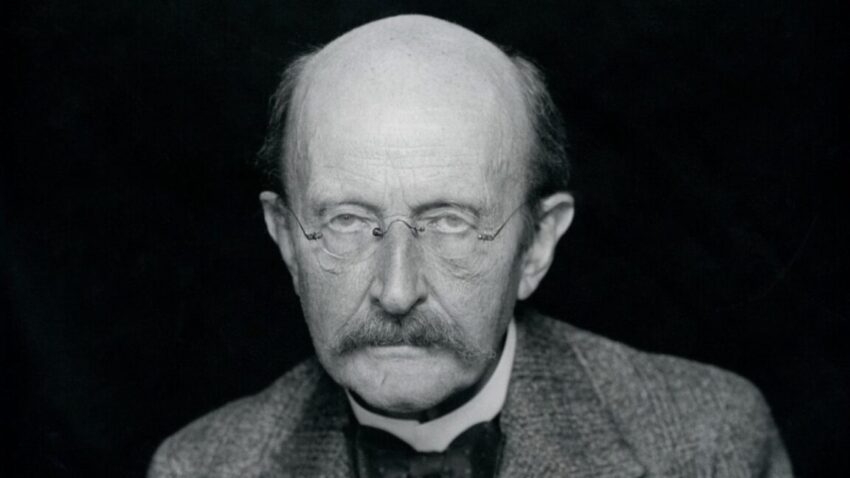
why did this journal retract two 1940s Recent revelations about the retraction of two papers by the esteemed physicist Max Planck have sparked intrigue and confusion within the scientific community.
why did this journal retract two 1940s
Background on Max Planck
Max Planck, a German physicist, is widely regarded as one of the founding figures of quantum mechanics. His groundbreaking work in the early 20th century laid the foundation for modern physics, culminating in his receipt of the Nobel Prize in Physics in 1918 for his discovery of energy quanta. This pivotal moment not only transformed scientific understanding but also opened new avenues for research in various fields, including chemistry and materials science.
Planck’s contributions to physics are monumental, and his theories have influenced countless scientists and researchers. His work on black-body radiation and the introduction of the Planck constant are fundamental concepts that continue to be relevant in contemporary physics. Given his esteemed reputation and the absence of any scandal surrounding his integrity or scientific contributions, the recent retraction of two of his papers has raised eyebrows and prompted further investigation.
The Retraction of Planck’s Papers
The journal responsible for the retraction is Naturwissenschaften, which is now known as The Science of Nature. This journal has a long history of publishing significant scientific research, and it typically follows standard procedures for retractions. Normally, when a paper is retracted, a large “RETRACTED” notice is added across the digital version of the paper, while the original content remains accessible for download. However, in the case of Planck’s two papers, the journal has taken an unusual step by completely removing the articles from its website. Instead of providing access to the original content, the journal now displays a blank page with a brief note indicating that the articles were “withdrawn due to article violation.”
Discovery by Historians
The retraction came to light when Yves Gingras, a physics historian at the University of Quebec in Montreal, was browsing the Retraction Watch blog. This blog maintains a list of Nobel Prize winners whose scientific papers have been retracted, and Gingras was taken aback to find Max Planck’s name on that list. Intrigued by this unexpected discovery, he enlisted the help of fellow historian Mahdi Khelfaoui from the University of Quebec at Trois-Rivieres to delve deeper into the circumstances surrounding the retraction.
The two historians began their investigation by examining the content of the retracted papers and the context in which they were published. Their findings were subsequently outlined in a preprint posted to the physics arXiv, a repository for research papers in the field of physics.
Content of the Retraction
While the specifics of the retracted papers have not been made publicly available due to their removal from the journal, historians have speculated about the potential reasons for the retraction. The phrase “article violation” raises questions about the nature of the issues that led to this decision. It is unclear whether the retraction was due to ethical concerns, scientific inaccuracies, or other factors.
Historians have pointed out that retractions are typically associated with misconduct, such as plagiarism or data fabrication. However, given Planck’s esteemed reputation and the historical context of his work, many in the scientific community are hesitant to jump to conclusions about the nature of the retraction. The absence of any prior allegations against Planck adds to the perplexity surrounding this situation.
Implications for Scientific Integrity
The retraction of papers by a figure as prominent as Max Planck raises broader questions about scientific integrity and the processes involved in publishing research. Retractions are a critical aspect of maintaining the credibility of scientific literature, as they serve to correct the record and ensure that erroneous or unethical work does not mislead future research.
However, the unusual nature of this retraction—specifically the complete removal of the papers—has sparked discussions about transparency in the retraction process. Critics argue that simply withdrawing papers without providing detailed explanations can lead to confusion and mistrust within the scientific community. It is essential for journals to maintain clear communication regarding the reasons for retractions to uphold the integrity of the scientific record.
Reactions from the Scientific Community
The retraction of Planck’s papers has elicited a range of reactions from scientists, historians, and ethicists. Many have expressed disbelief at the news, given Planck’s longstanding reputation as a paragon of scientific integrity. Some have called for the journal to provide a more comprehensive explanation for the retraction, emphasizing the importance of transparency in scientific publishing.
Others have pointed out that the retraction could have implications for how future generations of scientists view Planck’s work. If the reasons for the retraction remain unclear, it may cast a shadow over his legacy, despite the lack of evidence suggesting any wrongdoing on his part. This situation underscores the delicate balance between maintaining scientific integrity and protecting the reputations of established figures in the field.
Historical Context and Future Considerations
To fully understand the implications of this retraction, it is essential to consider the historical context in which Planck’s work was conducted. The 1940s were a tumultuous time in history, marked by World War II and significant political upheaval. The scientific community was not immune to the challenges of this era, and many researchers faced ethical dilemmas and pressures that could have influenced their work.
As historians continue to investigate the circumstances surrounding the retraction, it is crucial to consider the broader implications for the field of physics and scientific research as a whole. The case serves as a reminder of the importance of rigorous peer review and ethical standards in scientific publishing. It also highlights the need for ongoing discussions about the responsibilities of journals and researchers in maintaining the integrity of the scientific record.
Conclusion
The retraction of two papers by Max Planck has raised significant questions about the processes of scientific publishing and the importance of transparency in maintaining the integrity of the scientific record. As historians and scientists continue to investigate the circumstances surrounding this unusual decision, it is essential to consider the broader implications for the scientific community. The case serves as a reminder of the delicate balance between upholding ethical standards and preserving the legacies of influential figures in science.
While the reasons for the retraction remain unclear, the situation underscores the need for open dialogue and transparency in scientific publishing. As the investigation unfolds, it will be crucial for the scientific community to engage in discussions about the implications of this case and the lessons that can be learned moving forward.
Source: Original report
Was this helpful?
Explore more: More General Technology Tech News Blog
Last Modified: June 29, 2026 at 1:35 am
7 views