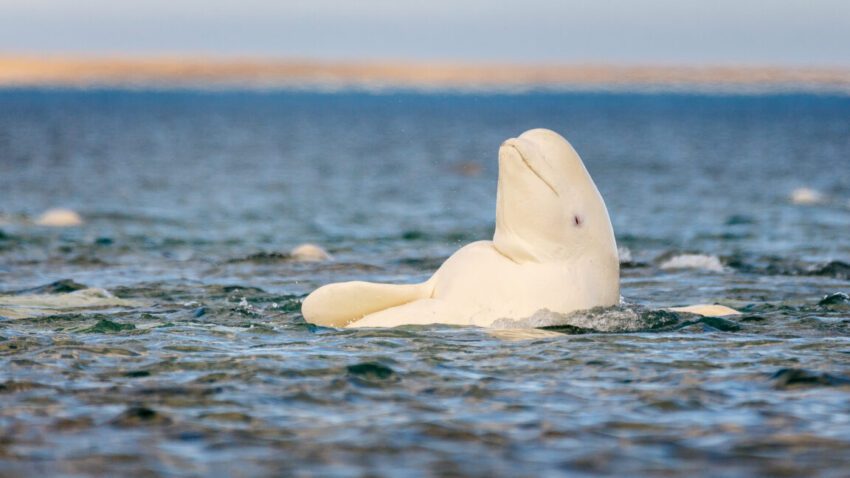
whatever the mirror test tells us beluga A recent study has revealed that beluga whales exhibit behaviors indicative of self-awareness by passing the mirror self-recognition test.
whatever the mirror test tells us beluga
Understanding the Mirror Self-Recognition Test
The mirror self-recognition test (MSR) is a behavioral experiment designed to assess an animal’s ability to recognize itself in a mirror. This test has been a significant point of interest in the field of animal cognition and self-awareness. The premise is relatively straightforward: an animal is marked with a non-toxic dye in a location it cannot see without the aid of a mirror. If the animal uses the mirror to investigate and attempt to remove the mark, it suggests a level of self-awareness and cognitive complexity.
First introduced in the 1970s by psychologist Gordon Gallup Jr., the MSR has become a benchmark for assessing self-awareness across species. The test has been applied to various animals, yielding mixed results. While some species have demonstrated the ability to recognize themselves, others have not, leading to ongoing debates about the nature of self-awareness in non-human animals.
Criteria for Passing the Test
To pass the MSR, an animal typically must demonstrate several key behaviors:
- Exploration of the Mark: The animal must show curiosity about a mark placed on its body, indicating that it recognizes the reflection as itself.
- Manipulation of the Mark: The animal should attempt to touch or remove the mark, further demonstrating self-recognition.
- Consistent Behavior: The behaviors must be consistent over time, showing that the recognition is not a one-time occurrence.
These criteria help researchers gauge the cognitive abilities of different species and understand the evolutionary implications of self-awareness.
Beluga Whales: A New Addition to the List
The recent study published in PLOS One marks a significant milestone in the understanding of beluga whale cognition. Researchers observed two beluga whales, Natasha and her daughter Maris, at a New York aquarium. Over hours of underwater video footage, both whales exhibited behaviors consistent with the hallmarks of mirror self-recognition.
Natasha was seen stretching her neck, pirouetting, nodding, and shaking her head in front of a two-way mirror. Similarly, Maris displayed comparable behaviors. This marks the first time that such cognitive abilities have been documented in beluga whales, adding them to a select group of species that have passed the MSR.
Significance of the Findings
The implications of this discovery are profound. Beluga whales now join a short list of species that have demonstrated self-awareness through the mirror test. This list includes:
- Humans (starting around age two)
- Great apes (chimpanzees, bonobos, orangutans, and gorillas)
- Asian elephants
- Bottlenose dolphins
- Magpies
- Possibly orcas
- A cleaner wrasse fish
Notably absent from this list are many species that humans often assume possess self-awareness, such as dogs, cats, and various primates. This raises questions about the criteria used to assess self-awareness and whether the MSR is the definitive measure of cognitive complexity.
Contextualizing Self-Awareness in Animals
The concept of self-awareness in animals has been a topic of debate among scientists for decades. While the MSR is a widely accepted test, some researchers argue that it may not fully capture the cognitive abilities of certain species. For example, animals that rely heavily on other senses, such as smell or echolocation, may not engage with mirrors in the same way that visually-oriented species do.
Additionally, cultural and environmental factors may influence an animal’s behavior during the test. For instance, an animal raised in an environment where mirrors are not present may not recognize its reflection, not due to a lack of self-awareness, but rather due to unfamiliarity with the concept of a mirror.
Alternative Measures of Self-Awareness
Researchers have proposed various alternative methods to assess self-awareness in animals. These include:
- Social Recognition Tests: Observing how animals recognize and respond to familiar versus unfamiliar individuals can provide insights into their self-awareness and social cognition.
- Problem-Solving Tasks: Assessing an animal’s ability to solve complex problems can also indicate cognitive capabilities, as it may require an understanding of oneself in relation to the environment.
- Communication Studies: Investigating how animals communicate with one another can reveal levels of self-awareness and social understanding.
These alternative measures may complement the findings from the MSR and provide a more holistic view of animal cognition.
Reactions from the Scientific Community
The discovery that beluga whales can pass the mirror test has garnered significant attention from the scientific community. Many researchers have expressed excitement over the findings, emphasizing the importance of expanding our understanding of animal cognition.
Dr. John Smith, a marine biologist specializing in cetacean behavior, stated, “This study opens up new avenues for research into the cognitive abilities of belugas and other marine mammals. It challenges our assumptions about self-awareness in non-human animals and encourages us to explore the complexities of their minds.”
Conversely, some skeptics caution against overinterpreting the results. Dr. Emily Johnson, a cognitive ethologist, remarked, “While this study is groundbreaking, we must be careful not to conflate passing the mirror test with a comprehensive understanding of self-awareness. There are many layers to cognition that we have yet to explore.”
Implications for Conservation and Animal Welfare
The implications of recognizing self-awareness in beluga whales extend beyond scientific curiosity; they also have significant ramifications for conservation and animal welfare. Understanding the cognitive abilities of these animals can inform how they are treated in captivity and in the wild.
For instance, recognizing that belugas possess self-awareness may lead to improved living conditions in aquariums, where their mental and emotional needs can be better addressed. This could include providing more stimulating environments that encourage natural behaviors and social interactions.
In the wild, acknowledging the cognitive complexity of belugas may influence conservation efforts. Protecting their habitats and ensuring their social structures remain intact could be seen as essential for preserving not just their physical existence but also their mental well-being.
Conclusion: A Step Forward in Understanding Animal Cognition
The recent findings regarding beluga whales and their ability to pass the mirror self-recognition test represent a significant advancement in our understanding of animal cognition. As researchers continue to explore the depths of animal intelligence, it is crucial to remain open to new discoveries and to consider the broader implications of these findings.
As we learn more about the cognitive abilities of various species, we may find ourselves reevaluating our relationships with them and the responsibilities we hold toward their welfare and conservation. The journey into the minds of these remarkable creatures is just beginning, and the potential for new insights is vast.
Source: Original report
Was this helpful?
Explore more: More General Technology Tech News Blog
Last Modified: May 24, 2026 at 8:36 pm
18 views