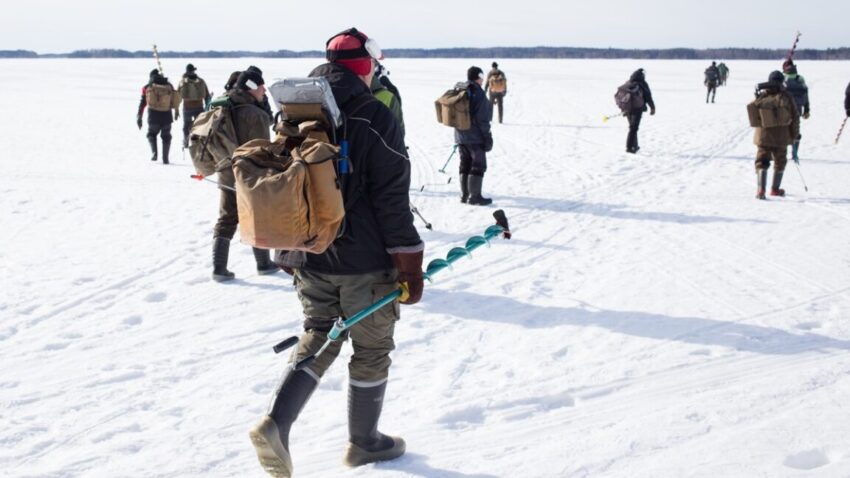
what ice fishing can teach us about Recent research highlights how ice fishing competitions can provide insights into the social cues that influence human foraging decisions.
what ice fishing can teach us about
The Tradition of Ice Fishing
Ice fishing is not merely a recreational activity; it is a deeply rooted tradition in Nordic countries, where communities gather to engage in this age-old practice. The allure of ice fishing competitions has grown significantly, drawing participants and spectators alike. These events are characterized by a blend of skill, patience, and social interaction, making them an ideal setting for examining human behavior in a foraging context.
Understanding Foraging in Extreme Environments
Humans are inherently foragers, a trait that has been essential for survival across diverse and often extreme environments. From the tropical jungles where tubers are unearthed to the Arctic tundras where seals are hunted, our species has adapted to gather food in various forms. This adaptability has not only ensured our survival but has also played a crucial role in the development of advanced cognitive functions.
Foraging encompasses a wide range of activities, including:
- Gathering fruits and vegetables
- Hunting animals
- Fishing in both freshwater and saltwater environments
- Collecting nuts and seeds
Each of these activities requires a unique set of skills and knowledge, which have evolved over millennia. Researchers argue that the complexity of human foraging has contributed to the development of critical cognitive abilities such as memory, navigation, and social learning. These skills are not only vital for individual survival but also for the cohesion and success of communities.
Social Cues in Foraging Decisions
The recent study published in the journal Science investigates how social cues impact foraging decisions, particularly in the context of ice fishing competitions. The authors suggest that understanding these dynamics can refine existing theories of social decision-making and enhance predictions about how different groups may adapt to environmental changes.
Previous Research Limitations
Historically, research on foraging behavior has often focused on solitary foragers, operating in what can be described as a social vacuum. This approach has its limitations, as it overlooks the influence of social interactions and cues that can significantly affect decision-making processes. Even studies that have examined social foraging have typically relied on computational models or laboratory settings, which may not accurately reflect real-world scenarios.
By shifting the focus to ice fishing competitions, researchers can observe how social dynamics play out in a natural setting. Participants in these competitions are not just competing against one another; they are also influenced by the behaviors and decisions of their peers. This social context provides a rich tapestry for understanding how humans make foraging decisions in a communal environment.
Implications of the Research
The findings from this research have broader implications beyond the realm of ice fishing. Understanding how social cues influence foraging decisions can provide insights into various fields, including economics, environmental science, and public policy. For instance, as climate change continues to alter ecosystems, communities may need to adapt their foraging strategies to ensure food security.
Adapting to Environmental Changes
As environmental conditions shift, the ability to make informed foraging decisions becomes increasingly critical. Communities that rely on traditional foraging practices may find themselves facing new challenges as species migrate or become scarce. Understanding the social dynamics of foraging can help these communities develop strategies to adapt to these changes.
For example, if a particular fish species becomes less abundant due to rising water temperatures, communities may need to collaborate more closely to identify alternative food sources. Social cues, such as observing the success of others in finding new foraging locations, can play a pivotal role in this adaptation process.
Research Methodology
The researchers employed a combination of observational studies and data analysis to explore the dynamics of ice fishing competitions. By observing participants in real-time, they were able to gather data on decision-making processes, social interactions, and the influence of competition on foraging behavior.
Key Findings
One of the key findings of the study is that social cues significantly influence individual foraging decisions. Participants who observed others successfully catching fish were more likely to change their own strategies in response. This behavior underscores the importance of social learning in foraging contexts.
Additionally, the study found that competition can lead to both positive and negative outcomes. While competition can motivate individuals to improve their foraging techniques, it can also lead to stress and anxiety, which may hinder decision-making. Understanding these dynamics is crucial for developing effective strategies for communal foraging.
Broader Context of Foraging Research
This research fits into a larger body of work examining the intersection of social behavior and foraging. As scientists continue to explore these dynamics, they are uncovering valuable insights into how humans and other species make decisions in complex environments.
Comparative Studies
Comparative studies of foraging behavior across different species can provide additional context for understanding human decision-making. For instance, studies on primates have shown that social learning plays a significant role in foraging success. Similarly, research on birds has demonstrated how flock dynamics can influence individual foraging strategies.
By examining these parallels, researchers can gain a more comprehensive understanding of the evolutionary roots of foraging behavior. This knowledge can inform conservation efforts and strategies for sustainable resource management.
Future Directions in Foraging Research
The implications of this research extend beyond immediate applications. Future studies could explore various aspects of social foraging, including:
- The role of cultural practices in shaping foraging strategies
- The impact of technology on modern foraging behaviors
- How social networks influence food-sharing practices
As researchers continue to delve into these topics, they will likely uncover new insights that can inform both academic understanding and practical applications in the field of foraging.
Conclusion
The study of ice fishing competitions offers a unique lens through which to examine the complexities of human foraging decisions. By understanding the social cues that influence these decisions, researchers can refine existing theories and provide valuable insights into how communities adapt to changing environments. As we face increasingly complex challenges related to food security and environmental sustainability, the lessons learned from this research will be essential for guiding future strategies.
Source: Original report
Was this helpful?
Explore more: More General Technology Tech News Blog
Last Modified: January 30, 2026 at 3:39 am
14 views