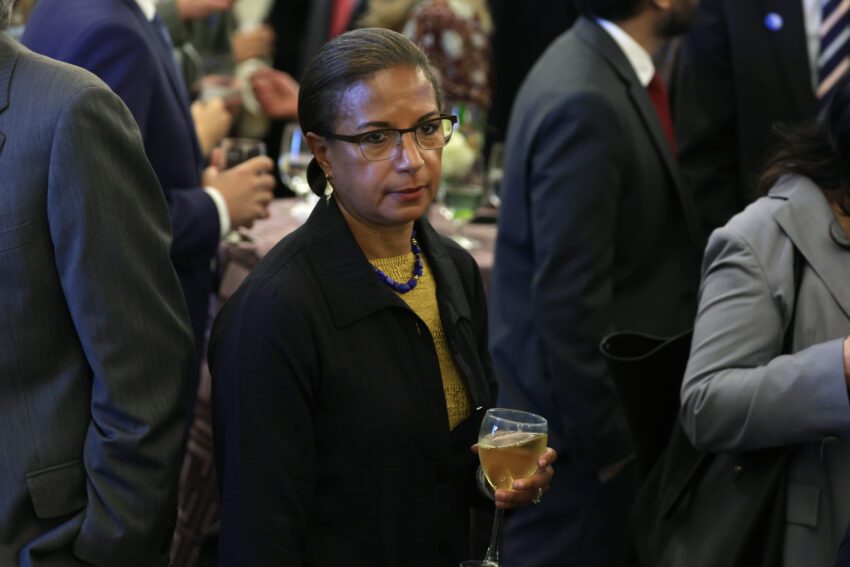
trump says netflix will pay the consequences Former President Donald Trump has issued a stark warning to Netflix, suggesting that the streaming giant will face “consequences” if it does not remove Susan Rice from its board of directors.
trump says netflix will pay the consequences
Background on Susan Rice
Susan Rice has had a distinguished career in public service, notably serving as the U.S. Ambassador to the United Nations from 2009 to 2013 under President Barack Obama. She later held the position of National Security Advisor from 2013 to 2017. Following her tenure in the Obama administration, Rice continued to be an influential figure in Democratic politics and was a prominent supporter of President Joe Biden during his campaign.
Rice’s background in foreign policy and national security has made her a respected voice in political circles. However, her involvement with Netflix as a board member has drawn scrutiny, particularly from conservative commentators and political figures. Her recent comments on a podcast have intensified this scrutiny and sparked a backlash from Trump and his supporters.
Trump’s Threat
In a recent statement, Trump asserted that Netflix would “pay the consequences” if it did not take action against Rice. This statement reflects Trump’s ongoing strategy of targeting corporations and individuals he perceives as opposing him or his political agenda. His comments come in the wake of Rice’s appearance on Preet Bharara’s podcast, where she discussed the responsibilities of corporations in the current political climate.
Rice’s Podcast Appearance
During her interview on the podcast, Rice made headlines with her remarks about corporations that “take a knee to Trump.” She warned that such companies would face accountability for their actions, implying that there would be repercussions for those who align themselves with Trump or his policies. This statement was interpreted by some as a veiled threat against businesses that do not support the Democratic agenda.
Rice’s comments have been met with mixed reactions, particularly from the right. Critics argue that her remarks suggest a willingness to use corporate power for political ends, while supporters contend that she is merely advocating for corporate responsibility in the face of political extremism.
Reactions from the Right
Right-wing influencer Laura Loomer was among the first to respond to Rice’s podcast appearance. Loomer accused Rice of “threatening half the country with weaponized government and political retribution.” This accusation highlights the heightened tensions between conservative and liberal factions in American politics, particularly regarding the role of corporations in political discourse.
Loomer’s comments reflect a broader sentiment among some conservatives who believe that corporate America has become increasingly aligned with progressive values, often at the expense of conservative viewpoints. This perception has fueled calls for boycotts and other forms of protest against companies that are seen as taking a political stance.
Implications for Netflix
Trump’s threat poses significant implications for Netflix, a company that has positioned itself as a leader in the entertainment industry while navigating complex political landscapes. The streaming service has faced criticism from various political factions over its content and corporate governance. Rice’s presence on the board adds another layer of scrutiny, particularly as Trump and his allies ramp up their rhetoric against perceived liberal bias in media and entertainment.
If Netflix were to heed Trump’s warning and remove Rice, it could be seen as capitulating to political pressure, potentially alienating a segment of its audience that values diversity of thought and representation on corporate boards. Conversely, if the company chooses to stand by Rice, it risks incurring the wrath of Trump and his supporters, who may call for boycotts or other forms of retaliation.
The Broader Political Context
This incident is emblematic of a larger trend in American politics, where corporate entities are increasingly viewed as battlegrounds for ideological conflicts. The polarization of American society has led to a situation where corporations are often forced to take sides, whether explicitly or implicitly, in the ongoing culture wars.
In recent years, several companies have faced backlash for their political stances or perceived biases. For instance, companies like Disney and Coca-Cola have been criticized for their responses to social justice movements and legislation perceived as discriminatory. These incidents have prompted discussions about the role of corporations in political advocacy and the extent to which they should engage in political discourse.
Stakeholder Perspectives
Various stakeholders have weighed in on the situation. Business leaders, political analysts, and commentators have expressed differing views on the implications of Trump’s threat to Netflix. Some argue that corporations should remain neutral in political matters to avoid alienating customers, while others contend that businesses have a responsibility to take a stand on social issues.
Supporters of Rice argue that her experience and perspective are valuable assets to Netflix’s board, particularly as the company navigates the complexities of content creation in a politically charged environment. They assert that diverse viewpoints can lead to better decision-making and innovation, ultimately benefiting the company and its audience.
Conclusion
The ongoing conflict surrounding Susan Rice’s position on Netflix’s board highlights the increasing intersection of politics and corporate governance. As Trump continues to leverage his influence to challenge corporations that do not align with his views, the stakes for companies like Netflix are higher than ever. The decisions made in the coming weeks could have lasting implications for the company’s reputation, its board’s composition, and its relationship with both its audience and the broader political landscape.
As the situation unfolds, it will be crucial to monitor how Netflix responds to Trump’s threats and the potential fallout from its decisions. The outcome may serve as a bellwether for how other corporations navigate the increasingly polarized political environment in the United States.
Source: Original report
Was this helpful?
Explore more: More Big Tech & Platforms Tech News Blog
Last Modified: February 22, 2026 at 10:36 pm
25 views