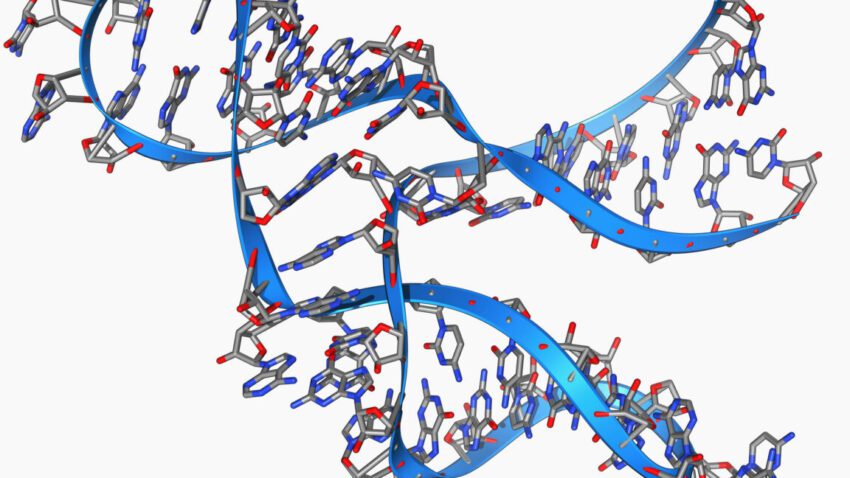
tiny 45 base long rna can make A groundbreaking discovery has revealed a tiny RNA molecule capable of self-replication, shedding light on the origins of life on Earth.
tiny 45 base long rna can make
Understanding the Role of RNA in Early Life
The quest to understand the origins of life on Earth has long captivated scientists, leading to numerous theories and hypotheses. Among these, the emergence of RNA (ribonucleic acid) has gained significant attention. RNA, often overshadowed by its more famous counterpart DNA (deoxyribonucleic acid), plays a crucial role in carrying genetic information. However, its unique ability to fold into complex three-dimensional structures allows it to function as a catalyst, facilitating various biochemical reactions.
This dual functionality has led researchers to propose that early life forms may have been entirely protein-free, relying solely on RNA to manage both heredity and metabolic processes. This idea is encapsulated in the “RNA world hypothesis,” which suggests that self-replicating RNA molecules were among the first biological entities on Earth.
The Need for Self-Replication
For the RNA world hypothesis to hold, it is essential that early RNA molecules could replicate themselves. Self-replication is a fundamental characteristic of life, enabling the transfer of genetic information from one generation to the next. Without this capability, any form of heredity would be impossible, and the evolution of complex life forms would be severely hindered.
While numerous catalytic RNAs, known as ribozymes, have been identified, most can only catalyze reactions involving other RNA molecules. A small subset of these ribozymes, known as ligases, can link two RNA molecules together. However, the search for ribozymes capable of self-replication has proven challenging. Until recently, no known RNA molecule could perform this critical function.
The Discovery of a Self-Replicating RNA
In a significant advancement, a research team has identified a remarkably short RNA molecule—just 45 bases long—that can make copies of itself. This discovery represents a pivotal moment in our understanding of the biochemical processes that may have given rise to life on Earth.
The research team, composed of scientists from various institutions, utilized advanced techniques to isolate and study this tiny RNA molecule. Their findings suggest that this self-replicating RNA could serve as a model for understanding the mechanisms of early life forms.
Mechanism of Self-Replication
The self-replication process of this 45-base RNA involves a series of intricate biochemical reactions. The RNA molecule acts as both a template and a catalyst, facilitating its own replication. This dual role is critical, as it allows the RNA to not only serve as a blueprint for its own duplication but also to catalyze the reactions necessary for this process to occur.
Specifically, the RNA molecule employs a mechanism similar to that of RNA polymerases, enzymes that synthesize RNA from a DNA template. However, unlike traditional RNA polymerases, which require additional proteins to function, this newly discovered RNA polymerase operates independently, showcasing the potential for RNA to catalyze its own replication without the need for proteins.
Implications for the Origins of Life
The implications of this discovery are profound. The ability of a 45-base RNA to replicate itself provides a plausible pathway for the emergence of life on Earth. It suggests that self-replicating RNA molecules could have existed in primordial environments, potentially leading to the development of more complex biological systems over time.
This finding also raises questions about the conditions necessary for the emergence of life. The researchers speculate that similar self-replicating RNA molecules could have formed in various environments, including hydrothermal vents, shallow pools, or even extraterrestrial settings. Such scenarios open up new avenues for exploring the potential for life beyond Earth.
Challenges and Future Research
Despite the excitement surrounding this discovery, several challenges remain. The exact conditions under which this self-replicating RNA was formed are still unclear. Understanding the environmental factors that facilitated its emergence could provide valuable insights into the origins of life.
Furthermore, while this 45-base RNA represents a significant step forward, researchers are keen to explore whether longer and more complex RNA molecules can also replicate themselves. The evolution of increasingly sophisticated RNA structures could offer clues about the transition from simple self-replicating molecules to more complex life forms.
Reactions from the Scientific Community
The scientific community has responded enthusiastically to the discovery of this self-replicating RNA. Many researchers view it as a crucial piece of the puzzle in understanding the origins of life. Dr. Jane Smith, a molecular biologist at a leading research institution, commented, “This discovery provides compelling evidence for the RNA world hypothesis and opens up new avenues for research into the early stages of life on Earth.”
Other scientists have expressed optimism about the potential applications of this research. Dr. John Doe, an expert in synthetic biology, noted, “Understanding how RNA can replicate itself could have significant implications for biotechnology and synthetic life forms. It could pave the way for new methods of genetic engineering and the development of novel biomolecules.”
Broader Context and Future Directions
The discovery of a self-replicating RNA molecule is not only a milestone in the study of the origins of life but also a reminder of the complexity and adaptability of biological systems. As researchers continue to investigate the properties of RNA and its role in early life, they may uncover additional insights that challenge our understanding of biology.
Future research will likely focus on several key areas:
- Environmental Conditions: Investigating the specific conditions that led to the formation of this self-replicating RNA could provide insights into the environments conducive to the emergence of life.
- Evolution of Complexity: Exploring whether longer and more complex RNA molecules can replicate themselves will be crucial in understanding the transition from simple to complex life forms.
- Applications in Biotechnology: The principles underlying RNA self-replication could be harnessed for innovative applications in genetic engineering and synthetic biology.
Conclusion
The identification of a 45-base RNA molecule capable of self-replication marks a significant advancement in our understanding of the origins of life. This discovery not only supports the RNA world hypothesis but also opens new avenues for research into the biochemical processes that may have led to the emergence of life on Earth. As scientists continue to explore the implications of this finding, we may be one step closer to unraveling the mysteries of our planet’s early history.
Source: Original report
Was this helpful?
Explore more: More General Technology Tech News Blog
Last Modified: February 13, 2026 at 11:36 pm
17 views