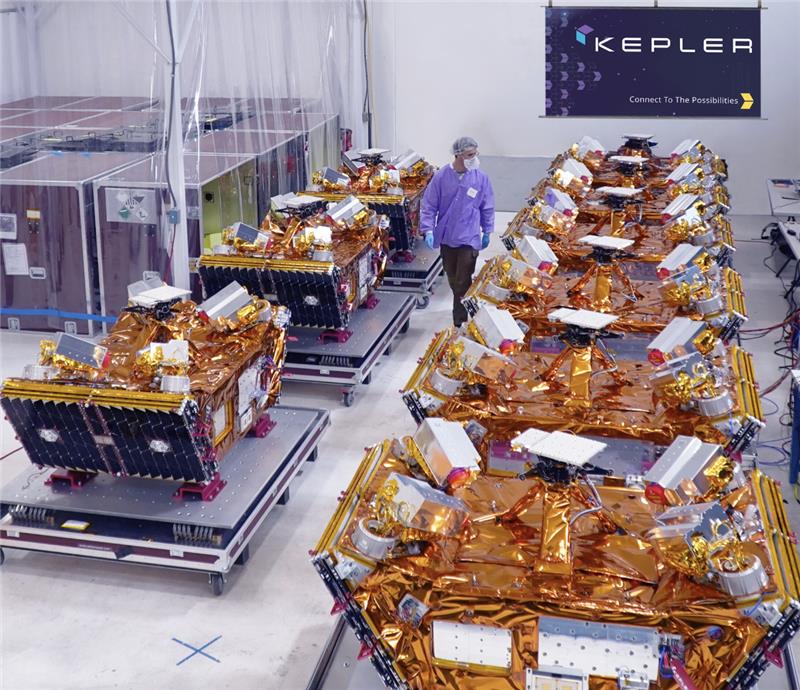
the largest orbital compute cluster is open Kepler Communications has officially launched the largest orbital compute cluster, equipped with 40 GPUs, marking a significant advancement in satellite technology and cloud computing.
the largest orbital compute cluster is open
Introduction to Kepler Communications
Founded in 2015, Kepler Communications has been at the forefront of satellite communications, focusing on providing global connectivity through a constellation of small satellites in low Earth orbit (LEO). The company aims to bridge the digital divide by offering affordable and reliable internet access to remote areas and industries that have historically been underserved. With the launch of its latest orbital compute cluster, Kepler is not only expanding its service offerings but also setting a new benchmark in the realm of space-based computing.
The Orbital Compute Cluster
The newly deployed orbital compute cluster consists of 40 high-performance Graphics Processing Units (GPUs) that are designed to handle complex computational tasks directly in space. This innovative setup allows for real-time data processing and analysis, significantly reducing latency compared to traditional ground-based systems. The cluster is expected to serve a variety of applications, including artificial intelligence, machine learning, and data analytics, all of which require substantial computational power.
Technical Specifications
The GPUs utilized in this cluster are state-of-the-art, designed to deliver exceptional performance while maintaining energy efficiency. Each GPU is optimized for parallel processing, making it ideal for tasks that can be executed simultaneously. This capability is particularly beneficial for applications that involve large datasets, such as satellite imagery analysis, environmental monitoring, and scientific research.
Advantages of Orbital Computing
One of the primary advantages of deploying compute resources in orbit is the reduction in latency. Traditional cloud computing relies on data centers located on Earth, which can introduce delays in data transmission. By processing data in space, Kepler Communications can provide near-instantaneous results, which is crucial for time-sensitive applications. Additionally, the orbital compute cluster can operate independently of terrestrial infrastructure, making it resilient to natural disasters or other disruptions that may affect ground-based systems.
Partnership with Sophia Space
Kepler Communications has announced that its latest customer is Sophia Space, a company specializing in satellite-based data services. This partnership is expected to leverage the capabilities of the orbital compute cluster to enhance Sophia Space’s offerings, particularly in the fields of remote sensing and data analytics.
About Sophia Space
Sophia Space has been making strides in the satellite industry by providing innovative solutions for data collection and analysis. The company focuses on delivering high-quality data to clients in sectors such as agriculture, environmental monitoring, and disaster response. By utilizing Kepler’s orbital compute cluster, Sophia Space aims to enhance its data processing capabilities, allowing for more timely and accurate insights for its customers.
Implications for the Industry
The collaboration between Kepler Communications and Sophia Space signifies a broader trend in the satellite industry, where companies are increasingly looking to harness the power of orbital computing. As more organizations recognize the benefits of processing data in space, we can expect to see a surge in demand for similar services. This shift could lead to the development of new applications and use cases that were previously thought to be impractical due to computational limitations.
Market Response and Stakeholder Reactions
The announcement of the orbital compute cluster has garnered attention from various stakeholders in the technology and satellite industries. Investors, analysts, and industry experts are closely monitoring the developments, as they believe this could be a game-changer for satellite-based computing.
Investor Interest
Investors are showing increased interest in companies that are pioneering advancements in satellite technology. The successful deployment of Kepler’s orbital compute cluster could attract further investment, allowing the company to expand its operations and explore additional partnerships. This influx of capital could accelerate innovation within the sector, leading to the development of new technologies and services.
Expert Opinions
Industry experts have expressed optimism about the potential applications of the orbital compute cluster. Many believe that this technology could revolutionize sectors such as agriculture, where real-time data analysis can lead to more efficient farming practices. Additionally, environmental scientists could benefit from enhanced data processing capabilities, allowing for better monitoring of climate change and natural disasters.
Challenges and Considerations
While the launch of the orbital compute cluster represents a significant advancement, it is not without its challenges. Operating in space comes with unique technical hurdles, including radiation exposure, thermal management, and the need for robust communication systems. Ensuring the reliability and longevity of the hardware in such an environment is critical for the success of the project.
Technical Challenges
One of the primary technical challenges is radiation exposure, which can affect the performance and lifespan of electronic components. Kepler Communications must implement effective shielding and error-correction mechanisms to mitigate these risks. Additionally, thermal management is crucial, as the extreme temperatures in space can impact the performance of the GPUs. The design and engineering of the orbital compute cluster must account for these factors to ensure optimal functionality.
Regulatory Considerations
As with any space-based initiative, regulatory considerations play a vital role in the deployment and operation of the orbital compute cluster. Kepler Communications must navigate various international regulations governing satellite operations, including frequency allocation and space debris management. Compliance with these regulations is essential to ensure the long-term sustainability of satellite operations and to minimize the risk of collisions in orbit.
The Future of Orbital Computing
The successful launch of the largest orbital compute cluster is just the beginning of what could be a transformative era in satellite technology. As more companies recognize the potential of orbital computing, we may see a proliferation of similar initiatives aimed at harnessing the power of space for data processing and analysis.
Potential Applications
The potential applications for orbital computing are vast and varied. Some of the most promising areas include:
- Environmental Monitoring: Real-time data processing can enhance the ability to monitor climate change, track deforestation, and assess natural disasters.
- Agriculture: Farmers can utilize satellite data for precision agriculture, optimizing crop yields and resource usage.
- Telecommunications: Improved data processing capabilities can enhance communication networks, particularly in remote areas.
- Scientific Research: Researchers can leverage orbital computing for complex simulations and data analysis in fields such as astrophysics and climate science.
Conclusion
Kepler Communications’ launch of the largest orbital compute cluster is a landmark achievement that has the potential to reshape the landscape of satellite technology and cloud computing. By partnering with Sophia Space, Kepler is poised to deliver enhanced data processing capabilities that can benefit a wide range of industries. As the demand for satellite-based computing continues to grow, the implications for innovation, investment, and application development are profound. The future of orbital computing is bright, and we are only beginning to scratch the surface of what is possible.
Source: Original report
Was this helpful?
Explore more: DevOps Services More Cloud & DevOps Tech News
Last Modified: April 13, 2026 at 4:37 pm
20 views