
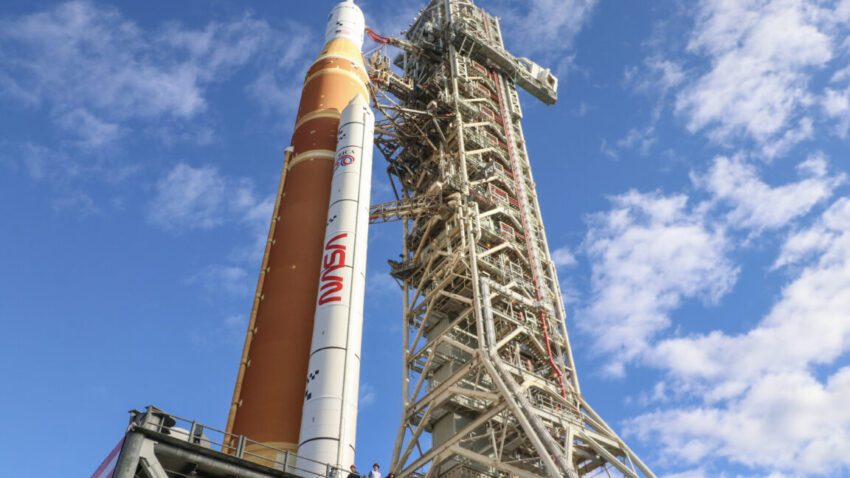
the fastest human spaceflight mission in history NASA’s Artemis II mission, marking the first human spaceflight to the Moon in over half a century, has made significant progress with the recent rollout of its rocket to the launch pad.
the fastest human spaceflight mission in history
Rollout of the Artemis II Rocket
On a weekend that will be remembered in the annals of space exploration, NASA’s Artemis II rocket was transported from the Vehicle Assembly Building to Launch Complex 39B at Kennedy Space Center in Florida. This monumental journey covered a distance of four miles and took approximately 12 hours, with the rocket reaching a top speed of just 1 mph. While this speed may seem slow, it is a crucial step in ensuring that all systems are functioning correctly ahead of the mission.
The Artemis II mission is set to be the first crewed flight of the Orion spacecraft, which is designed to carry astronauts beyond low Earth orbit. This mission aims to pave the way for future lunar exploration and eventual human missions to Mars. The Orion capsule, which sits atop the Space Launch System (SLS) rocket, is expected to reach speeds exceeding 25,000 mph as it re-enters Earth’s atmosphere following its nearly 10-day journey through cislunar space.
Historical Context
This mission is particularly significant as it revives human exploration of the Moon, a frontier that has not been visited by astronauts since Apollo 17 in December 1972. NASA Administrator Jared Isaacman remarked, “This is the start of a very long journey. We ended our last human exploration of the moon on Apollo 17.” The Artemis program aims not only to return humans to the lunar surface but also to establish a sustainable presence there, which could serve as a launchpad for future missions to Mars and beyond.
The Artemis Program
The Artemis program consists of several missions, with Artemis I already having successfully completed an uncrewed test flight in late 2021. This mission demonstrated the capabilities of the SLS rocket and the Orion spacecraft, providing valuable data for future crewed missions. Artemis II will build on this foundation, testing the spacecraft’s life support systems and other critical technologies in a real-world environment.
Following Artemis II, NASA plans to conduct Artemis III, which aims to land astronauts on the lunar South Pole. This area is of particular interest due to the presence of water ice, which could be used for life support and fuel in future missions. The Artemis program is not just about returning to the Moon; it is about establishing a sustainable human presence and conducting scientific research that could benefit life on Earth.
Technical Preparations
The rollout of the Artemis II rocket is a critical phase in the mission’s preparation. Engineers and technicians will now conduct a series of tests to ensure that all systems are functioning as intended. These tests will include checks on the rocket’s propulsion systems, avionics, and other essential components. The meticulous nature of these preparations underscores the complexity and risks associated with human spaceflight.
Key Tests Ahead
One of the most significant tests looming ahead is the “wet dress rehearsal,” where the rocket will be fully fueled and undergo a countdown simulation. This rehearsal is crucial for identifying any issues that may arise during the actual launch. NASA has emphasized the importance of thorough testing to ensure the safety of the astronauts who will be aboard the Orion capsule.
NASA’s commitment to safety is paramount, especially given the high stakes involved in human spaceflight. The agency has learned valuable lessons from past missions, including the Apollo program and the Space Shuttle era. Each mission provides insights that help improve safety protocols and mission planning.
Stakeholder Reactions
The Artemis II mission has garnered significant attention and support from various stakeholders, including government officials, scientists, and the general public. Many view this mission as a pivotal moment in space exploration, one that could inspire a new generation of scientists and engineers.
NASA Administrator Jared Isaacman has been vocal about the importance of this mission, stating, “We are not just returning to the Moon; we are laying the groundwork for future exploration of Mars and beyond.” His comments reflect a broader vision for space exploration that extends far beyond lunar missions.
International Collaboration
The Artemis program is not solely a U.S. endeavor; it involves international collaboration with space agencies from around the world. Countries such as Canada, Japan, and members of the European Space Agency (ESA) are contributing to the program, providing technology, expertise, and resources. This collaborative approach not only enhances the capabilities of the Artemis missions but also fosters international goodwill and cooperation in space exploration.
Implications for Future Missions
The successful execution of Artemis II will have far-reaching implications for future missions. It will serve as a testbed for technologies and procedures that will be essential for long-duration spaceflights, such as those planned for Mars. The data collected during this mission will inform the design and operation of future spacecraft, ensuring that they are equipped to handle the challenges of deep space exploration.
Scientific Research and Discovery
In addition to its exploratory goals, the Artemis program aims to conduct scientific research that could yield valuable insights into the Moon’s geology and history. Understanding the Moon’s composition and resources will be crucial for establishing a sustainable human presence there. The knowledge gained from these missions could also inform our understanding of other celestial bodies, including Mars.
Furthermore, the Artemis missions are expected to contribute to advancements in technology that could have applications beyond space exploration. Innovations in materials science, robotics, and life support systems could benefit various industries on Earth, from healthcare to renewable energy.
Public Engagement and Inspiration
The Artemis II mission is also an opportunity for public engagement and education. NASA has been actively promoting the mission through various outreach programs, aiming to inspire interest in STEM (science, technology, engineering, and mathematics) fields. The agency recognizes that fostering a passion for space exploration can lead to a more informed and engaged citizenry.
As the mission progresses, NASA plans to share updates and insights with the public, allowing people to follow along on this historic journey. The excitement surrounding Artemis II has already sparked interest among students and educators, with many schools incorporating space exploration themes into their curricula.
Conclusion
The rollout of the Artemis II rocket to its launch pad marks a significant milestone in NASA’s efforts to return humans to the Moon. With the mission set to build on the successes of Artemis I, the agency is poised to make history once again. As preparations continue, the focus remains on ensuring the safety and success of the astronauts who will embark on this groundbreaking journey.
As we look ahead, the Artemis program promises not only to revive human exploration of the Moon but also to lay the groundwork for future missions to Mars and beyond. The implications of this mission extend far beyond the lunar surface, offering opportunities for scientific discovery, technological advancement, and international collaboration. With each step taken towards the launch of Artemis II, the dream of a sustainable human presence in space becomes increasingly tangible.
Source: Original report
Was this helpful?
Last Modified: January 20, 2026 at 3:36 pm
2 views














