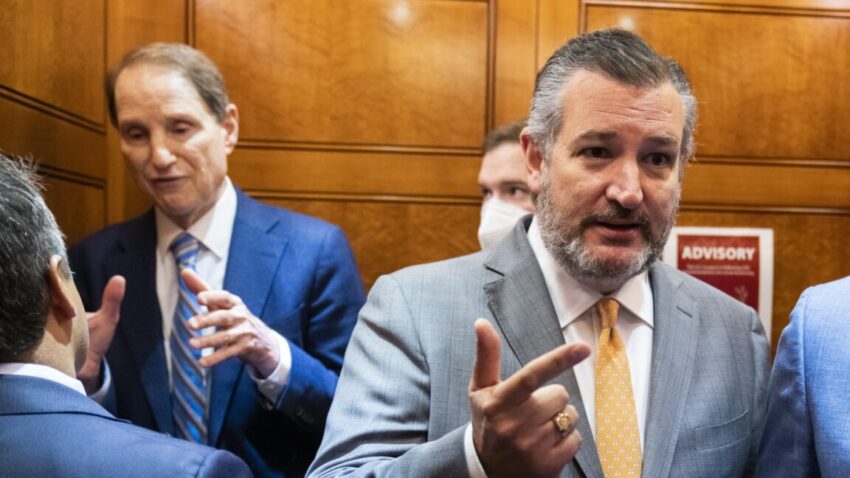
ted cruz and ron wyden try to U.S. Senators Ted Cruz and Ron Wyden have introduced the JAWBONE Act, a legislative proposal aimed at curbing government overreach in the regulation of speech across various platforms.
ted cruz and ron wyden try to
Overview of the JAWBONE Act
The Justice Against Weaponized Bureaucratic Overreach to Networked Expression Act, commonly referred to as the JAWBONE Act, seeks to address concerns regarding the federal government’s influence over media and online platforms. This bipartisan initiative, spearheaded by Cruz, a Republican from Texas, and Wyden, a Democrat from Oregon, aims to protect free speech by prohibiting federal agencies and employees from coercing broadcasters and online service providers into altering their content.
Key Provisions of the Act
The JAWBONE Act is designed to create a legal framework that empowers individuals and organizations to challenge government actions that they believe infringe upon their rights to free expression. The legislation includes several critical components:
- Prohibition of Coercion: The act explicitly prohibits federal agencies and their employees from attempting to coerce broadcasters and online service providers into changing their content. This provision is particularly relevant in light of recent instances where government officials have pressured media outlets and tech companies to suppress certain viewpoints.
- Private Right of Action: One of the most significant aspects of the JAWBONE Act is the establishment of a private right of action for individuals who believe they have been victims of “jawboning.” This allows individuals to seek compensatory damages in court if they feel their speech has been stifled due to government pressure.
- Enforcement by State Attorneys General: The proposed law also empowers state attorneys general to enforce its provisions through civil actions. This could lead to a more robust mechanism for holding federal officials accountable for overreach.
Context and Background
The introduction of the JAWBONE Act comes at a time when concerns about censorship and government influence over media have reached a fever pitch. Recent events have highlighted the delicate balance between regulating harmful content and preserving free speech. The act aims to clarify the boundaries of government authority in this context.
Federal Communications Commission (FCC) Chairman Brendan Carr has been a focal point in discussions about government pressure on media outlets. His attempts to influence TV networks and broadcasters have raised alarms about the potential for government overreach. The JAWBONE Act seeks to address these concerns by creating a legal framework that protects against such coercive tactics.
Implications for Media and Technology
The JAWBONE Act could have far-reaching implications for both traditional media and technology companies. By providing a legal avenue for individuals to challenge government actions, the act may encourage more robust defenses of free speech across various platforms. This could lead to a more vibrant public discourse, where diverse viewpoints can be expressed without fear of government reprisal.
Moreover, the act may also impact how tech companies approach content moderation. With the threat of legal action looming, companies may be more cautious in their interactions with government officials regarding content regulation. This could lead to a more transparent dialogue between tech firms and government entities, fostering a healthier environment for free expression.
Reactions from Stakeholders
The introduction of the JAWBONE Act has garnered a range of reactions from various stakeholders, reflecting the polarized nature of the debate surrounding free speech and government regulation.
Support from Free Speech Advocates
Free speech advocates have welcomed the JAWBONE Act as a necessary step toward protecting individual rights against government overreach. Organizations dedicated to civil liberties have expressed support for the legislation, emphasizing the importance of safeguarding free expression in an increasingly digital world. They argue that the act could serve as a vital tool for individuals who feel their voices have been silenced by government pressure.
Concerns from Government Officials
On the other hand, some government officials and agencies have expressed concerns about the potential implications of the JAWBONE Act. Critics argue that the legislation could hinder legitimate efforts to regulate harmful content, particularly in the context of misinformation and hate speech. They contend that while protecting free speech is essential, there must also be mechanisms in place to address the spread of harmful content that can have real-world consequences.
Legal Landscape and Challenges
The JAWBONE Act introduces a complex legal landscape that may lead to various challenges as it moves through the legislative process. Legal experts have pointed out that the act’s provisions could face scrutiny regarding their constitutionality and practical implementation.
Potential Legal Challenges
One potential challenge lies in defining what constitutes “coercion” in the context of government interactions with media and tech companies. Legal experts may debate the nuances of this term, and courts may need to establish precedents that clarify its meaning. Additionally, the act’s provision for a private right of action could lead to an influx of lawsuits, raising questions about the burden on the judicial system and the potential for frivolous claims.
Impact on Future Legislation
The introduction of the JAWBONE Act may also influence future legislative efforts related to free speech and media regulation. As lawmakers grapple with the complexities of digital communication and the role of government in regulating content, the act could serve as a reference point for future discussions. It may inspire similar initiatives aimed at protecting individual rights in the face of government overreach.
Conclusion
The JAWBONE Act represents a significant effort by Senators Ted Cruz and Ron Wyden to address concerns about government censorship and the protection of free speech. By establishing legal mechanisms to challenge coercive actions by federal officials, the act aims to empower individuals and promote a more open dialogue across media and technology platforms. As the legislative process unfolds, the implications of this act will likely resonate throughout the ongoing discussions surrounding free expression in the digital age.
Source: Original report
Was this helpful?
Explore more: More Big Tech & Platforms Tech News Blog
Last Modified: June 12, 2026 at 6:35 am
7 views