south korea to spend 1t on more South Korea’s government and leading technology firms are set to invest $1 trillion into transformative projects aimed at enhancing the global memory chip supply, establishing new AI data centers, and advancing the commercial deployment of humanoid robots by 2028.
south korea to spend 1t on more
Investment Overview
The ambitious investment plan was unveiled amidst a backdrop of record profits and soaring stock valuations for South Korean tech giants, particularly in the memory chip sector. Companies like Samsung and SK Hynix have experienced significant growth due to the increasing demand for memory chips driven by the burgeoning artificial intelligence (AI) industry. This demand has resulted in supply constraints, leading to shortages and inflated prices for consumer electronics.
Memory Chip Production
Memory chips are critical components in a wide array of electronic devices, from smartphones to servers. The global shift towards AI technologies has intensified the need for high-performance memory solutions. As AI applications require vast amounts of data processing, the demand for advanced memory chips has surged. South Korea, being home to some of the world’s largest semiconductor manufacturers, is strategically positioned to capitalize on this trend.
The $1 trillion investment will focus on enhancing production capabilities and scaling up the manufacturing of memory chips. This initiative aims to alleviate the current supply shortages and stabilize prices in the global market. Analysts predict that increased production capacity will not only benefit South Korean companies but also provide a much-needed boost to the global supply chain, which has been under strain due to various geopolitical factors and the COVID-19 pandemic.
AI Data Centers
In addition to memory chips, the investment will also target the establishment of new AI data centers. These centers are essential for processing the enormous volumes of data generated by AI applications. As companies increasingly rely on AI for various functions, from data analytics to autonomous systems, the need for robust data infrastructure has never been greater.
The South Korean government has recognized the importance of building a resilient AI ecosystem. By investing in state-of-the-art data centers, South Korea aims to create a conducive environment for AI research and development. This move is expected to attract both domestic and international tech firms, fostering innovation and collaboration in the AI space.
Humanoid Robots
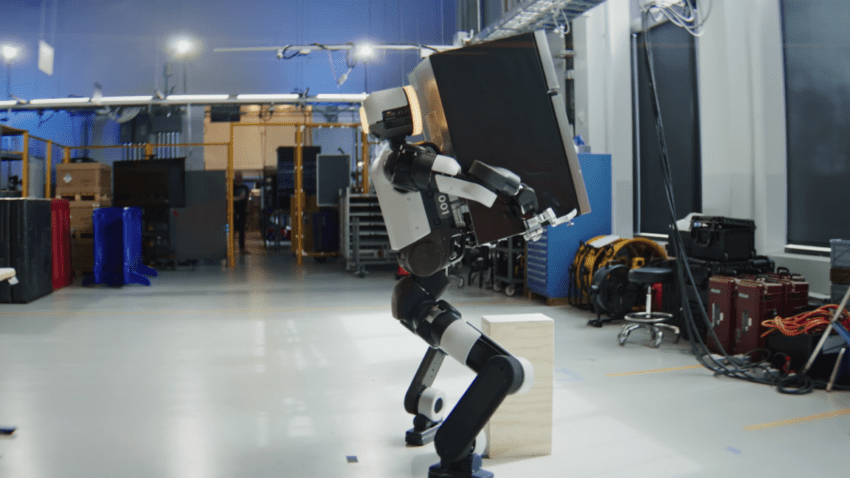
Another significant aspect of the investment plan is the focus on humanoid robots. Hyundai Motor Company, through its subsidiary Boston Dynamics, is at the forefront of this initiative. The company is racing to mass-produce humanoid robots designed to perform labor-intensive tasks in various industries, particularly in automotive manufacturing.
The integration of humanoid robots into the workforce is seen as a solution to labor shortages and increasing operational efficiency. These robots are expected to take over repetitive and physically demanding tasks, allowing human workers to focus on more complex and creative roles. The potential for humanoid robots to transform workplaces is immense, and South Korea aims to be a leader in this emerging field.
Government Support and Strategic Goals
South Korean President Lee Jae Myung emphasized the urgency of securing core elements of AI technology during a televised speech on June 29. He stated, “We must secure the core elements of AI faster than any other country. Semiconductors, physical AI, and AI data centers are the triple axis for a great leap forward.” This statement underscores the government’s commitment to positioning South Korea as a global leader in AI and semiconductor technology.
The government’s proactive approach includes not only financial investment but also policy support aimed at fostering innovation. By creating a favorable regulatory environment, South Korea hopes to attract more investments and talent in the tech sector. This strategy aligns with the broader goal of enhancing the country’s technological capabilities and economic competitiveness on the global stage.
Market Implications
The $1 trillion investment is expected to have far-reaching implications for the global technology landscape. As South Korea ramps up its memory chip production, it could help stabilize prices and alleviate shortages that have plagued the market in recent years. This stabilization is crucial for consumer electronics manufacturers who have faced rising costs and supply chain disruptions.
Moreover, the establishment of new AI data centers will likely enhance the capabilities of companies relying on AI technologies. Improved data infrastructure can lead to more efficient processing and analysis, enabling businesses to harness the full potential of AI. This could result in innovations across various sectors, from healthcare to finance, as organizations leverage AI for improved decision-making and operational efficiency.
Global Competition
South Korea’s investment strategy also highlights the intensifying global competition in the tech sector. Countries like the United States and China are also heavily investing in semiconductor manufacturing and AI technologies. The race to dominate these critical areas is not only about economic growth but also about national security and technological sovereignty.
As South Korea positions itself as a leader in memory chip production and AI, it may face challenges from other nations seeking to bolster their own capabilities. The geopolitical landscape surrounding technology is complex, and countries are increasingly aware of the strategic importance of semiconductors and AI. This competition could lead to further investments and innovations, benefiting the global tech ecosystem as a whole.
Stakeholder Reactions
The announcement of the $1 trillion investment has garnered mixed reactions from various stakeholders. Industry experts and analysts have largely welcomed the initiative, viewing it as a necessary step to address the current challenges in the memory chip market and the growing demand for AI technologies.
However, some critics have raised concerns about the feasibility of such a massive investment. Questions have been raised regarding the timeline for implementation and whether the South Korean government and companies can effectively execute their ambitious plans. The tech industry is known for its rapid changes, and the ability to adapt to evolving market conditions will be crucial for the success of this initiative.
Public Perception
Public perception of the investment is also an important factor. As South Korea invests heavily in technology, citizens may have varying opinions on the prioritization of funds. While many may support advancements in AI and robotics, others may be concerned about the implications for employment and job displacement. The government will need to address these concerns and ensure that the benefits of technological advancements are shared broadly across society.
Conclusion
South Korea’s commitment to investing $1 trillion in memory chip production, AI data centers, and humanoid robots marks a significant step towards enhancing its technological capabilities and economic competitiveness. As the global demand for memory chips continues to rise, this investment could play a crucial role in stabilizing the market and fostering innovation in AI technologies.
The implications of this initiative extend beyond South Korea, as it positions the country as a key player in the global tech landscape. However, the challenges of execution, competition, and public perception will require careful navigation. As the world watches, South Korea’s ambitious plans could set a precedent for how nations approach technological advancement in the coming years.
Source: Original report
Was this helpful?
Explore more: More Hardware & Devices Tech News Blog
Last Modified: June 30, 2026 at 3:35 am
11 views