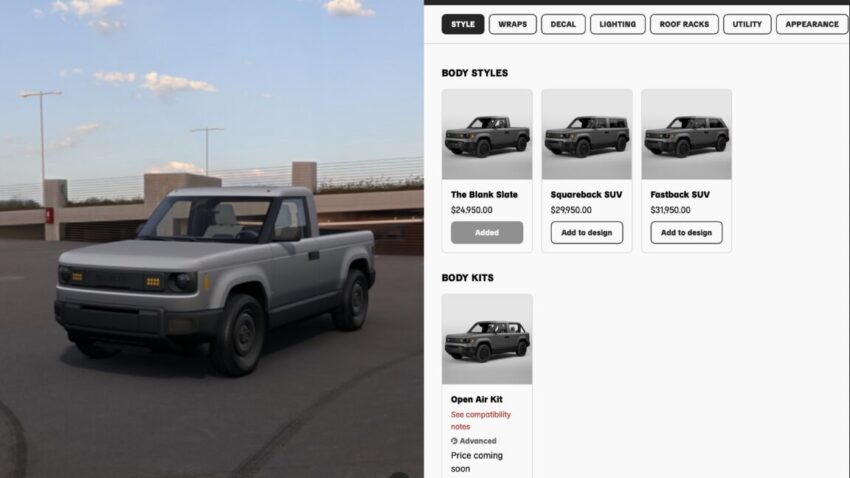
slate auto s truck builder goes live Slate Auto has officially launched its online configurator for the Slate electric truck, revealing a starting price of $24,950 for the highly anticipated vehicle.
slate auto s truck builder goes live
Overview of the Slate Electric Truck
This morning, Slate Auto made headlines with the announcement of pricing for its Slate electric truck. The company aims to provide an affordable entry point into the electric vehicle (EV) market, targeting consumers who are looking for a budget-friendly option without compromising on essential features. The Slate truck is designed to appeal to a broad audience, including those who may have been hesitant to transition to electric vehicles due to cost concerns.
Key Specifications
The Slate electric truck is equipped with a lithium iron phosphate battery pack, offering a usable energy capacity of 63 kWh (65 kWh gross). This battery configuration powers a rear-wheel-drive electric motor that delivers 181 horsepower (135 kW) and 195 lb-ft (264 Nm) of torque. These specifications suggest that the Slate truck is not just a budget option but also a capable vehicle for everyday use.
Performance and Range
In its pickup configuration, the Slate truck features 17-inch steel wheels and boasts an EPA-estimated range of 205 miles (330 km) on a single charge. This range is competitive within the budget EV segment, making it a viable option for daily commuting and light-duty tasks. The vehicle supports DC fast charging, allowing it to charge from 20% to 80% in approximately 30 minutes at a maximum rate of 120 kW via a North American Charging Standard (NACS) port. For those who prefer slower charging methods, the Slate truck can also be charged using AC power, with charging times varying from four to 17 hours depending on the outlet used.
Customization Options
One of the standout features of the Slate electric truck is its online configurator, which allows potential buyers to customize their vehicles according to their preferences. This tool not only provides an engaging user experience but also helps consumers understand the various options available to them.
Base Model Configuration
For those interested in a no-frills option, the base model of the Slate truck is designed to be as affordable as possible. A preliminary configuration I created this morning came to $25,289.97, excluding taxes and fees. This price reflects a bare-bones pickup that still retains essential functionalities. The only additional cost incurred was for decals to personalize the truck, showcasing how customization can be achieved without significantly increasing the overall price.
Additional Features and Upgrades
While the base model is appealing for its affordability, Slate Auto offers various upgrades and features that can enhance the driving experience. These may include improved interior materials, advanced technology packages, and enhanced safety features. However, it is essential to note that these upgrades will increase the overall cost of the vehicle.
Market Context and Implications
The introduction of the Slate electric truck comes at a time when the demand for affordable electric vehicles is on the rise. As more consumers seek to transition to electric mobility, manufacturers are under pressure to deliver cost-effective solutions. The Slate truck’s pricing strategy positions it well within a competitive market, especially against established players like Ford and Tesla, who have also been working on more affordable EV options.
Consumer Reactions
Initial reactions from potential buyers and industry analysts have been largely positive. Many consumers appreciate the sub-$25,000 price point, which is increasingly rare in the EV market. The ability to customize the vehicle further adds to its appeal, allowing buyers to tailor their trucks to meet specific needs and preferences. However, some concerns have been raised regarding the availability of features that are standard in higher-priced models from competitors.
Challenges Ahead
Despite the excitement surrounding the Slate electric truck, the company faces several challenges as it moves forward. One of the most significant hurdles is ensuring that production meets demand. As the EV market continues to grow, manufacturers are grappling with supply chain issues and component shortages, particularly in battery production. Slate Auto will need to navigate these challenges to deliver vehicles on time and maintain customer satisfaction.
Competition in the EV Market
The electric vehicle market is becoming increasingly crowded, with numerous manufacturers vying for consumer attention. Established brands like Tesla, Ford, and General Motors have already made significant inroads into the EV space, and new entrants are continually emerging. Slate Auto’s ability to differentiate itself through pricing, features, and customer experience will be crucial for its long-term success.
Future Prospects
Looking ahead, the future of the Slate electric truck appears promising, provided the company can effectively address the challenges it faces. The demand for affordable electric vehicles is expected to continue growing, driven by increasing consumer awareness of environmental issues and the rising cost of traditional fuel sources. If Slate Auto can maintain its competitive pricing while offering a reliable and well-built product, it may carve out a significant niche in the market.
Potential for Expansion
As Slate Auto establishes itself in the electric truck segment, there may also be opportunities for expansion into other vehicle categories. The company could explore the development of electric SUVs or sedans, leveraging its existing technology and production capabilities. Such diversification could help mitigate risks associated with market fluctuations and enhance overall brand recognition.
Conclusion
The launch of the Slate electric truck at a starting price of $24,950 marks a significant milestone in the quest for affordable electric vehicles. With its competitive specifications, customization options, and a user-friendly online configurator, Slate Auto is positioning itself to attract a wide range of consumers. However, the company must remain vigilant in addressing production challenges and navigating a competitive landscape to ensure its long-term success in the evolving EV market.
Source: Original report
Was this helpful?
Explore more: More Hardware & Devices Tech News Blog
Last Modified: June 24, 2026 at 9:36 pm
9 views